
SURAIELEC Light Sensor Socket 2 Pack
4.0Editor score
360-degree sensor rotation
Spring-loaded contact design
UL listed for safety
Discover the best Light Sensor Socket options for outdoor and indoor use. We compare top-rated dusk to dawn and motion sensor sockets for energy savings and
Light sensor sockets offer a smart way to automate your lighting without rewiring. These devices screw directly into standard fixtures, turning bulbs on at dusk and off at dawn. They enhance security, save energy, and add convenience to your home.
We compared ten top-rated products based on sensor accuracy, ease of installation, and durability. Our list includes both dusk to dawn photocell sockets and motion-activated options. Each entry highlights key features, pros, cons, and ideal use cases for every buyer.
Every pick shows real specifications, customer ratings, and direct links to purchase. We focus on reliability and performance to help you choose wisely. Please note that prices and availability change frequently, so check current listings before buying your next light socket.
4.0Editor score

4.4Editor score

4.8Editor score
This side-by-side comparison highlights the key differences between each model. You will see how sensor types, adjustability, and special features vary across the top ten choices available today.


The DEWENWILS 2 Pack Light Sensor Socket stands out as our top choice for automating outdoor lights. It features an advanced built-in dusk to dawn sensor that turns your standard fixture into an automatic light without any wiring. Its 4.4-star rating reflects reliable performance across many homes.
We may earn a commission when you buy through this link, at no additional cost to you.
Its strongest feature is the automatic control system. The sensor detects natural light levels to switch bulbs on at dusk and off at dawn. The included off-delay function prevents bulbs from flickering due to sudden light sources like car headlights. This ensures smooth operation and extends bulb life.
A minor trade-off is the requirement for a clear light path. You cannot use this socket with opaque or frosted glass fixtures, or the sensor will not function correctly. However, this is a common limitation for photocell sockets. Clear covers work perfectly and maintain good aesthetics.
If you want a simple, effective way to automate porch or garage lights, this set is ideal. It offers great value with two units included. The ETL listing adds confidence in safety. We recommend it for most standard outdoor lighting needs.
Automatic dusk to dawn lighting ensures your home is lit when you return, deterring intruders without manual intervention.
The 60-second off delay keeps lights on during brief light spikes, avoiding annoying flickers from passing cars or birds.
We may earn a commission when you buy through this link, at no additional cost to you.
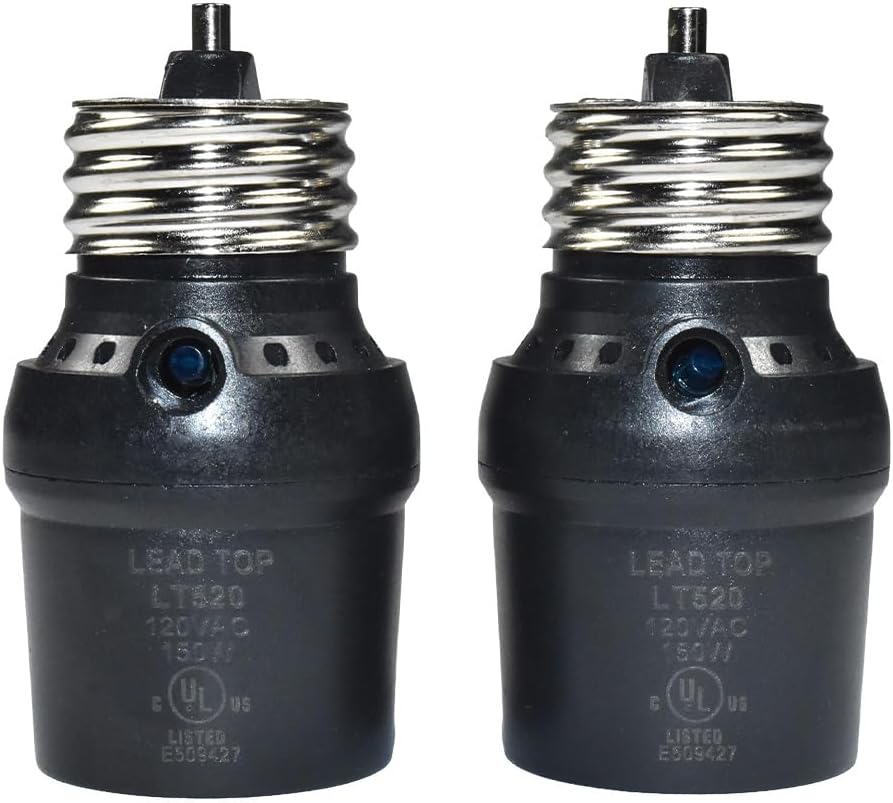
For those seeking value, the SURAIELEC Light Sensor Socket offers an excellent entry point. It provides full 360-degree rotation, allowing precise sensor alignment. This flexibility helps avoid false triggers from nearby lights. With a 4.0 rating, it delivers solid performance for the price.
We may earn a commission when you buy through this link, at no additional cost to you.
The standout feature is the adjustable photocell sensor. You can rotate the socket to face the exact direction light comes from. The spring-loaded central electrode ensures strong electrical contact. This design prevents connection issues over time. It works with standard bulbs up to 150 watts.
Some users note that sensitivity can vary. Adjusting the angle carefully helps optimize performance. The UL listing assures safety standards are met. While the rating is slightly lower than others, the low cost makes it a smart trial option for multiple fixtures.
Choose this if you need multiple sensors on a tight budget. The rotation feature is a major plus for tricky mounting spots. It is easy to install and blends well with most fixtures. A great starting choice for DIY lighting automation.
The 360-degree rotation allows you to aim the sensor perfectly, avoiding shadows or nearby streetlights.
Spring-loaded contacts maintain firm pressure, ensuring reliable power delivery without loose connections.
We may earn a commission when you buy through this link, at no additional cost to you.
The Light Sensor Socket Dusk to Dawn with Timer earns the top rating with 4.8 stars. It adds a unique 12-hour timer-off function. This ensures lights shut off even on cloudy days when sensors might stay triggered. It combines photocell sensing with time-based control for maximum reliability.
We may earn a commission when you buy through this link, at no additional cost to you.
Its key strength is versatility. The 300-degree rotatable sensor lets you customize the angle to reduce interference. The compact size fits neatly into most fixtures without looking bulky. Users appreciate the extra security of the timer overriding the sensor during extreme weather.
The only consideration is understanding the timer function. If you want pure dusk-to-dawn, the timer adds a layer of control. This might seem complex but offers protection against light lock. For most users, this added safety is a valuable benefit worth the investment.
If you want the highest-rated product with extra features, this is the pick. The dual control ensures your lights work as intended. It is ideal for areas with variable light conditions. A premium choice for reliable, worry-free outdoor lighting automation.
The 12-hour timer guarantees your light turns off after a set time, even if the sky stays dark.
300-degree rotation provides ample range to dodge interference from neighbors or streetlights.
We may earn a commission when you buy through this link, at no additional cost to you.
This DEWENWILS model uses two photocell sensors instead of one. The symmetrical design ensures at least one sensor faces natural light. This reduces the risk of obstruction causing errors. With a 4.6 rating, it offers robust performance for standard outdoor fixtures.
We may earn a commission when you buy through this link, at no additional cost to you.
The dual sensor approach is its main advantage. It prevents lighting failures caused by shadows or misalignment. The off-delay function keeps lights on for 5 minutes after light detection. This stops flickering from passing cars. The heat-resistant PET material ensures long-term durability.
Unlike other models, it lacks rotation. You must install the socket so the dual sensors face outward. This limitation is minor if you have clear mounting options. The safety and reliability are worth the fixed orientation. It is a solid upgrade for existing lights.
Pick this for high reliability in simple mounts. The dual sensors mean fewer false negatives. It is an excellent choice for front porch lights. With two units, you can cover multiple spots. A practical and reliable solution for automated lighting.
Dual sensors work together to ensure light detection, even if one is partially blocked.
A 5-minute off delay is longer than average, helping to avoid interruptions from transient light sources.
We may earn a commission when you buy through this link, at no additional cost to you.
The E26 Light Sensor Socket is designed for compact outdoor fixtures. It features a 300-degree rotatable sensor for precise aim. The 30-second minimum on time prevents false triggers from sudden light spikes. Its 4.2 rating shows steady performance for most porch applications.
We may earn a commission when you buy through this link, at no additional cost to you.
Key strengths include its small size. It blends into most fixtures without altering their look. The rotatable sensor reduces interference from neighbors. It supports E26/E27 bases up to 150W. This makes it suitable for most standard porch or garage light bulbs.
It lacks premium weather ratings. Use it under covered porches or sheltered areas. The 30-second delay helps maintain steady operation. While not the most feature-rich, it gets the job done efficiently. A great option for budget-conscious buyers needing rotation.
This model is ideal for small outdoor lights. It is simple to install and reliable for basic needs. The compact size keeps aesthetics intact. A smart buy for anyone wanting automated porch lighting without bulk.
The 30-second minimum on time helps ensure the light stays stable despite momentary light changes.
The compact build ensures the adapter remains hidden behind the bulb in most fixtures.
We may earn a commission when you buy through this link, at no additional cost to you.
This motion sensor socket targets indoor use like basements and storage. It uses Passive Infrared (PIR) to detect human presence. With adjustable time and LUX settings, you can control duration and light thresholds. A 4.0 rating indicates solid function for indoor tasks.
We may earn a commission when you buy through this link, at no additional cost to you.
Its standout feature is precise control. The LUX button sets ambient light levels. This prevents lights from turning on if there is already enough light. The time button sets how long the light stays on. This flexibility helps avoid false triggers and saves energy.
The indoor-only restriction is critical. It is not rated for outdoor weather exposure. Use it for closets or garages. The 60-watt max limit suits LEDs well. For motion control in dark areas, this offers great value.
Choose this for utility rooms or dark hallways. The easy screw-in installation makes setup fast. It keeps your space lit only when needed. A practical choice for energy-saving indoor lighting.
The adjustable LUX knob ensures the light turns on only when it is actually dark enough.
Motion detection in basements or closets ensures safety without manual switches.
We may earn a commission when you buy through this link, at no additional cost to you.
The Motion Activated Light Socket offers a fully adjustable sensor head. It rotates 160 degrees horizontally and vertically. This allows precise positioning to cover the most critical areas. With a 4.2 rating, it provides reliable motion detection for indoor spaces.
We may earn a commission when you buy through this link, at no additional cost to you.
Its flexibility sets it apart. You can tweak time, sensitivity, and light levels. The 100-watt capacity supports larger bulbs than others. The LUX knob distinguishes between day and night modes. This ensures it stays off during daylight hours.
Like other motion sensors, it is for indoor use only. Avoid direct weather exposure. The setup requires slight calibration. Once adjusted, it works well for laundry rooms or stairs. A versatile tool for automated utility lighting.
Select this for tricky corners or wide areas. The adjustability ensures the sensor sees motion clearly. It balances cost and features well. A strong contender for indoor motion-activated needs.
Rotating the head 160 degrees lets you point detection exactly where people walk.
The LUX knob lets you disable motion sensing during the day to avoid unnecessary power use.
We may earn a commission when you buy through this link, at no additional cost to you.
This four-pack offers exceptional value for those needing multiple sensors. It mirrors the dual-sensor design with a 4.4 rating. The extra units allow covering several fixtures cost-effectively. It includes the same heat-resistant PET and ETL certification as the two-pack.
We may earn a commission when you buy through this link, at no additional cost to you.
The dual sensor design prevents obstruction issues. The 5-minute off delay avoids flickering from cars. This ensures consistent performance over time. While it lacks rotation, the symmetrical sensors make up for it. A practical choice for large homes or rental properties.
The main limitation is the fixed orientation. You must align it correctly during install. If you have clear porch lights, this is ideal. Bulk buying reduces the unit cost significantly. A smart investment for whole-home lighting upgrades.
Buy this if you need several sockets at once. The reliability and safety standards match the single-unit version. It ensures consistent performance across all fixtures. A top recommendation for bulk lighting needs.
Buying four units at once offers significant savings compared to purchasing pairs individually.
Both sensors work to ensure light detection, reducing failure points in each unit.
We may earn a commission when you buy through this link, at no additional cost to you.
This DEWENWILS model focuses on precision with 360-degree rotation. A 4.5 rating shows high user satisfaction. The retractable spring contact ensures the sensor faces the sun correctly. It combines durability with easy adjustment for outdoor lighting.
We may earn a commission when you buy through this link, at no additional cost to you.
The rotation mechanism is robust. It uses a telescopic spring to hold position. The 60-second off delay prevents flickering from sudden light changes. The PET material handles heat well. This makes it a reliable option for exposed mounts.
While it lacks a timer, the sensor accuracy is high. The rotation is critical for avoiding streetlights. This model ensures your fixture turns on only when needed. A premium choice for tricky outdoor setups.
Choose this for reliable dusk-to-dawn control. The rotation ensures no blind spots. It balances build quality and function well. A strong option for porch or patio lights needing accuracy.
The spring telescopic range holds the sensor firmly once you adjust it to the perfect angle.
A 60-second off delay keeps your light steady during brief light interruptions.
We may earn a commission when you buy through this link, at no additional cost to you.
The HQRP Light Sensor Socket boasts a perfect 5.0 rating. It is built for extreme weather from -40°C to +70°C. This durability ensures reliability in all seasons. The 360-degree sensor rotation adds flexibility for precise outdoor aiming.
We may earn a commission when you buy through this link, at no additional cost to you.
Its weather resistance is a standout feature. It withstands high humidity and temperature extremes. The UL certification adds peace of mind for safety. The low power consumption keeps operating costs minimal. This makes it ideal for harsh climates.
The rotation helps avoid streetlight interference. It supports E26/E27 bulbs up to standard limits. While pricier, the durability justifies the cost. For exposed mounts in cold or hot zones, this is a top pick.
If durability is your priority, this is the choice. It handles weather that others might not. The perfect rating reflects high satisfaction. A premium option for long-term outdoor automation.
Withstands temperatures from -40°C to +70°C, ensuring it works in freezing winters or hot summers.
UL certification ensures safety, and low power use keeps costs down over time.
We may earn a commission when you buy through this link, at no additional cost to you.
Choosing the right sensor socket depends on your location and bulb type. This guide explains the key factors to consider before buying.
Most sockets use photocell sensors to detect dusk and dawn. Motion sensors (PIR) detect movement for indoor use. Decide if you need light-based automation or motion activation for your space.
Look for photocells with adjustable sensitivity to reduce false triggers.
Sensors with 360-degree rotation allow precise aiming. This helps avoid interference from streetlights or nearby fixtures. Fixed sensors work if your mount has a clear view of the sky.
Rotation is vital for tricky mounting spots or shaded porches.
Ensure the socket supports E26/E27 bases. Check the max wattage rating for your bulb type. LED bulbs usually draw less power, fitting most sockets easily.
Match your bulbs wattage to the socket limits for safety.
Outdoor sockets must withstand rain and temperature shifts. Look for heat-resistant PET or similar durable plastics. Weather ratings ensure longevity in harsh climates.
Choose weather-resistant models for uncovered outdoor fixtures.
Off-delay functions prevent bulbs from flickering due to passing headlights. Some models have adjustable time delays. This ensures stable lighting without rapid on-off cycles.
A good delay feature improves user experience and bulb life.
Always check for UL or ETL listings. These confirm the product meets safety standards. Certified sockets reduce fire and electrical risks.
Never buy uncertified sockets for high-voltage applications.
All recommended sockets are screw-in types requiring no wiring. They fit directly into existing fixtures. This simplifies DIY installation for most homeowners.
Ensure you turn off power before screwing in the new socket.
Prices vary based on features like timers or rotation. Multi-packs offer better value for multiple lights. Balance features against your budget to find the best fit.
Consider buying in bulk if you need several sockets.
First, ensure power is off before installation. Screw the sensor socket directly into your existing E26/E27 fixture. Then, screw your bulb into the new socket. Make sure the sensor faces clear, natural light to avoid obstruction.
Second, allow the system to calibrate. Leave the fixture untouched overnight. The sensor will learn light levels and adjust. Avoid covering the sensor with shades or debris during this time.
Third, clean the sensor lens regularly. Dust and dirt can block light detection. Use a soft, dry cloth to wipe the exposed plastic. This maintains accurate performance and prevents flickering.
Yes, most models work with LED bulbs. Ensure the LED wattage does not exceed the socket's rated limit. LED bulbs are often the best choice due to lower power consumption. Always check the specific wattage limit in the product description.
No, do not use them with frosted or opaque fixtures. The sensor needs direct exposure to natural light. Opaque covers block light detection, causing the socket to fail. Use clear or open fixtures for best results.
Rotatable models allow you to twist the socket. Some use a retractable spring mechanism. Turn the socket until the sensor faces the sky. Ensure it remains secure after adjustment to avoid loosening.
Flickering happens due to sudden light sources like headlights. Use a model with an off-delay function. Ensure the sensor is not too close to the bulb or other lights. Clean the lens to remove dirt.
Yes, many are rated for outdoor use. Look for weather-resistant materials like PET. Some models have extreme temperature ratings. Always ensure the fixture has some cover from heavy rain.
Timers allow lights to turn off after a set time. This prevents them from staying on all night during cloudy weather. The timer overrides the sensor to save energy. It is useful for security and convenience.
Dusk-to-dawn sensors use light levels to turn on/off. Motion sensors detect movement to trigger lights. Dusk-to-dawn is best for continuous outdoor light. Motion sensors suit indoor or high-security zones.
No, installation is very simple. No wiring or tools are needed. Just screw out the old socket and screw in the new one. It takes minutes and requires no electrician skills.
We reviewed the top 10 options available. The DEWENWILS 2 Pack and HQRP models lead in value and durability. Each pick offers distinct advantages for different lighting needs.
Prioritize weather resistance and adjustability. Ensure the socket fits your bulb type. A good sensor socket saves energy and improves home safety without complexity.
Prices and availability change daily. Always check current listings before purchasing. With the right choice, you can automate your lights effortlessly and safely.