
RC Cellmeter 8 Digital Battery Capacity Checker
4.4Editor score
Large LCD screen display
One-click measurement button
Safe minimum operating voltage
This guide compares the top rated Li Ion Battery Tester models for accuracy, features, and reliability to help you choose the right device for your needs.
Finding the right Li Ion Battery Tester is essential for maintaining the health and longevity of your rechargeable power sources. Whether you manage drones, flashlights, or industrial equipment, knowing exact capacity prevents unexpected failures and ensures safety during operation.
We evaluated ten top-rated models based on accuracy, compatibility, display clarity, and user-friendly design. Our analysis covers everything from simple voltage checkers to advanced capacity analyzers with internal resistance tracking, ensuring you find a tool that fits your specific technical requirements.
Each pick highlights key strengths and limitations so you can make an informed decision quickly. Please note that product availability and pricing fluctuate frequently, so verify current details before purchasing to ensure you get the best value for your investment today.
4.4Editor score

4.7Editor score
4.6Editor score
The following table provides a side-by-side comparison of all ten tested units to help you quickly identify key specifications and capabilities before making your final selection decision.


The ISDT BG-8S Battery Meter stands out as a top-tier choice for enthusiasts requiring detailed battery analytics. With a high rating from users, it delivers precise measurements across multiple chemistries including LiPo and Li-ion packs.
We may earn a commission when you buy through this link, at no additional cost to you.
Its integration of BattGO technology allows for deep dives into battery history and health, while the auto-balancing feature ensures longevity. The unit doubles as a power bank, offering immense value beyond simple testing tasks.
While it requires specific connectors like XT60i for full features, the trade-off is worth the advanced data provided. The learning curve is manageable for most users accustomed to RC electronics.
This device is ideal for drone pilots and RC hobbyists who demand professional-grade insights. We recommend it for anyone seeking a comprehensive tool that combines testing with maintenance capabilities.
Connect via XT60i to access detailed parameters like cell cycles and working states effortlessly.
Auto-balancing algorithms ensure each cell stays matched, preventing dangerous imbalances during operation.
We may earn a commission when you buy through this link, at no additional cost to you.
The RC Cellmeter 8 offers an excellent entry point for those needing reliable voltage checks without breaking the bank. Its solid rating reflects consistent performance across various battery types like NiMH and Li-ion.
We may earn a commission when you buy through this link, at no additional cost to you.
The large screen and single-button operation make it incredibly accessible for beginners. It prevents damage by respecting minimum voltage thresholds, ensuring your devices remain safe during checks.
It lacks advanced capacity testing, which might limit professional users, but for quick field checks it is sufficient. The simple design reduces complexity significantly for casual users.
Ideal for students or hobbyists on a tight budget, this meter provides essential data quickly. We suggest it for anyone prioritizing ease of use over complex diagnostics.
The device automatically prevents testing below 1.2 volts to avoid damaging sensitive battery cells.
A one-click button ensures you get instant voltage data without navigating complex menus.
We may earn a commission when you buy through this link, at no additional cost to you.
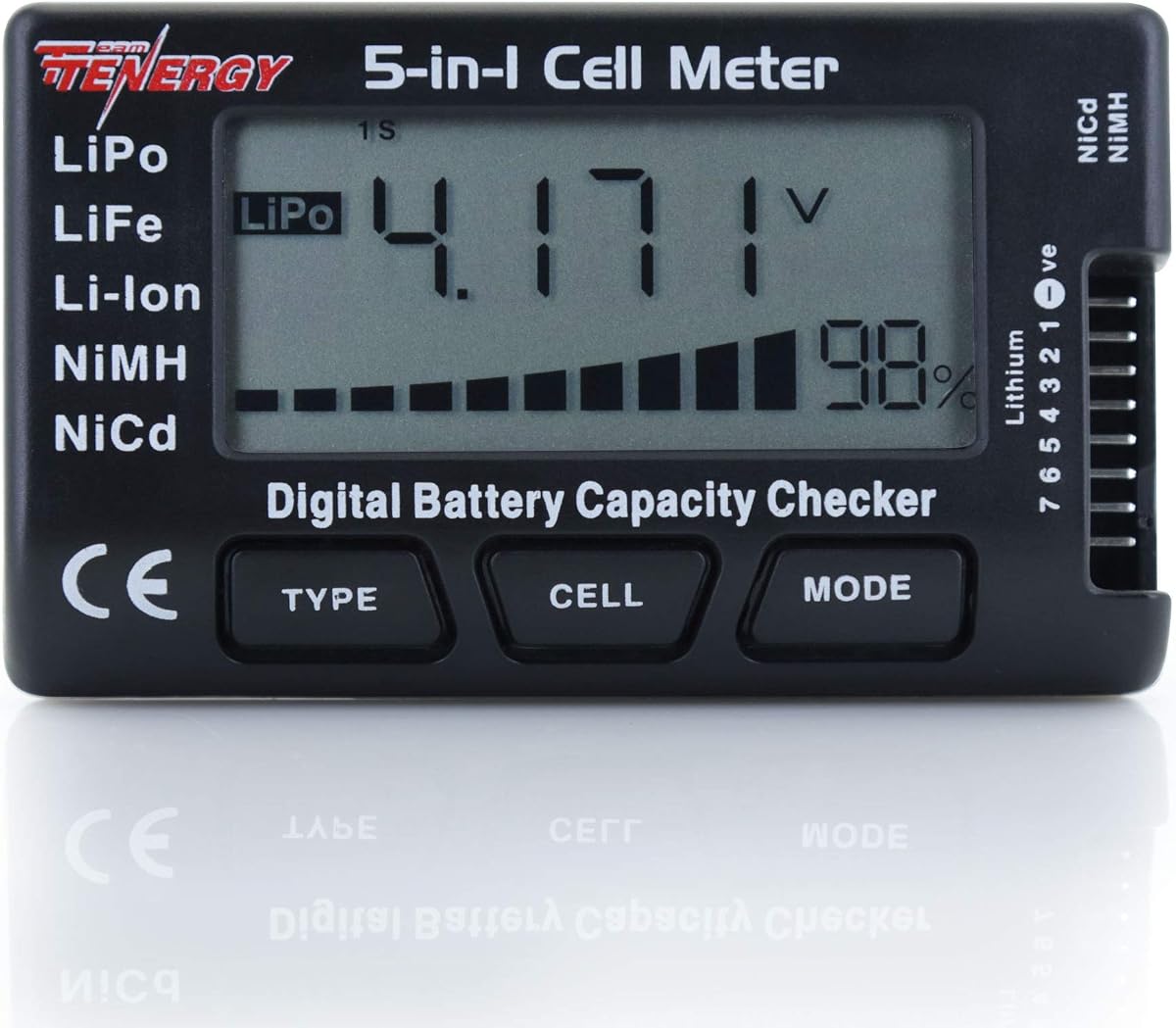
The Tenergy 5-in-1 Meter delivers professional features often reserved for expensive benchtop units. Its high rating stems from reliable performance in balancing and discharging battery packs safely.
We may earn a commission when you buy through this link, at no additional cost to you.
The internal resistance test helps identify failing cells before they cause system crashes. The adjustable discharge threshold ensures batteries are stored at safe levels to maintain health.
It needs power from the connected battery, which limits testing of dead cells, but this is common in this category. The balancing feature is a standout for extending overall pack life.
For serious RC users who maintain multiple batteries, this meter is indispensable. We recommend it for those needing to extend battery longevity through regular maintenance.
Balance your packs automatically to ensure even performance across all cells during flight.
Internal resistance readings reveal hidden issues before they become visible failures.
We may earn a commission when you buy through this link, at no additional cost to you.
This dedicated module focuses on 18650 cells, providing detailed capacity data that standard testers often miss. Users appreciate the ability to track actual milliamp hours rather than just voltage.
We may earn a commission when you buy through this link, at no additional cost to you.
Testing four channels simultaneously saves time for bulk analysis. The Type-C interface simplifies connection, while internal resistance checks help screen bad cells effectively.
The manual process for detailed features can be tedious, and accuracy varies slightly under load. However, the cost efficiency per cell analyzed makes it a great value.
Ideal for flashlight enthusiasts or laptop users maintaining their own cells. We suggest it for anyone needing bulk capacity verification without professional equipment.
Simultaneous four-channel operation allows you to test multiple batteries in a single session.
Displays both capacity and internal resistance for a complete health profile of the cell.
We may earn a commission when you buy through this link, at no additional cost to you.
This model brings modern convenience to household battery testing with a magnetic slot that prevents slipping. It achieves a strong rating for ease of use across common AA, AAA, and 9V types.
We may earn a commission when you buy through this link, at no additional cost to you.
The built-in rechargeable battery means no external power costs, making it eco-friendly. One-touch operation cycles through types quickly, and a buzzer alerts you to status changes.
It lacks granular data for deep enthusiasts, focusing instead on quick health checks for general consumers. The magnetic slider adds a unique touch but may require eventual replacement.
Perfect for home use where quick checks prevent unexpected device shutdowns. We recommend it for families wanting a hassle-free way to manage their battery supplies.
The magnetic slider secures your battery firmly, allowing one-handed testing easily.
USB-C input keeps the tester running for 15 hours without buying disposable batteries.
We may earn a commission when you buy through this link, at no additional cost to you.
The FLY RC Cellmeter 7 prioritizes portability, making it perfect for on-field adjustments. Its high rating confirms reliability for checking voltage levels without heavy equipment.
We may earn a commission when you buy through this link, at no additional cost to you.
It displays critical cell differences, helping you spot weak cells that could cause crashes. The lightweight build ensures it fits easily in pockets or small storage cases.
While the screen is small, the essential data is visible in most lighting conditions. It focuses strictly on voltage rather than capacity, which limits deeper analysis options.
Ideal for drone pilots needing quick checks before takeoff. We suggest it for field work where weight and speed are more important than comprehensive data.
Its compact design ensures you always have a checker ready for immediate battery checks.
Seeing the voltage gap helps identify weak cells that may fail under load.
We may earn a commission when you buy through this link, at no additional cost to you.
This version of the BG-8S emphasizes smart features like deep battery history tracking. It maintains a solid rating for its robust capabilities in the hobby electronics sector.
We may earn a commission when you buy through this link, at no additional cost to you.
The power bank function delivers substantial output for charging other devices, increasing versatility. Automatic balancing keeps your packs healthy, reducing the risk of voltage mismatches.
Some features rely on specific connectors and firmware, which can complicate initial setup. However, the value provided by advanced monitoring outweighs these minor drawbacks.
Great for pilots who also need charging solutions on the go. We recommend it for those valuing integrated solutions over single-purpose tools.
Use it as a power bank to charge phones, adding value to its testing function.
Track cycles and working parameters to understand exactly when to replace a pack.
We may earn a commission when you buy through this link, at no additional cost to you.
This unit offers professional-grade throughput with eight independent channels for simultaneous testing. It is designed for enthusiasts needing accurate data without waiting for single tests to finish.
We may earn a commission when you buy through this link, at no additional cost to you.
Real-time current and voltage monitoring ensures precise analysis of battery behavior. The color screen presents clear data, while the cooling system maintains accuracy during long cycles.
Adjustable settings provide flexibility, but mastering them takes time and practice. It is built for those who manage many batteries and need consistent high-quality data.
Best suited for workshops or advanced hobbyists maintaining large fleets. We suggest it for anyone needing bulk analysis capabilities in a compact form.
Eight independent channels allow you to test multiple batteries simultaneously without interference.
A 2.4 inch color screen makes reading real-time data easy under any lighting.
We may earn a commission when you buy through this link, at no additional cost to you.
The QWORK RC Battery Checker simplifies voltage checks for RC models with an intuitive display. It scores highly for its simplicity and ability to read data instantly in the field.
We may earn a commission when you buy through this link, at no additional cost to you.
Supporting 2 to 7S packs covers most drone and car applications effectively. The digital screen ensures you see critical values clearly, preventing guesswork during setup.
It is limited to balance connectors, which restricts testing of single cells, but this fits the target audience. The lightweight design ensures it never adds unnecessary bulk to your kit.
Ideal for hobbyists needing a reliable quick-check tool. We recommend it for anyone prioritizing speed and accuracy in basic diagnostics.
Get immediate cell condition readings without navigating menus or complex setups.
Its compact design ensures it fits easily into your gear bag or backpack.
We may earn a commission when you buy through this link, at no additional cost to you.
The ZTS Mini Load Tester uses pulse load technology to simulate real-world usage conditions. Its long-standing popularity is backed by a strong rating for accurate results under load.
We may earn a commission when you buy through this link, at no additional cost to you.
Fully automatic operation with no switches makes it incredibly easy to use. It identifies weak cells reliably, which is often more accurate than a simple voltage check.
The lack of a digital screen means relying on indicator lights, which is less detailed. However, its simplicity is perfect for quick checks of common household batteries.
Best for general household use where detailed data is unnecessary. We suggest it for keeping your home battery drawer organized and safe.
Pulse load technology identifies weak cells that might pass a basic voltage check.
Probes and lead wires store away in the seam, keeping the unit tidy for travel.
We may earn a commission when you buy through this link, at no additional cost to you.
Choosing the right Li Ion Battery Tester depends on your specific usage scenarios and technical requirements. This guide outlines the most critical factors to consider before making a purchase.
Ensure the device supports the specific battery chemistries you use most often. Some testers handle Li-ion and LiPo only, while others support NiMH and alkaline as well.
Look for broad compatibility if you manage a mixed collection of batteries for different devices.
A clear display is vital for reading accurate voltage and capacity data quickly. LCD screens should be large enough to see details even in bright sunlight.
Prioritize units with high-contrast screens to avoid misreading critical information.
Advanced testers offer internal resistance metrics which indicate battery health beyond just voltage. This feature helps you identify degrading cells before they fail during use.
Select a model with this feature if you prioritize safety and performance optimization.
True capacity testers discharge the battery to measure actual milliamp hours stored. This is more accurate than relying on voltage readings alone for determining health.
Choose a capacity tester if you need to verify exact performance for critical applications.
Check the connectors supported, such as XT60, XH, or JST. Some devices may require adapters for certain pack types.
Ensure the tester matches your existing battery connectors to avoid extra costs.
Most testers draw power from the tested battery, but some have internal rechargeable cells. Internal power allows testing of dead batteries that lack voltage.
Consider this feature if you need to test batteries that are completely drained.
Look for robust construction that can withstand drops and rough handling in a workshop. Durable cases and high-quality connectors extend the lifespan of the device.
Invest in a rugged unit if you frequently use it outdoors or in industrial settings.
Some testers offer extra functions like balancing or power bank mode. These add significant value but may increase complexity and price.
Decide if these extras justify the cost based on your daily workflow needs.
Always begin by selecting the correct battery type on the device to ensure accurate readings. Connect the leads securely to the positive and negative terminals to prevent measurement errors.
Allow the device to stabilize for a few seconds before recording data to avoid fluctuations caused by connection resistance. This step ensures your results are reliable and consistent.
Store the tester in a cool, dry place away from direct sunlight to preserve its internal components. Regularly clean the contacts to prevent oxidation that could affect future readings.
Voltage testing measures the electrical pressure at a single moment, which can be misleading if a battery is weak. Capacity testing measures total energy stored by discharging the battery completely. Capacity testing provides a more accurate view of battery health.
Most basic voltage checkers cannot test batteries below a certain threshold. Some models have internal power to test completely dead cells. Check the specs for minimum operating voltage before purchasing.
Internal resistance shows how easily current flows within the battery. High resistance indicates wear or damage that reduces performance. Monitoring it helps you replace cells before they cause safety issues.
Test batteries after every cycle for critical applications like drones. For occasional use, test every few months to ensure they hold charge. Regular checks extend battery lifespan significantly.
Reputable testers are designed to avoid damaging cells during the process. Avoid cheap, unbranded units that might apply unsafe loads. Stick to well-reviewed models with built-in safety features.
While some estimators provide rough runtime predictions, accuracy varies. Real runtime depends on load conditions. Use capacity data to calculate expected performance more reliably.
Many testers come with standard XH connectors. You may need adapters for XT60 or other proprietary connectors. Verify connector types in the product description before buying.
Most testers do not charge batteries directly. Some advanced units offer balancing or storage charging. Check if the device supports charging modes if you need all-in-one functionality.
We have reviewed ten top-rated models to help you find the perfect Li Ion Battery Tester for your needs. Whether you prioritize budget, advanced features, or simplicity, there is a great option here.
Prioritize safety features and compatibility with your specific battery types to ensure reliable results. Investing in a quality device now will save money and prevent equipment failures later.
Remember to check current prices and availability on the manufacturer site before buying. Regular maintenance and accurate testing keep your batteries running safely and efficiently.