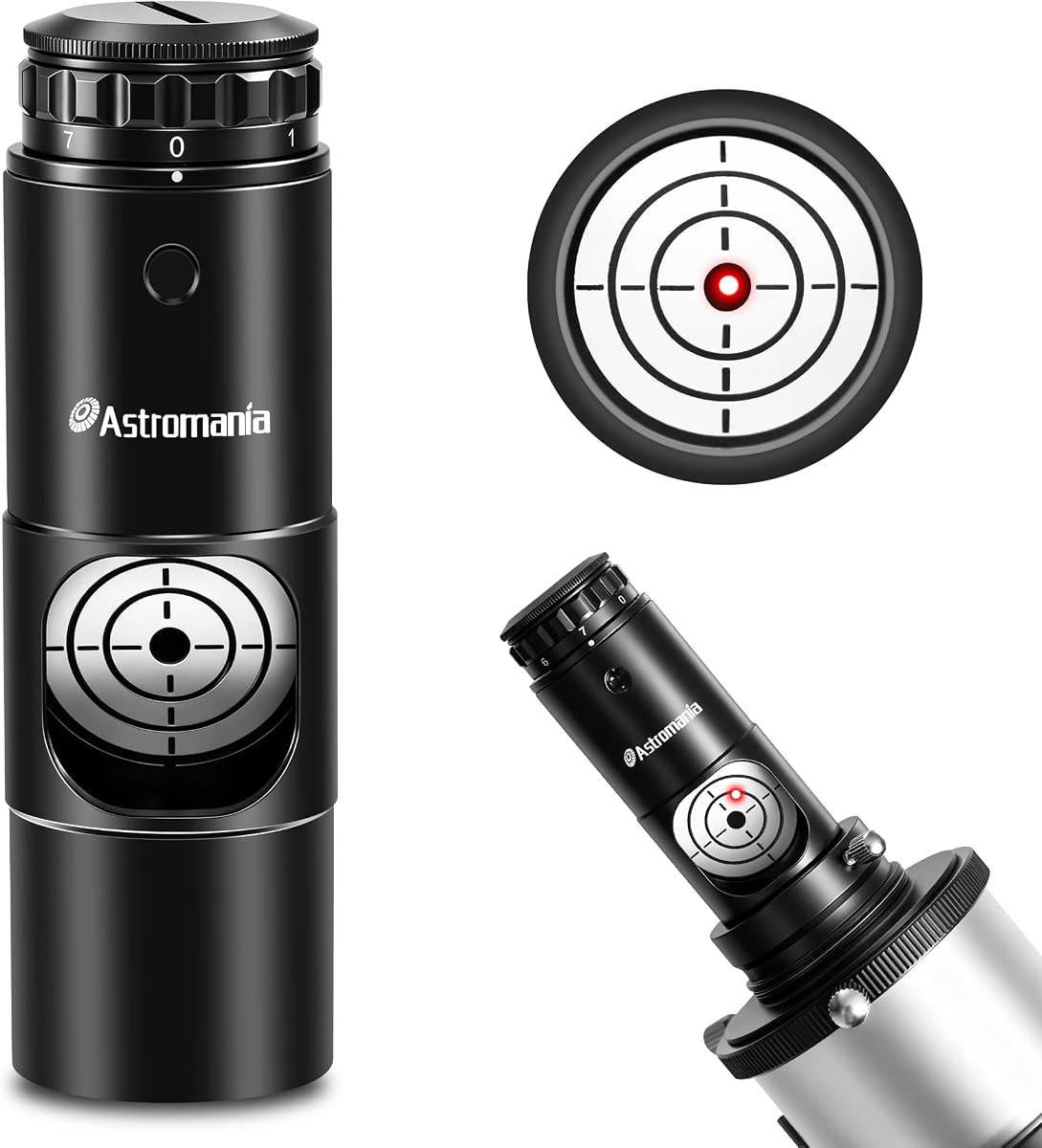
Astromania Laser Collimator 1.25
4.5Editor score
Fits 1.25 inch focusers
Includes CR2032 battery
Seven adjustable brightness levels
Achieving sharp views through your telescope requires precise optical alignment. A laser collimator for telescope alignment helps you adjust mirrors quickly and accurately. These tools are essential for Newtonian reflectors to ensure light paths are correctly aligned for optimal performance.
We evaluated ten top-rated models based on build quality, ease of use, and calibration stability. Each product was analyzed for its compatibility with standard focusers and its ability to maintain accuracy over time. This list covers both budget-friendly options and premium bundles for serious astronomers.
Every pick highlights key features like brightness levels, adapter options, and included accessories. While we strive for accuracy, product details may vary by seller. Always check current availability and specifications before purchasing to ensure the tool meets your specific telescope needs.
4.5Editor score

4.5Editor score
4.7Editor score
As an Amazon Associate we earn from qualifying purchases.
The following table provides a side-by-side comparison of all ten laser collimator for telescope alignment products reviewed in this guide. It highlights key specifications and unique features to help you find the right match for your equipment.


The SVBONY Laser Collimator stands out as a reliable tool for aligning Newtonian telescopes. It holds a strong rating among users and delivers clear results quickly. Its design allows for seamless transition between 1.25 and 2 inch systems.
We may earn a commission when you buy through this link, at no additional cost to you.
Key strengths include the triple cemented lens which stabilizes the red dot. The metal body ensures it withstands field conditions well. Users appreciate the 7 brightness levels that adapt to different observing environments.
Some users note that the included instructions are basic. While the tool is robust, occasional checks ensure accuracy remains high. These minor trade-offs are acceptable for the value it provides.
Buy this if you want a versatile and durable collimator for everyday use. It suits beginners and experienced astronomers who need consistent performance without breaking the bank.
The removable 2 inch adapter makes this unit future proof for upgrades. You do not need to buy a new tool when changing focusers.
Triple cemented lenses ensure the laser dot stays focused. This reduces eye strain during the alignment process significantly.
We may earn a commission when you buy through this link, at no additional cost to you.
The Astromania Laser Collimator is an excellent entry point for new telescope owners. It offers reliable alignment features at a very accessible cost. Many users find it perfect for standard 1.25 inch focusers.
We may earn a commission when you buy through this link, at no additional cost to you.
Its compact design makes it easy to carry to dark sky sites. The metal body protects internal components from minor bumps. The 7 brightness levels allow for use in various lighting conditions.
However, it lacks a 2 inch adapter for those with larger tubes. If your focuser is strictly 1.25 inch, this is a non issue. The value proposition remains high for most users.
Choose this if you need a basic but effective tool on a budget. It is ideal for beginners who want to start collimating immediately.
The intuitive layout means you can align alone without help. A side window lets you check reflections easily during adjustments.
Complies with Class 3R laser safety standards to protect eyes. Wavelength is set for visibility without harmful intensity.
We may earn a commission when you buy through this link, at no additional cost to you.
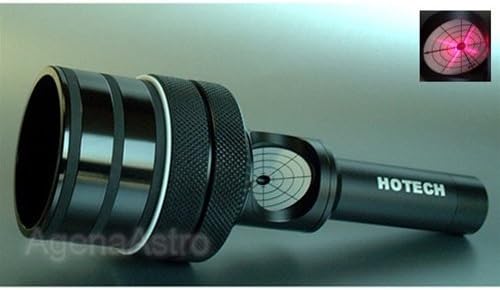
This HoTech collimator is designed for users demanding the highest optical precision. It uses a unique self-centering adapter to remove fitting errors. This feature is critical for deep sky imaging and professional use.
We may earn a commission when you buy through this link, at no additional cost to you.
The patented mechanism allows repeatable installation on any brand focuser. You can trust the calibration remains intact over time. It comes with a 1.25 SCA laser and a 2 to 1.25 adapter.
The cost is higher than basic models but justified by performance. Users report it saves time on fine tuning setups. The battery type is standard but slightly less common.
Invest in this if you need absolute precision for serious astronomy. It is the choice for those who value accuracy above all else.
The SCA technology ensures the laser sits perfectly centered. This eliminates the wobble common in standard adapters.
Ideal for astrophotographers needing exact star alignment. Reduces time spent troubleshooting focus errors in post.
We may earn a commission when you buy through this link, at no additional cost to you.
This Astromania model offers a robust solution for versatile telescope setups. It includes a removable 2 inch adapter for flexibility. Users find it reliable for both standard and upgraded focusers.
We may earn a commission when you buy through this link, at no additional cost to you.
The build quality features anodized aluminum for durability. It has multiple brightness levels to suit different environments. The design allows for one person operation effectively.
Some users mention the instructions are in German as well. This might require translation for some but the steps are clear. The weight is a bit higher but ensures stability.
Buy this if you need a durable collimator with a 2 inch adapter. It is a solid choice for regular users who value longevity.
Having both 1.25 and 2 inch compatibility saves money. No need to buy separate tools for different scopes.
7 brightness levels let you see the beam clearly. This helps when aligning in different ambient light conditions.
We may earn a commission when you buy through this link, at no additional cost to you.
The Alstar Laser Collimator provides accurate alignment for Newtonian scopes. It supports 1.25 inch focusers with a reliable beam. Users appreciate the detailed guide that helps beginners.
We may earn a commission when you buy through this link, at no additional cost to you.
The design includes a side window to check laser reflections. This feature allows for precise adjustments without extra tools. The metal body ensures it remains stable in cold weather.
Some users note that batteries are not always included. The adjustment ports are sealed which helps calibration but requires care. These factors are minor for most users.
Choose this for a reliable and affordable tool for standard telescopes. It works well for beginners looking for clear instructions.
Instructions cover adjustments for Newtonian scopes clearly. Even new astronomers can get good results quickly.
Side window at 45 degrees allows you to see returns. This is key for accurate primary mirror alignment.
We may earn a commission when you buy through this link, at no additional cost to you.
This Alstar model supports both standard and 2 inch focusers. It comes pre-calibrated to save time during setup. The sealed ports protect the internal mechanism from dust and debris.
We may earn a commission when you buy through this link, at no additional cost to you.
The build quality is professional grade with metal materials. It includes a battery so you can start immediately. Users appreciate the versatility for different telescope types.
Some users report the rating is slightly lower than others. The sealed ports require care when opening for adjustment. This design ensures long-term accuracy for most.
Buy this if you need a versatile tool for multiple scopes. It is suitable for those who want a ready-to-use option.
Sealed ports keep dust away from critical components. This helps maintain precision over many observing seasons.
Factory calibration reduces the need for initial tweaks. This is helpful for those new to collimation.
We may earn a commission when you buy through this link, at no additional cost to you.
This SVBONY set includes a collimator plus a phone adapter bundle. It is great for those wanting to capture images quickly. The collimator itself has 2 inch adapter flexibility.
We may earn a commission when you buy through this link, at no additional cost to you.
The phone adapter works with many smartphones and has EVA pads. This protects your phone during use while allowing secure attachment. The collimator part is standard but effective.
Some users find the phone adapter does not fit very wide cases. The price is higher due to the included accessories. For astrophotographers this is a useful bundle.
Choose this if you want an imaging bundle with your collimator. It saves time buying separate adapters for phone photography.
The phone adapter allows quick snapshots through the scope. Useful for checking alignment without full eyepieces.
Locking mechanism ensures the phone stays in place. EVA pads prevent scratches on your device.
We may earn a commission when you buy through this link, at no additional cost to you.
This bundle offers both a Cheshire eyepiece and a laser collimator. It covers alignment needs for both day and night sessions. Users rate this highly for its completeness and versatility.
We may earn a commission when you buy through this link, at no additional cost to you.
The Cheshire has a fine crosshair for daytime alignment. The laser is ready for use after dark with 7 brightness levels. Having both tools in one package is convenient.
The price reflects the dual utility of the package. Carrying two tools may be extra bulk for some users. But for accuracy this is an unmatched value.
Buy this if you want a complete alignment solution in one box. It is perfect for users who want to verify alignment by day and night.
Cheshire eyepiece works without batteries in daylight. This allows you to prep your scope before nightfall.
Laser collimator ensures the beam is centered at night. This complements the Cheshire for final tweaks.
We may earn a commission when you buy through this link, at no additional cost to you.
This Ocal Pro uses software for precise optical alignment. It features built-in calibration circles to guide adjustments. This electronic approach suits users who prefer data over manual tools.
We may earn a commission when you buy through this link, at no additional cost to you.
The unit is factory centered to pixel-level accuracy for reliability. It works with Newtonian and Schmidt Cassegrain scopes easily. The smartphone compatibility adds a modern touch.
Setup requires software which may take time for some. The price is high but justified by the precision offered. It is a niche tool for tech-savvy astronomers.
Buy this if you want an electronic solution for alignment. It is best for those who enjoy integrating software with optics.
Calibration circles guide you through the process clearly. This removes guesswork from the alignment routine.
Uses digital precision for field adjustments easily. Ideal for tech-focused astronomy setups.
We may earn a commission when you buy through this link, at no additional cost to you.
This bundle combines a laser collimator with a telescope lens. It is designed to offer a complete viewing setup. The lens provides a wide field of view for star clusters.
We may earn a commission when you buy through this link, at no additional cost to you.
The collimator features adjustable brightness for night use. It is safe with low power output standards. The metal body ensures durability in field use.
The price is higher due to the extra optical piece. If you need both items this bundle saves time buying separate. The eyepiece is specific but effective.
Choose this if you want a collimator and eyepiece together. It is good for users looking to upgrade optics and collimation.
The 62 degree eyepiece offers immersive wide views. This makes observing deep sky targets more enjoyable.
Output power is under 1mW for safety. This ensures eyes are protected during alignment work.
We may earn a commission when you buy through this link, at no additional cost to you.
Selecting the right laser collimator involves considering several technical factors. This guide covers the key aspects to help you make an informed decision.
Ensure the collimator fits your telescope's focuser diameter. Most models come in 1.25 inch or include a 2 inch adapter. Check your current focuser before purchasing to avoid fit issues.
Look for removable adapters if you plan to upgrade your focuser later.
A stable beam is essential for accurate alignment. Look for units with cemented lenses to minimize beam drift. Stability ensures the dot stays true during the adjustment process.
Unstable beams lead to incorrect alignment and blurry images.
Metal bodies are more durable than plastic ones. Aluminum construction resists temperature changes and wear in field conditions. This ensures the tool lasts longer over time.
High-quality materials protect internal mechanisms from damage and dust.
Adjustable brightness levels let you see the beam clearly in different environments. Brightness helps in both dark skies and light pollution areas. Look for at least 7 levels of control.
This feature allows for fine-tuning during observation or day setup.
User-friendly designs allow for single-person collimation. A side window helps you see laser reflections easily. Check for clear instructions to guide your process.
Ease of use reduces setup time and frustration for beginners.
Some bundles include batteries or additional adapters. Others may come with eyepieces for imaging. Check what is included to understand the total value.
Accessories save you from buying extra items separately.
Precision tools should maintain calibration over time. Some units have sealed ports to protect internal alignment. Regular checks ensure the tool remains accurate.
Maintenance is minimal but essential for consistent results.
Price varies from budget models to premium tools. Higher prices often reflect better build and precision. Determine your needs to avoid overpaying.
Value lies in accuracy and longevity of the tool.
Insert the collimator into your focuser firmly. Ensure it seats fully without forcing to avoid damaging the mechanism. If using a 2 inch adapter, tighten it securely in place.
Turn on the laser and adjust brightness to a comfortable level. Aim at the primary mirror. Look for the reflection spot on the laser itself.
Adjust the telescope screws until the dot sits centered on your laser aperture. This ensures the light path is aligned. Always turn off the device when not in use to preserve battery.
Yes, if you own a Newtonian or reflector telescope. These scopes require precise alignment to deliver sharp images. A laser collimator makes this process much easier and faster than traditional methods.
You should collimate your telescope every time you set it up. Transportation can bump the mirrors out of alignment. Regular collimation ensures your views remain sharp and clear.
The difference lies in the diameter of the focuser tube they fit. A 1.25 inch collimator fits standard focusers while 2 inch collimators fit larger tubes. Some tools come with removable adapters to work with both sizes.
Yes, you can use a laser collimator during the day with care. Ensure the laser is not too bright to avoid eye damage. It is often easier to align in daylight before night viewing.
Most collimators meet safety standards for low-power lasers. However, you should never look directly into the beam. Always use caution and keep the beam directed at mirrors during use.
You can check calibration by rotating the collimator in the focuser. If the dot moves significantly, it may need adjustment. Regular use of sealed units helps maintain calibration over time.
We reviewed ten distinct collimators ranging from budget to premium options. The Astromania and SVBONY models offer great entry points for most users. The HoTech unit provides top-tier precision for professional needs.
Prioritize compatibility with your focuser and build quality when deciding. If you value imaging accuracy, consider the self-centering features. For basic viewing, standard units work perfectly.
Remember to check current product details and availability before purchase. Prices and stock may vary over time. Choose the tool that best fits your scope and budget.