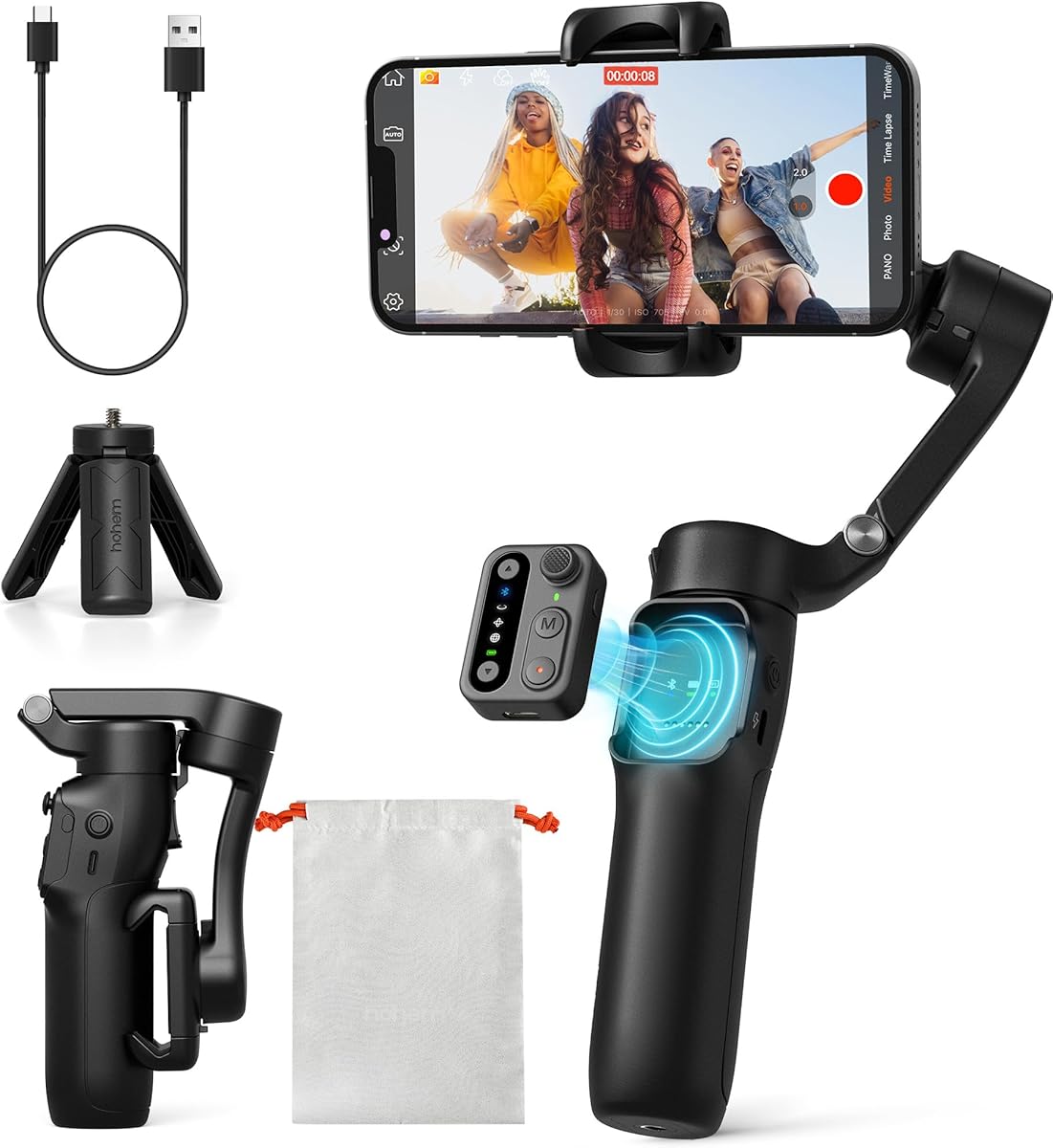
hohem iSteady X3 SE
4.2Editor score
Affordable price point
Lightweight foldable design
11-hour runtime
Capturing smooth footage while climbing requires a gimbal that balances weight, durability, and stabilization. Mountaineering demands gear that withstands cold, wind, and rugged terrain without failing mid-shoot.
We evaluated ten leading gimbals based on stabilization algorithms, battery endurance, weatherproofing, and payload capacity. Each product was assessed for its ability to handle dynamic movement and harsh environmental conditions.
Each pick highlights unique strengths for outdoor creators, from smartphone stabilization to camera support. Prices and availability change frequently, so verify details before purchasing to ensure the best fit for your adventure.
4.2Editor score

4.1Editor score

4.9Editor score
As an Amazon Associate we earn from qualifying purchases.
This side-by-side comparison evaluates all ten products across key performance metrics to help you choose the right tool for your mountaineering adventures.


The Hohem iSteady Pro 4 earns our Editor's Choice for mountaineering due to its rugged build and extended battery life. With a 4.1 rating, it offers reliable stabilization for action cameras in dynamic environments.
We may earn a commission when you buy through this link, at no additional cost to you.
Its IPX4 splashproof rating means it can handle rain or snow without damage, making it ideal for unpredictable mountain weather. The Bluetooth connection saves power, allowing up to 14 hours of continuous use on a single charge.
While it lacks smartphone support, its focused design for action cameras ensures optimized motor performance. The quick mounting system lets you attach your camera in seconds, so you don't miss fleeting moments.
Climbers and hikers who prioritize durability and runtime will find this gimbal invaluable. It balances performance with portability, ensuring your footage remains steady even on steep ascents.
The IPX4 rating protects against splashes from any direction, ensuring reliability during sudden rain showers on the trail.
A 14-hour runtime supports all-day shooting without needing mid-trip recharges, crucial for remote mountaineering expeditions.
We may earn a commission when you buy through this link, at no additional cost to you.
The hohem iSteady X3 SE offers exceptional value for smartphone users seeking stabilization. At 0.79 lbs, it is easy to carry on long treks without adding significant weight to your pack.
We may earn a commission when you buy through this link, at no additional cost to you.
Its 11-hour battery life covers most day hikes, while the detachable remote allows for creative framing from a distance. The foldable design ensures it fits into tight spaces in your gear.
Though it supports phones rather than cameras, its advanced stabilization algorithms deliver smooth footage during movement. The AI tracking features simplify solo shooting on the mountain.
This gimbal is perfect for casual adventurers who want professional results without heavy gear. It strikes a balance between cost and functionality for mobile content creators.
Weighing only 0.79 lbs and folding to pocket size, it minimizes bulk during challenging climbs.
The detachable magnetic remote enables hands-free control from up to 32 feet away.
We may earn a commission when you buy through this link, at no additional cost to you.
The FeiyuTech SCORP Mini-3-Pro stands out with its 4.9 rating and professional-grade features. It supports mirrorless and action cameras, making it versatile for serious mountaineering videography.
We may earn a commission when you buy through this link, at no additional cost to you.
Built-in AI tracking allows you to follow subjects without an app, which saves battery and simplifies operation in the field. The detachable remote handle acts as a wireless controller for flexible angles.
While it costs more, the robust payload capacity means you can use heavier lenses without sacrificing stability. The cooling fan prevents overheating during extended recording sessions in sunlight.
For climbers who demand top-tier performance and versatility, this gimbal justifies the investment. It delivers stable, cinematic results across a wide range of camera types.
Supporting up to 4.4 lbs, it accommodates heavier cameras and lenses without needing additional weights.
Use gestures to start tracking or capture shots, keeping your hands free for climbing.
We may earn a commission when you buy through this link, at no additional cost to you.
The DJI Osmo Mobile 8 brings advanced features like integrated lighting and audio reception to phone filmmaking. Its 4.4 rating reflects consistent performance for casual and semi-pro creators.
We may earn a commission when you buy through this link, at no additional cost to you.
Active tracking ensures your subject stays in frame, while the built-in tripod allows for stable low-angle shots on uneven terrain. The 10-hour battery supports long filming sessions.
Though limited to smartphones, the extensive features reduce the need for extra gear. The one-tap editing tools help you create polished content quickly without post-production delays.
Mobile vloggers will appreciate the all-in-one design that simplifies workflow. It is a strong choice for those capturing mountain adventures with a phone.
Built-in audio reception and lighting help maintain quality in low-light or noisy environments.
The extension rod acts as a selfie stick, enabling wider shots without extra accessories.
We may earn a commission when you buy through this link, at no additional cost to you.
Weighing just 300g, the DJI Osmo Mobile 7 is one of the lightest options available. This makes it easy to carry during strenuous climbs without adding noticeable burden.
We may earn a commission when you buy through this link, at no additional cost to you.
Its ActiveTrack 7.0 provides reliable subject tracking, ensuring you capture action even when moving quickly. The ergonomic handle reduces strain during long periods of use.
The foldable design simplifies packing, while the 10-hour runtime covers most daily activities. It balances portability with performance effectively for smartphone shooters.
For adventurers prioritizing weight savings, this gimbal offers significant benefits. It delivers professional stabilization in a minimal package.
At 300g, it minimizes fatigue during long treks, ideal for ultralight mountaineering setups.
Folds down to a compact size, fitting easily into small pockets or backpacks.
We may earn a commission when you buy through this link, at no additional cost to you.
This variant of the Hohem iSteady Pro 4 highlights a 3-second quick-release mechanism, speeding up setup times. The 4.2 rating confirms reliable stabilization for action cameras.
We may earn a commission when you buy through this link, at no additional cost to you.
The 600-degree Inception mode allows for creative spinning transitions, adding dynamism to your footage. IPX4 rating ensures protection against rain, which is vital in mountain weather.
With 14 hours of battery, it supports extended sessions. The intuitive button design means you can switch modes without digging through menus.
Action camera users who want speed and versatility will benefit from these features. It is a robust tool for capturing high-energy outdoor activities.
The spring-loaded clip allows you to detach or attach cameras in seconds, perfect for rapid changes.
Rotate through 600 degrees for mind-bending transitions without post-production software.
We may earn a commission when you buy through this link, at no additional cost to you.
The DJI Osmo Mobile 7P includes a Multifunctional Module that supports audio and lighting, reducing the need for accessories. Its 4.5 rating indicates high satisfaction with its stability.
We may earn a commission when you buy through this link, at no additional cost to you.
Dual-lens tracking ensures sharper focus even when your subject moves quickly. The extension rod helps capture wide angles, useful for scenic mountain vistas.
While it is dedicated to smartphones, the added features make it a versatile standalone solution. The seamless setup via magnetic design saves time.
For mobile creators wanting a complete toolkit in one package, this is ideal. It simplifies gear management while delivering professional results.
The module adds mic reception and lighting, streamlining your audio and visual workflow.
The included extension rod expands your creative angles without carrying extra gear.
We may earn a commission when you buy through this link, at no additional cost to you.
Designed for mirrorless cameras, the DJI RS 3 Mini balances portability with payload. At 795g, it remains manageable while supporting up to 2kg of equipment.
We may earn a commission when you buy through this link, at no additional cost to you.
The touchscreen UI simplifies adjustments, and Bluetooth shutter control enables remote capture. Vertical shooting is built-in for social media content creation.
While setup requires the DJI Ronin app, the 3rd-Gen stabilization delivers smooth footage. It is a strong choice for serious cinematographers on the move.
This gimbal bridges the gap between pro features and travel convenience. It ensures high-quality results for those using larger camera systems.
The 1.4-inch touchscreen makes accessing settings and adjustments fast and intuitive.
Quickly switch to vertical orientation without rebalancing for social media content.
We may earn a commission when you buy through this link, at no additional cost to you.
The DJI Osmo Pocket 3 integrates a camera with a gimbal, removing the need for separate devices. Its 1-inch sensor captures high-quality video, even in low light.
We may earn a commission when you buy through this link, at no additional cost to you.
ActiveTrack 6.0 keeps your subject centered, while the rotating screen simplifies framing. The stereo audio ensures clear sound during voiceovers.
Although you cannot swap the camera, the convenience of having everything in one pocket-sized unit is unmatched. It reduces the number of items you need to carry.
For creators seeking simplicity and quality, this device excels. It delivers stable, sharp footage without complex setup.
No need to mount cameras; the gimbal is built directly into the camera body for seamless use.
Advanced tracking ensures your subject stays focused, even during fast movements.
We may earn a commission when you buy through this link, at no additional cost to you.
The hohem iSteady MT3 Pro offers up to 20 hours of battery life, making it ideal for multi-day expeditions. Its 4.5 rating confirms robust performance across various camera types.
We may earn a commission when you buy through this link, at no additional cost to you.
The detachable touchscreen remote provides a live feed, helping you frame shots accurately from a distance. The built-in AI camera allows for autonomous subject tracking.
With a 2.5kg payload, it handles mirrorless cameras comfortably. The fill light aids visibility in shadowed areas, reducing the need for external lighting.
For adventurers needing versatility and endurance, this gimbal is a top contender. It adapts to different devices and long shooting requirements seamlessly.
Up to 20 hours ensures you can shoot through multiple days without recharging.
The 1.4-inch detachable remote lets you see a live preview remotely for better composition.
We may earn a commission when you buy through this link, at no additional cost to you.
Selecting the right gimbal for mountaineering involves balancing weight, stabilization quality, and durability. These factors ensure your footage remains steady without burdening your climb.
Payload capacity determines the maximum weight of the camera the gimbal can stabilize. For action cameras, lower payload needs are sufficient, but mirrorless cameras require higher limits.
Ensure the gimbal supports your camera's weight to avoid motor strain or vibration during movement.
Mountaineering often involves long days away from power sources. Look for gimbals with at least 10 hours of runtime to last through entire expeditions.
A longer battery life reduces the risk of missing critical moments due to power failure.
Weather conditions in the mountains can be unpredictable. Gimbals with IP ratings like IPX4 offer protection against water splashes, which is essential for rainy or snowy environments.
Choose a model with splashproof features to safeguard your equipment from moisture damage.
Every ounce matters when climbing. A lighter gimbal reduces fatigue during long treks and is easier to pack in a backpack.
Prioritize lightweight models that do not sacrifice stabilization quality for portability.
Advanced stabilization algorithms smooth out movements effectively. Look for models with up-to-date tech like iSteady 10.0 or DJI's 3rd-Gen RS Algorithm for optimal results.
Better algorithms translate to steadier footage even on rough terrain or during fast motion.
Complex setups can hinder creativity on the mountain. Intuitive controls, quick-release plates, and automatic balancing features help you start shooting faster.
User-friendly designs allow you to focus on capturing shots rather than fiddling with settings.
Ensure the gimbal supports your specific camera type. Some models work only with phones, while others accommodate action or mirrorless cameras.
Check compatibility lists carefully to avoid purchasing a gimbal that does not fit your gear.
Features like tracking, lighting, and remote controls add value. AI tracking allows for hands-free operation, while built-in lights help in low-light conditions.
Consider which extras you truly need to avoid paying for unnecessary capabilities.
Always balance your camera on the gimbal before turning it on to prevent motor damage. Use the quick-release system to secure your device firmly.
Avoid exposing the gimbal to direct water or extreme temperatures without protection. Wipe it down with a dry cloth after use to remove dirt or moisture.
Charge the battery fully before every trip and store it in a cool, dry place. Regularly update firmware to ensure the best performance and bug fixes.
Most phone gimbals are designed specifically for smartphones and may not fit action cameras securely. Check the payload capacity and mounting mechanism to ensure compatibility. Some models support both, but dedicated action camera gimbals are often better.
Weather resistance is critical for protecting electronics from snow, rain, and moisture. Look for at least IPX4 rating to ensure the gimbal can handle splashes without failing during adverse conditions.
A full day of hiking requires at least 10 to 14 hours of battery life. Models with 20-hour batteries offer extra security for multi-day trips without needing extra chargers.
Not necessarily. A gimbal must match your camera's weight. Overloading a low-payload gimbal causes vibration, while a high-payload model might be unnecessarily heavy for light cameras.
Modern gimbals have auto-leveling features that help stabilize shots on uneven ground. Proper balancing is still required, but most models adapt well to slopes and rocky paths.
Many newer gimbals feature fast vertical switches that let you rotate the camera without rebalancing. This is useful for social media content while on the move.
The Hohem iSteady Pro 4, hohem iSteady X3 SE, and FeiyuTech SCORP Mini-3-Pro stand out as top contenders for their balance of performance and portability.
Prioritize battery life and weather resistance to ensure your gear survives harsh mountain conditions. Also consider whether you need support for phones or professional cameras.
Always check current product availability and specifications before purchasing. Prices and features may change, so confirm the best fit for your specific needs.