
acer USB 3.0 HDMI Capture Card
4.4Editor score
4K input support
Mic-in for commentary
Plug and play setup
This guide compares the top ten dual PC streaming setup capture cards for performance, latency, and compatibility to help you choose the right hardware.
Streaming games on two PCs requires reliable hardware to move video feeds without lag or quality loss. A good capture card ensures your gameplay looks crisp while your streaming PC handles encoding and chat interactions smoothly. This guide highlights tools built for high frame rates and seamless integration.
We evaluated each product based on resolution support, latency performance, and software compatibility across major platforms. Our analysis focuses on how well these devices handle dual PC workflows, including passthrough capabilities and input flexibility for consoles and cameras. Every selection meets strict criteria for stability.
Each pick below shows what makes that model stand out for creators and gamers aiming for professional output. We include detailed breakdowns of features and limitations so you can match specs to your needs. Please note that product prices and availability may change over time.
4.4Editor score
4.5Editor score

4.5Editor score
This table offers a side-by-side view of all ten capture cards to help you compare key specs like resolution, latency, and connectivity options at a glance.


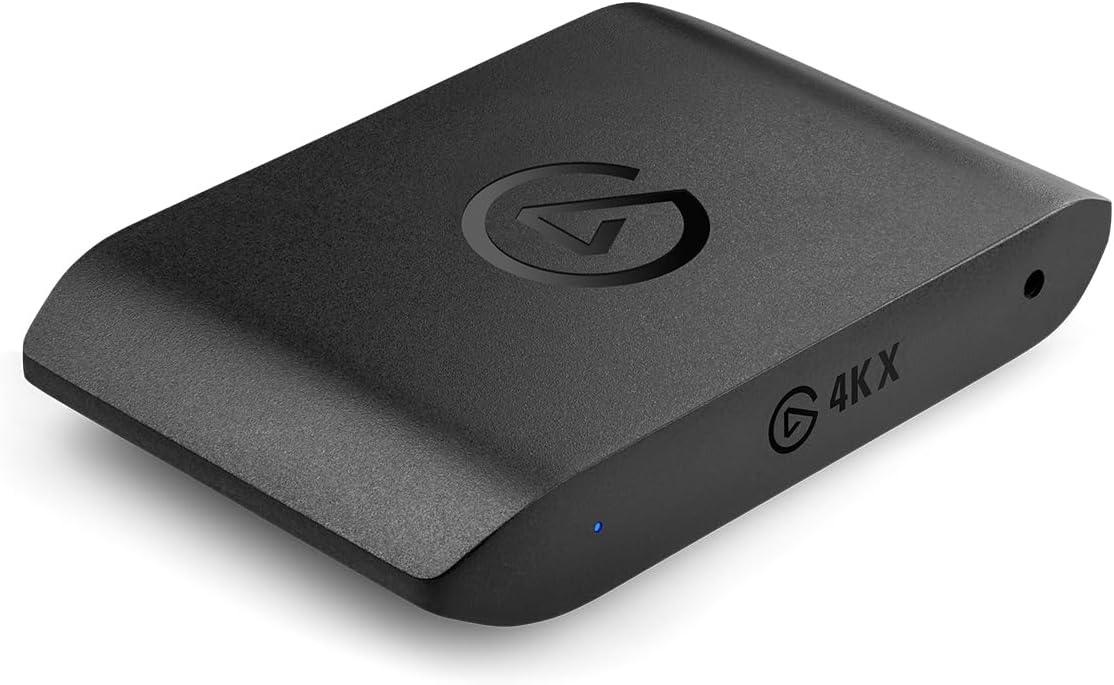
The Elgato 4K X Capture Card is a top-tier device designed for serious streamers who demand high frame rates and crisp visuals. It holds a strong 4.5 rating from users who praise its ability to handle modern gaming consoles and PCs with ease. The standout quality here is its HDMI 2.1 support which unlocks 4K at 144fps capture without compromising on latency.
We may earn a commission when you buy through this link, at no additional cost to you.
This card shines in dual PC setups where synchronization between gameplay and broadcast is critical. The USB 3.2 Gen 2 interface ensures that data transfer is fast enough to keep your stream smooth even during intense action scenes. Variable Refresh Rate passthrough keeps your gameplay fluid on your monitor while you record the action on your stream PC.
While the performance is excellent, the price reflects the premium technology packed inside. You need a system that can fully utilize HDMI 2.1 features to get the most out of this device. If you are streaming from a standard console without high refresh rate support, you might not see the full benefit of these specs.
Buyers should choose this if they need the best possible capture quality for 4K gaming and want a reliable tool that works with all major streaming software. It is ideal for professionals who need consistent performance and advanced features like VRR to avoid visual artifacts during live broadcasts.
Capture up to 4K144fps to ensure every movement in your game is recorded with precision and clarity.
Variable Refresh Rate passthrough keeps gameplay smooth on your monitor while you capture the action.
We may earn a commission when you buy through this link, at no additional cost to you.
This 4K Internal Capture Card offers a robust solution for streamers who want to install hardware directly into their desktop PC for stable performance. With a 4.3 rating it is praised for handling high resolution content without introducing noticeable lag. The internal design means it bypasses USB bottlenecks which can be crucial for dual PC setups.
We may earn a commission when you buy through this link, at no additional cost to you.
Its ability to capture and pass through 4K60 video ensures that you do not lose visual quality while streaming. The near-zero latency passthrough allows you to see your game on your main monitor with instant feedback while the stream PC handles the recording. High-speed recording at 240fps in 1080p is also available for slower playback content.
Installation requires opening your PC case and finding a free PCIe slot which might not be feasible for all users. Unlike external cards this device does not offer USB connectivity for quick swapping between devices. Users should ensure their motherboard supports the PCIe interface before purchasing this model.
If you prefer a permanent installation that maximizes bandwidth and stability this card is a strong contender. It is best suited for users who already have a dedicated streaming PC and need a reliable way to ingest video signals directly into the system.
Installing the card directly into a PCIe slot ensures stable performance without USB connection issues.
Capture high-motion action with 240fps recording at 1080p for detailed playback.
We may earn a commission when you buy through this link, at no additional cost to you.
The RØDE X Streamer X is a compact and fully integrated audio interface and video capture device designed for streaming. It holds a 3.8 rating which suggests mixed user experiences but highlights its unique features like dual USB-C outputs. This allows you to connect to two computers simultaneously to capture video from one and stream on another.
We may earn a commission when you buy through this link, at no additional cost to you.
Audio quality is a major focus with a high-quality Neutrik combo input and Revolution Preamp for broadcast-grade audio. You can record video up to 4K at 30fps or 1440p at 60fps and monitor in real time up to 4K at 60fps. The onboard wireless receiver supports RØDE Series IV products like Wireless GO II for cable-free operation.
The 4K capture is limited to 30fps which may not satisfy gamers who need higher frame rates for fast action. The lower rating indicates some users found setup or compatibility issues compared to more specialized capture cards. You should consider whether the audio features outweigh the video limitations for your specific setup.
This device is ideal for creators who want a single unit for both audio and video without adding separate hardware. It works well for talk shows or educational streams where high frame rates are less critical than audio clarity and dual computer connectivity.
Connect microphones or line-level devices with professional-grade inputs directly to the unit.
Connect two computers simultaneously to capture video from one and stream on another.
We may earn a commission when you buy through this link, at no additional cost to you.
The Elgato 4K Pro Internal Capture Card stands as a premium choice for streamers who want maximum resolution support and internal stability. With a 4.5 rating users appreciate its ability to handle 8K60 passthrough while capturing in stunning 4K60 quality. This ensures you can monitor your game in high resolution while recording efficiently on your stream PC.
We may earn a commission when you buy through this link, at no additional cost to you.
HDMI 2.1 in/out allows you to record high frame rates up to 240fps in pristine 1080p resolution. Variable Refresh Rate passthrough eliminates screen tearing which is crucial for smooth gameplay visual during streaming. The internal design connects directly to your PC which reduces latency and improves data throughput compared to USB models.
Installing an internal card requires opening your computer case which may void warranties on prebuilt systems. The price is higher than external options but justified by the 8K passthrough capability. If you do not need 8K support this might be overkill for your workflow but future-proofs your setup for next-gen consoles.
This card is perfect for advanced users who want the highest possible quality and are comfortable with internal hardware installation. It offers unparalleled synchronization between broadcast and gameplay ensuring every moment is captured with precision for professional results.
Immerse yourself in pure gameplay at an astounding 8K60 resolution while capturing in 4K60.
Harness the power of internal connectivity for faster data transfer and reduced latency.
We may earn a commission when you buy through this link, at no additional cost to you.
This budget-friendly capture card provides a simple way to start streaming from various HDMI devices without complex setups. It holds a 4.3 rating and is ideal for capturing up to 1080p at 60fps. Video input supports 4K30/60Hz but output supports up to 2K30Hz so you get a reliable HD feed for streaming.
We may earn a commission when you buy through this link, at no additional cost to you.
The plug and play design means no driver or external power supply is required. Once plugged in the device is identified automatically as a webcam for easy integration with OBS or other software. It supports multiple systems including Windows and Mac OS and works well with cameras and consoles like PS5 and Xbox.
While it captures 4K input the output is limited which might be a trade-off for some users. There is no delay during game play but high frame rates above 1080p are not available. If you stream at standard HD this device performs reliably without consuming much CPU power.
Buyers looking for an entry-level solution will find this card meets basic needs well. It is great for casual streamers who want to add commentary using the microphone input and need a device that works across multiple platforms.
No driver or external power supply required for immediate setup and streaming.
Capture one single channel HD HDMI video signal with no delay during game play.
We may earn a commission when you buy through this link, at no additional cost to you.
The PORTTA DX20R captures stunning gameplay in 4K at 60Hz while allowing passthrough for up to 1080p at 240Hz. It holds a 4.2 rating and supports YUY2, NV12, and RGB24 formats for enhanced visual quality. This flexibility ensures you can tailor the capture to your specific streaming needs without compromising on colors.
We may earn a commission when you buy through this link, at no additional cost to you.
Advanced VRR and HDR technology provide superior image quality with smoother gameplay and better contrast. The smart display shows real-time operation parameters and includes a switch for easy ring light control. You can download the CapHub Utility to customize video settings adjust audio mixing and manage EDID or VRR modes.
While the hardware is solid some settings require using the software utility which adds a small setup step. You need a USB 3.0 port to get the best performance and plug-and-play works across Windows, macOS, and Linux. If you prefer purely hardware controls this might be less appealing than a simpler device.
This card is a good middle ground for streamers who want high resolution and high frame rates without a steep price. It is compatible with major platforms like PS5 and Xbox and integrates well with OBS for a professional streaming experience.
Enjoy superior image quality with Variable Refresh Rate and High Dynamic Range for smoother gameplay.
Real-time operation parameters and a smart switch for easy display and ring light control.
We may earn a commission when you buy through this link, at no additional cost to you.
The acer USB 3.0 HDMI Capture Card offers stunning clarity with 4K input and smooth 1080P at 60Hz output. It holds a 4.4 rating which reflects its reliability and value. Featuring YUY2 technology it delivers richer colors than MJPEG for lifelike live streaming and recording without introducing high latency.
We may earn a commission when you buy through this link, at no additional cost to you.
Mic-in allows you to plug in a headset or mic directly to stream voice easily without extra adapters. This keeps your voice synced perfectly with video eliminating post-editing hassle. The device is small and lightweight making it ideal for outdoor live streams or on-the-go recordings where portability matters.
The output is limited to 1080P at 60Hz which is sufficient for most platforms but not 4K streamers. You do not need extra drivers or power and it works with devices like Switch, PS5, and Xbox. It saves hassle while delivering smooth results for both gaming and teaching environments.
Buyers who need a reliable entry-level option will find this card delivers solid performance at an affordable price. It is perfect for streamers who want to avoid compatibility headaches and keep HD quality intact without spending a fortune.
Delivers richer colors than MJPEG for lifelike live streaming and recording quality.
Plug in a headset or mic directly to stream or record voice easily without extra adapters.
We may earn a commission when you buy through this link, at no additional cost to you.
The XIIXMASK USB 3.0 HDMI Capture Card supports up to 4K60FPS video capture via USB 3.0 and 4K HDMI passthrough. It holds a 4.2 rating and handles high-frame-rate input up to 1920×1080 at 120FPS. This ensures real-time monitoring while recording high-quality video for live streaming or gameplay.
We may earn a commission when you buy through this link, at no additional cost to you.
Video formats including MJPEG, YUY2, NV12, and XRGB offer enhanced flexibility for professional streaming needs. The card includes 3.5mm audio input and microphone output ports for integrating external audio. You can easily connect a headset or mic to embed commentary or ambient sound into your stream without extra equipment.
While it supports broad OS and software compatibility some users might face limitations with older systems. The USB A/C connection adds versatility but ensure your port matches the included cable. It works well with major consoles and streaming apps like OBS, Streamlabs, and VLC for a complete experience.
Choose this if you want a versatile device that handles high frame rates and supports multiple video formats. It is suitable for online meetings and live editing needs while keeping a compact design that fits easily in your bag.
Handles high-frame-rate input and recording up to 1920×1080 at 120FPS.
This USB 3.0 capture card includes 3.5mm audio input and microphone output ports.
We may earn a commission when you buy through this link, at no additional cost to you.
The Osee GoStream M2 Capture Card features two 4K60 HDMI inputs to connect with two different streaming sources. It holds a 4.2 rating and outputs 1080p at 60fps which you can connect with your TV or laptop. This dual input capability is ideal for switching between game and camera feeds seamlessly.
We may earn a commission when you buy through this link, at no additional cost to you.
Audio Video Capture features include a built-in 3.5mm Microphone and Audio Input/Output Port for embedding commentary directly. USB 3.0 increases transmission rate and due to low latency you can project real-time game screen to your TV or tablet with no delay. The card supports PIP and PBP video effects allowing diverse needs for live conferences.
While it supports dual inputs the output resolution is capped at 1080P which might be a limitation for high-resolution viewers. You need to use the switch button to change between PBP layouts which might take practice to master. It works with mainstream systems and platforms without requiring driver installation.
This card is a great choice for streamers who need to manage multiple video feeds without buying separate hardware. It is suited for streaming platforms like YouTube and Twitch while providing a flexible solution for live content creation and gaming.
Two 4k60 HDMI inputs to connect with two different streaming source such as camera and gaming device.
This usb video capture card supports PIP and PBP video effects with switch button for layouts.
We may earn a commission when you buy through this link, at no additional cost to you.
The AVerMedia GC575 Live Gamer is an internal PCIe capture card built for 4K60 recording with ultra-low latency. It holds a 4.3 rating and supports HDMI 2.1 to level up gameplay with refresh rates up to 240Hz. This makes it suitable for high-performance consoles and PCs where speed and resolution are critical.
We may earn a commission when you buy through this link, at no additional cost to you.
You can record 4K60 footage without losing quality or frame rate thanks to the PCIe connection which provides direct bandwidth. The ultra-low latency ensures that your gameplay on your main monitor remains responsive while the capture happens in the background. It is compatible with PS5, Xbox Series X/S, and Switch games seamlessly.
Installing this card requires opening your PC case and ensuring your motherboard has a free PCIe slot. While it is a solid performer you may find it less flexible than external USB models if you swap PCs often. The price reflects the internal build quality and HDMI 2.1 compatibility.
Choose this if you want a dedicated internal solution that guarantees high refresh rates and stable capture. It is best for users who prioritize performance and latency and have a dedicated streaming PC for their setup.
Level up your gameplay with support for refresh rates up to 240Hz for smooth action.
HDMI 2.1 Internal PCIe Capture Card for Streaming and Recording 4K60 with Ultra-Low Latency.
We may earn a commission when you buy through this link, at no additional cost to you.
Selecting the right capture card involves understanding your streaming needs, hardware compatibility, and budget constraints.
Check whether the capture card supports your desired resolution like 4K or 1080p and frame rates such as 60fps or 144fps. Higher frame rates ensure smoother video for fast-paced games but may require more powerful hardware.
Choose a card that matches your source device capabilities to avoid bottlenecks in your stream quality.
Decide between external USB cards and internal PCIe cards. External cards are portable and easy to swap but may have bandwidth limits. Internal cards offer better stability and bandwidth for dedicated streaming PCs.
Ensure your system has the necessary ports such as USB 3.0 or free PCIe slots for installation.
Low latency is critical for real-time streaming so look for cards that promise minimal delay between gameplay and capture. This ensures your reactions appear instantly on stream without lag.
Prioritize ultra-low latency models to maintain audience engagement and gameplay synchronization.
Modern consoles often use HDMI 2.1 so confirm the capture card supports this standard for high frame rates and resolutions. Older cards might support HDMI 2.0 which limits bandwidth.
Select a card with HDMI 2.1 to future-proof your setup for next-gen gaming devices.
Ensure the capture card works with your preferred streaming software like OBS or Streamlabs. Most models offer plug-and-play support with Windows and Mac OS.
Check for utility software that allows audio mixing or firmware updates to enhance performance.
Passthrough lets you monitor your game on your main monitor while streaming. Look for cards that support VRR or high refresh rates in passthrough to avoid tearing.
Choose a model with clean passthrough to maintain smooth gameplay visuals during broadcast.
Some capture cards include mic-in or audio mixing options which simplify your setup by reducing extra hardware. If you rely on external microphones ensure the card supports 3.5mm inputs.
Opt for units with integrated audio interfaces if you want a streamlined streaming workstation.
Budget-friendly options exist but may lack advanced features like 4K60 capture. Invest more if you need high frame rates or internal stability. Warranty support varies by brand.
Consider lifetime warranty options and customer service responsiveness before finalizing your purchase.
Begin by connecting the HDMI cable from your game console or camera to the capture card's input. Ensure the card is securely installed either via USB or internal PCIe slot for stable data transfer.
Install any necessary drivers or software utilities that come with the device to configure audio mixing or video settings. Most modern cards are plug and play but firmware updates can improve performance.
Regularly clean the device and ports to prevent dust buildup that might interfere with connections. Store external cards in protective cases if you transport them often to avoid physical damage.
A dual PC streaming setup capture card allows one computer to play games while another handles the streaming tasks. It captures video from the gaming PC and sends it to the streaming PC via USB or PCIe to reduce load on the main machine.
If you stream games that support high refresh rates like 120fps or 144fps you will need HDMI 2.1 support. Older HDMI 2.0 cards may limit you to 60fps which can result in choppy footage for fast action content.
Most modern capture cards are plug and play and do not require driver installation on Windows or Mac. However using manufacturer software can provide better control over settings like audio mixing or firmware updates.
In a dual PC setup the gaming PC performance should not be affected since the capture card sends the video to a separate system. If using a single PC the encoding load may impact frame rates depending on the card and hardware.
Screen tearing occurs when your monitor refresh rate and game frame rate are mismatched. Ensure your capture card supports VRR passthrough or adjust your monitor settings to match your game frame rate for smooth visuals.
Some capture cards like the Osee GoStream M2 support dual HDMI inputs to connect multiple sources. Most standard cards accept only one HDMI input so you need a switch if you want to connect multiple devices.
Audio delay can be fixed by adjusting sync settings in your streaming software. Ensure your microphone and capture card inputs are properly calibrated to match video timestamps for synchronized sound.
Internal capture cards offer better bandwidth and stability since they connect directly to the motherboard. External cards are more portable but may be limited by USB connection speed.
The Elgato 4K X Capture Card leads our list for its unmatched performance and HDMI 2.1 support ideal for high frame rate streams. Our top picks offer options across different budgets to suit every creator's needs and technical requirements.
Prioritize low latency and resolution support to ensure your gameplay looks professional and smooth during live broadcasts. Consider your available ports and internal slots to choose the right form factor for your streaming PC.
Always check current prices and availability before purchasing as deals may vary over time. With the right hardware you can deliver crisp visuals and smooth streams to your audience every time.