
INSWAN INS-1 Classic USB Document Camera Webcam
4.6Editor score
Built-in LED Light
Anti-Glare Sheet Included
Free Documate Software
This guide compares the best document cameras with zoom features for teachers and professionals, evaluating image quality, connectivity, and ease of use.
Document cameras with powerful zoom capabilities are essential tools for modern educators and presenters who need to showcase detailed materials clearly. Whether you are teaching online or demonstrating hardware components, a high-quality camera ensures every detail is visible to your audience without distortion or blur.
We evaluated ten top-rated models based on optical performance, digital zoom range, connectivity options, and overall build quality. Our analysis focuses on how well each device handles magnification while maintaining sharpness and color accuracy during live streaming or recorded sessions.
Each selection highlights specific strengths such as low-light performance, portability, or advanced software integration. Please note that product availability and pricing may change frequently, so always verify current details before making a purchase decision for your classroom or office setup.
4.6Editor score
4.5Editor score

4.5Editor score
The following table provides a side-by-side comparison of the ten selected document cameras, highlighting their key specifications and unique features to help you choose the right model for your specific needs.


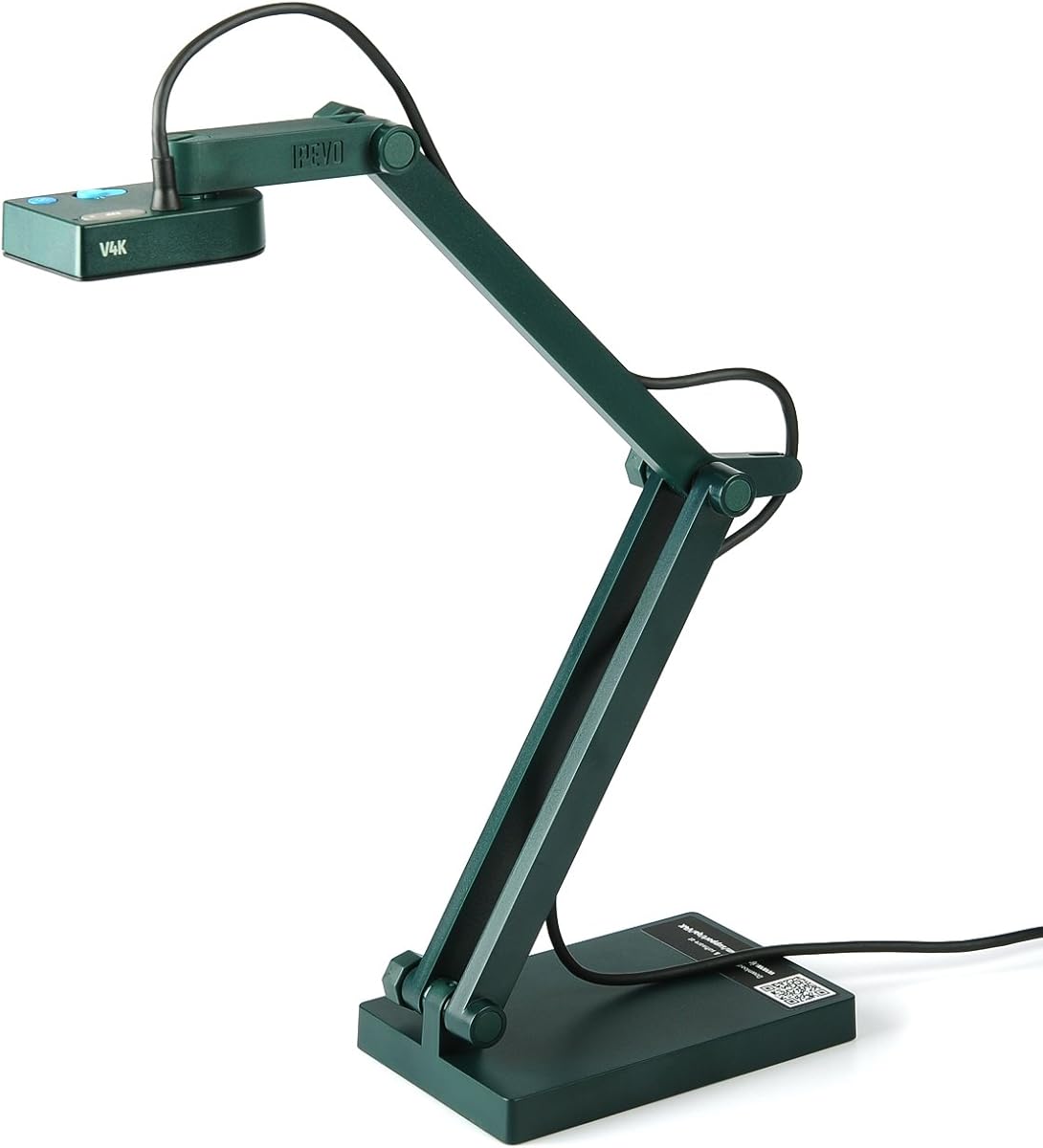
The IPEVO V4K stands out as a top-tier document camera offering exceptional image quality with its 8-megapixel Sony CMOS sensor. It delivers ultra-high-definition live images up to 3264 x 2448 pixels and streams smoothly at up to 30 frames per second in full HD, making it ideal for detailed demonstrations.
We may earn a commission when you buy through this link, at no additional cost to you.
Its fast focusing speed minimizes interruptions when switching between different materials during lessons or presentations. The multi-jointed stand provides flexible positioning to capture both flat documents and 3D objects effectively, while the Sony sensor ensures excellent noise reduction and color reproduction even in dimly lit environments.
While it lacks optical zoom and HDMI output, the digital capabilities and software support compensate well for most educational and professional use cases. The stand design is robust enough for daily use though some users may need to tighten joints over time due to wear.
Educators and remote workers seeking a reliable balance between performance and affordability will find this model highly suitable for virtual classrooms or web conferencing needs.
The 8MP Sony CMOS sensor captures fine details with minimal noise, ensuring text and graphics remain legible even when magnified significantly during live sessions.
The multi-jointed stand allows users to adjust angles freely, accommodating various presentation styles from overhead document display to 3D object showcasing.
We may earn a commission when you buy through this link, at no additional cost to you.
The INSWAN INS-1 offers remarkable value for users seeking a cost-effective document camera without sacrificing core imaging capabilities. It features an 8-megapixel Sony camera that captures live images at up to 3264 x 2448 pixels with lag-free streaming at 30 frames per second across all resolutions.
We may earn a commission when you buy through this link, at no additional cost to you.
Its space-saving multi-joint design supports a generous viewing size of 14.72 x 11 inches, making it suitable for A3-sized documents. The inclusion of an anti-glare sheet and adjustable LED brightness helps manage exposure challenges in varying lighting conditions without needing extra equipment.
While it lacks autofocus and advanced hardware zoom, the bundled Documate software provides digital zoom and annotation tools that enhance its utility for classroom presentations. The built-in microphone ensures basic audio capture though external mics may be preferred for critical conferencing.
Budget-conscious educators or home users needing a plug-and-play solution for live demos or distance learning will appreciate its simplicity and strong imaging performance at this price point.
The 7-segment brightness control and anti-glare sheet allow users to optimize image exposure manually, reducing reflections and glare during document capture.
The free Documate software adds value with features like image flip rotation and digital zoom enabling enhanced presentation capabilities without hardware upgrades.
We may earn a commission when you buy through this link, at no additional cost to you.
The Elmo TT-12W represents a premium document camera solution designed for advanced educational environments requiring versatile zoom and connectivity. It offers an impressive 192x total zoom combining 12x optical and 16x digital capabilities allowing extreme magnification while maintaining image stability and clarity.
We may earn a commission when you buy through this link, at no additional cost to you.
Powered by Android this device supports a wide range of educational apps directly without needing external computers. Its connectivity suite includes HDMI in and out RGB USB Ethernet and Wi-Fi enabling flexible integration into complex classroom AV systems or networked presentations.
The built-in remote control dock ensures easy access to adjustments during live sessions and the multiple auto focus options cater to different object distances. Despite its high cost and setup complexity the features justify the investment for institutions needing robust multimedia presentation tools.
Schools and corporate training centers requiring high optical zoom and networked display capabilities will find this model a powerful upgrade over basic USB document cameras.
The 12x optical zoom preserves image quality at high magnifications unlike digital-only zoom which can pixelate details when enlarging distant objects.
Android support allows standalone use with educational apps reducing dependency on connected PCs and simplifying setup for standalone projector connections.
We may earn a commission when you buy through this link, at no additional cost to you.
The Epson DC-13 focuses on delivering high-definition visual output through HDMI connectivity ensuring compatibility with projectors and displays without computer mediation. Its 1080p resolution and 16x digital zoom provide clear imagery for standard document and object presentations in classroom settings.
We may earn a commission when you buy through this link, at no additional cost to you.
A unique feature is the included microscope adapter which supports many standard microscopes allowing biology and science classes to project microscopic samples directly. The built-in microphone and included software enable one-touch audio and video recording for creating lesson archives easily.
However the lower user rating suggests potential usability issues or limited feature depth compared to competitors. The digital zoom alone may not satisfy users needing extreme magnification without loss of detail in scientific demonstrations.
Educators requiring simple HDMI integration and microscope support for basic science lessons may find this model practical despite its narrower feature set.
The included adapter connects standard microscopes to the camera expanding its utility for science education by projecting lab specimens to larger screens.
HDMI connectivity allows direct connection to monitors or projectors bypassing computers for simpler setup in classrooms with existing AV equipment.
We may earn a commission when you buy through this link, at no additional cost to you.
The THUSTAR 8MP document camera emphasizes flexibility with adjustable LED lighting and image reversal options for diverse presentation needs. Its 8-megapixel sensor delivers ultra-high-definition images and videos up to 2448P with smooth 30fps streaming for real-time transmission during calls.
We may earn a commission when you buy through this link, at no additional cost to you.
Three levels of adjustable LED brightness help eliminate shooting problems under difficult lighting conditions allowing clear capture in both dark and bright environments. The dual microphones reduce ambient noise improving audio quality for remote conferencing sessions without external hardware.
Manual image reversal and adjustable brightness controls give users precise control over visual output though the camera lacks optical zoom for extreme magnification tasks. The foldable design makes it portable and space-efficient for mobile educators or home office use.
Presenters needing adaptable lighting control and portability for live demos or distance education will find this model a balanced choice for typical classroom lighting scenarios.
Adjustable ring lamp beads provide three brightness levels to match ambient room conditions ensuring clear images regardless of environmental lighting.
Built-in dual silicon microphones reduce noise effectively improving sound clarity during video chats or recorded lessons without additional equipment.
We may earn a commission when you buy through this link, at no additional cost to you.
The PAKOTOO document camera supports A3 format coverage allowing larger documents or artworks to be displayed without repositioning. Its flexible hose structure enables angle adjustments to capture images from various perspectives ideal for 3D demonstrations or uneven objects.
We may earn a commission when you buy through this link, at no additional cost to you.
Three levels of LED fill light and 5-level IOS exposure controls help achieve sharp images in imperfect lighting conditions. The dual microphones reduce noise enhancing audio clarity for virtual meetings or recorded lessons without external hardware.
Setup requires manual configuration to select USB camera in the system settings which may complicate initial use. The lack of autofocus means users must manually adjust focus for different object distances during presentations.
Users needing large document coverage and flexible angle options will appreciate this model despite the initial setup requirements.
Maximum A3 paper size coverage eliminates the need to reposition large documents repeatedly ensuring continuous presentation flow.
Hose structure allows capturing images from multiple angles facilitating 3D object display and creative presentation styles.
We may earn a commission when you buy through this link, at no additional cost to you.
The IPEVO VZ-R supports HDMI USB dual mode allowing direct connection to projectors or computers without additional software. Its 8MP Sony sensor captures up to 3264 x 2448 images in USB mode ensuring high clarity during live presentations or remote teaching sessions.
We may earn a commission when you buy through this link, at no additional cost to you.
The built-in LED provides sufficient lighting for capturing material in dimly lit environments while the glass fiber reinforced stand ensures durability during daily use. Tactile buttons on the body enable instant image adjustments without relying on a connected PC.
Lack of included HDMI cable and power adapter may require extra purchases for standalone projector setups. However the flexibility to operate with or without a computer makes it versatile for various classroom configurations.
Educators needing a portable standalone document camera that integrates easily with existing AV systems will find this model highly effective.
Direct HDMI connection allows projection without a computer simplifying setup and reducing potential connectivity issues in classrooms.
Glass fiber reinforced stand provides increased durability and portability for daily use ensuring longevity in active educational settings.
We may earn a commission when you buy through this link, at no additional cost to you.
The OKIOCAM S2-4K features OKIOPoint AI tracking software that zooms and follows pointer movements in real-time simplifying teaching focus. Its 8MP Exmor R CMOS sensor captures images up to 3264 x 2448 pixels with smooth 30fps streaming suitable for presentations and web conferencing.
We may earn a commission when you buy through this link, at no additional cost to you.
The back-illuminated sensor design doubles light sensitivity reducing noise and glare without supplemental LEDs. This makes it effective even under faint projector light ensuring vibrant colors and sharp images during typical classroom sessions.
AI tracking and annotation tools enhance student engagement but rely on software installation. While optical zoom is limited the near-Ledger capture area allows large documents to be displayed fully.
Presenters needing interactive software tools and low-light performance will find this camera a modern solution for hybrid learning environments.
OKIOPoint software zooms and follows pointers in real-time allowing teachers to highlight details without manually adjusting focus.
Back-illuminated Exmor R sensor improves light capture reducing noise and glare for clearer images in varying lighting conditions.
We may earn a commission when you buy through this link, at no additional cost to you.
The IPEVO V4K PRO offers a 120-degree wide-angle lens capturing expansive visuals ideal for tabloid-size documents and larger objects. Its 4K resolution and Sony CMOS sensor deliver crystal-clear detail with AI noise reduction improving video call quality in various environments.
We may earn a commission when you buy through this link, at no additional cost to you.
Swift autofocus allows quick adjustments when switching between materials while the portable design makes it easy to move between classrooms or home offices. Built-in LED light ensures sufficient illumination during presentations or recorded sessions.
Limited optical zoom may restrict extreme magnification needs but the wide-angle capabilities compensate for standard document display. Users seeking a versatile webcam alternative with enhanced clarity will appreciate this model's compact form and software integration.
Remote workers and educators needing wide-field coverage for group presentations will find this camera highly effective.
120-degree FOV captures expansive visuals allowing multiple pages or large objects to be displayed fully without moving the camera.
AI noise reduction effectively eliminates background ambient noises improving clarity during video conferencing and live streaming.
We may earn a commission when you buy through this link, at no additional cost to you.
The Elmo TT-12iD offers HDMI input and output enabling integration with other video sources for dynamic multi-source lessons. Its 96x zoom combined with a 3.4-megapixel CMOS sensor ensures smooth moving images at 30 frames per second during demonstrations.
We may earn a commission when you buy through this link, at no additional cost to you.
A built-in switcher allows seamless transitions between connected devices enhancing classroom interactivity. The included remote control simplifies adjustments for teachers during presentations reducing manual handling of the camera.
While zoom options are limited compared to other models the HDMI input capability makes it unique for connecting external media players or laptops directly. High user rating reflects reliability and ease of use in professional educational settings.
Institutions requiring seamless multi-source video integration will find this model a practical choice for advanced classroom technology setups.
HDMI input allows direct connection of external video sources enabling dynamic lessons combining documents with digital media.
Built-in switcher facilitates quick transitions between inputs simplifying multi-source presentations without additional hardware.
We may earn a commission when you buy through this link, at no additional cost to you.
Selecting the right document camera involves evaluating optical and digital zoom capabilities connectivity options image quality and software support. This guide outlines critical factors to consider for educational or professional use.
Optical zoom preserves image quality when magnifying objects while digital zoom enlarges pixels often resulting in loss of clarity. For detailed presentations involving fine text or small objects prioritize models with higher optical zoom ratios to maintain sharpness.
Choose cameras with significant optical zoom if you frequently magnify distant objects while digital zoom suffices for standard document display.
Higher resolution sensors such as 8MP or above capture finer details ensuring legibility when zoomed. Sony CMOS sensors provide better noise reduction and color reproduction especially in varying lighting conditions.
Prioritize high-resolution sensors with proven CMOS technology for clear detailed imaging during live sessions.
USB connectivity is standard for computer integration but HDMI supports direct projection without a PC. Additional ports like Ethernet or Wi-Fi enable networked classrooms or standalone operation with interactive displays.
Select connectivity that matches your classroom AV setup; HDMI is essential for direct projection while USB supports computer-based conferencing.
Smooth video streaming at 30 frames per second prevents lag during live demonstrations and keeps presenters engaged. Lower frame rates may cause jerky motion during fast object movements reducing clarity.
Ensure the camera supports at least 30fps for fluid real-time transmission during lessons or meetings.
Companion software often includes digital zoom annotation recording and image adjustment tools enhancing presentation flexibility. AI-powered features like pointer tracking or noise reduction can streamline teaching workflows.
Evaluate software capabilities to ensure alignment with teaching methods and presentation requirements.
Durable multi-jointed stands and reinforced materials withstand daily handling in classrooms. Foldable designs and lightweight builds support educators who move between rooms or teach remotely.
Invest in robust construction and portable design to ensure longevity and adaptability.
Built-in LED lights with adjustable brightness compensate for dark room conditions reducing shadows and glare. Back-illuminated sensors enhance light sensitivity minimizing the need for extra lighting equipment.
Choose models with adjustable LED lighting and sensitive sensors to maintain clarity in varying illumination.
Plug-and-play functionality supports Windows Mac Chromebook and interactive displays minimizing driver issues. Check OS requirements and supported conferencing software to ensure seamless integration with existing tools.
Prioritize cross-platform compatibility and easy setup to reduce technical barriers during implementation.
Connect the document camera to your computer or projector using the provided USB or HDMI cable and launch your preferred conferencing software. Ensure the camera is positioned securely on the adjustable stand pointing downward toward the presentation area.
Use the focus and zoom controls to frame your document or object clearly adjusting LED brightness to reduce shadows or glare. If using software features enable annotation or digital zoom tools to highlight specific details during live sessions.
After use store the camera in a protective case and avoid exposing it to dust or direct sunlight. Regularly clean the lens with a soft cloth and check stand joints for tightness to maintain performance and durability over time.
Optical zoom uses physical lens movement to magnify images preserving quality while digital zoom enlarges pixels which may reduce clarity. Models with higher optical zoom ratios deliver sharper results when displaying small text or distant objects compared to digital-only alternatives.
Yes some document cameras support HDMI connectivity allowing direct connection to projectors or displays without a computer. These standalone models enable simple presentations and reduce dependency on external computing devices in classroom settings.
Choose a camera with built-in adjustable LED lighting and a back-illuminated sensor for better light capture. Adjust brightness settings to balance ambient light and reduce shadows during presentations in dimly lit rooms.
Most document cameras are compatible with major conferencing software like Zoom Microsoft Teams Google Meet and OBS via standard USB video drivers. Many models also include proprietary software offering additional tools like annotation or recording.
Yes adjustable multi-jointed stands allow the camera to angle toward 3D objects such as lab specimens or models. Cameras with macro focus capabilities can capture details from close distances enhancing 3D presentation quality.
Many modern document cameras support USB-C HDMI or wireless connections compatible with interactive displays. This enables direct projection and annotation on smartboards without requiring a separate computer as a middleman.
Use a soft dry microfiber cloth to gently wipe the lens surface avoiding abrasive materials or cleaning liquids. Regular maintenance prevents dust and smudges from degrading image quality during presentations or recordings.
High-quality document cameras can last five to ten years with proper care and daily usage in educational settings. Durability depends on build quality and handling so choosing robust models ensures longevity and consistent performance.
The top picks in this guide include the IPEVO V4K for overall performance the INSWAN INS-1 for budget-conscious buyers and the Elmo TT-12W for premium advanced features. Each model offers distinct advantages based on zoom range connectivity and software support to match different needs.
Prioritize optical zoom and sensor quality if you frequently present detailed materials or operate in varied lighting. For straightforward needs consider plug-and-play models with USB connectivity and multi-platform compatibility to simplify setup.
Always verify current pricing and availability before purchasing as these factors change frequently. This ensures you obtain the best value and access the latest features for your teaching or professional presentation requirements.