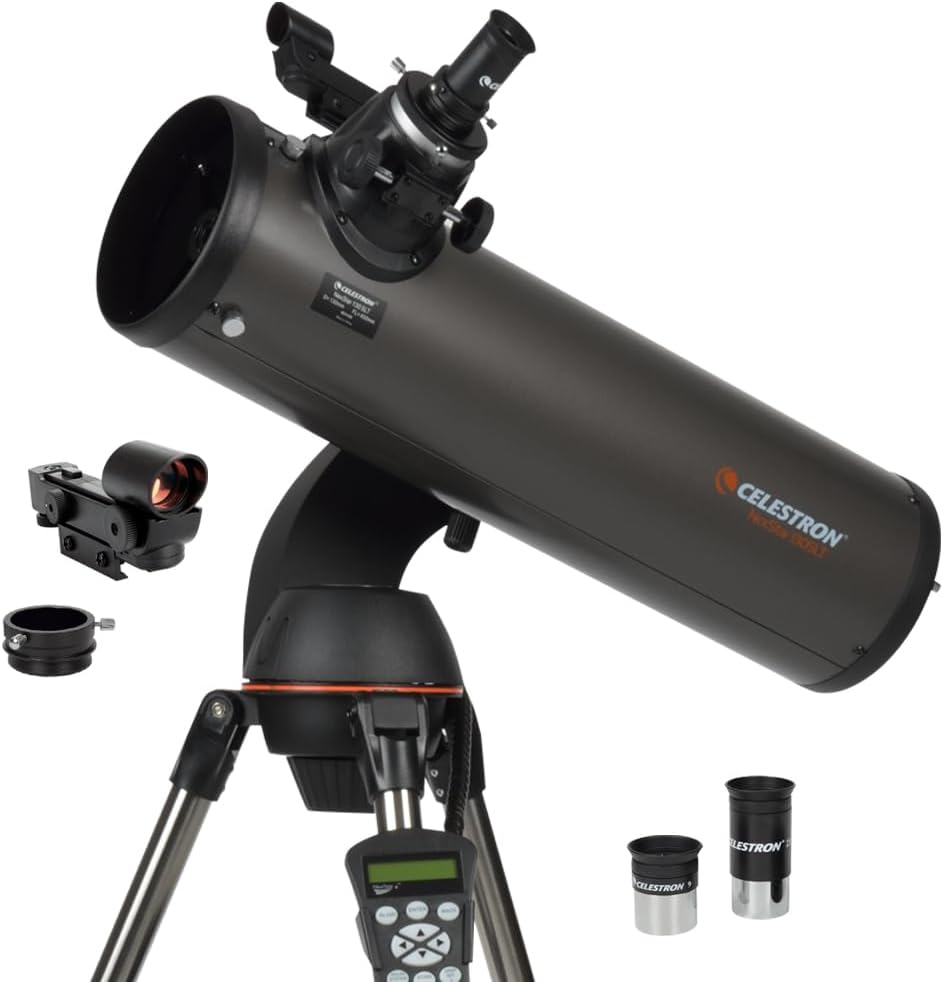
Celestron NexStar 130SLT Newtonian Reflector Telescope
4.4Editor score
Compact and portable design
130mm aperture gathers light
Includes free Starry Night software
Computerized telescopes for adults offer an accessible way to explore the night sky without needing extensive knowledge of constellations. These instruments use automated systems to locate and track celestial objects, making stargazing more enjoyable for beginners and experienced enthusiasts alike.
We evaluated the top models based on optical quality, mount stability, ease of setup, and additional features like app integration. Our selection includes a variety of telescope types, from Schmidt-Cassegrain to Newtonian reflectors, ensuring there is a suitable option for every budget and observation preference.
Each pick highlights specific strengths such as portability, image clarity, or advanced tracking capabilities. Please note that product availability and pricing can change frequently, so verify the current details before making your final purchase decision to ensure you get the best value.
4.4Editor score

4.3Editor score

4.4Editor score
As an Amazon Associate we earn from qualifying purchases.
The following table provides a side-by-side comparison of the ten selected computerized telescopes. Review the key specifications and features for each model to identify which one best aligns with your observation goals and technical requirements.




The Celestron NexStar 8SE stands out as a top choice for adults seeking a powerful yet manageable computerized telescope. With a high rating, it is praised for its ability to reveal detailed views of the Moon and planets while remaining user-friendly.
We may earn a commission when you buy through this link, at no additional cost to you.
Its 8-inch Schmidt-Cassegrain optics gather significant light, making it possible to see cloud bands on Jupiter and faint deep-sky objects. The fully automated GoTo mount ensures you can find thousands of celestial targets without manual star charts.
While the scope is relatively portable, it is heavier than smaller refractors which might require a sturdy vehicle for transport. The power system needs either AC or batteries which is a minor inconvenience but standard for this class of equipment.
This model is ideal for enthusiasts ready to move beyond beginner scopes. It balances optical power with automation features perfectly making it a versatile tool for both visual observation and potential entry-level imaging projects.
The large aperture allows for viewing faint galaxies and nebulae that smaller scopes might miss.
The mount automatically follows celestial objects across the sky ensuring steady views during observation.
We may earn a commission when you buy through this link, at no additional cost to you.
The NexStar 130SLT offers an excellent entry point into computerized astronomy for those mindful of cost. Its high rating reflects user satisfaction with its ability to show clear views of Solar System objects.
We may earn a commission when you buy through this link, at no additional cost to you.
With a 130mm aperture this reflector gathers enough light to see Saturn's rings and Jupiter's details. The compact form factor makes it easy to take to dark sky sites or set up quickly at home.
It is not as powerful as larger aperture models for viewing faint deep-sky objects. The mount is lightweight which is great for portability but might feel less stable in very windy conditions.
This telescope is perfect for beginners or families looking for a shared hobby. It provides a solid balance of performance and price with the added bonus of software to help plan your sessions.
Its lightweight design makes it ideal for weekend trips and casual stargazing anywhere.
The easy setup and guided software help new users learn the sky quickly.
We may earn a commission when you buy through this link, at no additional cost to you.
The Odyssey PRO represents the cutting edge of smart telescopes by integrating digital imaging directly into the viewing experience. Users appreciate its ability to start observing in minutes without complex calibration steps.
We may earn a commission when you buy through this link, at no additional cost to you.
It uses enhanced vision technology to show faint objects that traditional optics might hide. The app interface allows for easy navigation and data export enabling users to participate in real scientific projects.
The price is significantly higher than traditional optical scopes which may not suit all budgets. It focuses heavily on digital imaging rather than pure visual observation through glass optics.
This unit is ideal for tech-savvy adults who want convenience and imaging capabilities. It removes the barriers of traditional astronomy making it possible to enjoy deep space views with minimal setup time.
Built-in sensors enhance the view allowing you to see faint details easily.
Users can export data for scientific campaigns helping real-world research efforts.
We may earn a commission when you buy through this link, at no additional cost to you.
The NexStar 5SE is a compact version of the popular SE series offering a balance of portability and optical power. It is well rated for its ease of use and quality of views.
We may earn a commission when you buy through this link, at no additional cost to you.
The 5-inch aperture is sufficient for detailed planetary views and bright deep-sky objects. The integrated wedge allows for basic astrophotography without needing extra accessories making it versatile for imaging.
While it is lighter than the 8SE it may struggle with wind if the mount is not heavy enough. The optics are high quality but the smaller size means fainter objects are harder to see.
This scope suits those who value travel and quick setup over maximum aperture. It is an excellent mid-tier option for adults who want reliable automated tracking in a manageable package.
The included wedge makes it easier to capture long-exposure images of the sky.
SkyAlign technology allows for fast setup and ready to observe in minutes.
We may earn a commission when you buy through this link, at no additional cost to you.
The 114LCM is designed to be an affordable and simple introduction to computerized astronomy. It receives positive feedback for its user-friendly features that make stargazing accessible.
We may earn a commission when you buy through this link, at no additional cost to you.
Its 114mm aperture provides clear views of the Moon and planets. The Sky Tour button generates a list of objects to view which is helpful for users unsure of what to observe.
It is a lightweight telescope that is not built for heavy-duty professional use. The aperture is small compared to premium models limiting its ability to show faint nebulae and galaxies.
This model is best suited for casual observers or children learning about space. It offers a low barrier to entry with all necessary accessories included to start using it right away.
The button suggests viewing targets based on current sky conditions automatically.
Eyepieces and finderscope are included so you can start observing immediately.
We may earn a commission when you buy through this link, at no additional cost to you.
The 127SLT uses a Maksutov-Cassegrain optical design which is known for sharp high contrast images. It is rated well for its ability to show fine details on planets and the Moon.
We may earn a commission when you buy through this link, at no additional cost to you.
With a 127mm aperture it gathers good light for Solar System viewing. The tube is compact which aids in transport but the longer focal length means it may take time to cool down.
It is a sturdy telescope that performs well in various conditions. However the optics require thermal stability for the best performance which can be a minor inconvenience in changing weather.
This scope is a good choice for those wanting high detail on planets. It combines the automation of the SLT series with optics that offer clear and sharp visual experiences.
The optical design provides high contrast ideal for viewing planetary surface features.
The GoTo system works efficiently making navigation quick and accurate.
We may earn a commission when you buy through this link, at no additional cost to you.
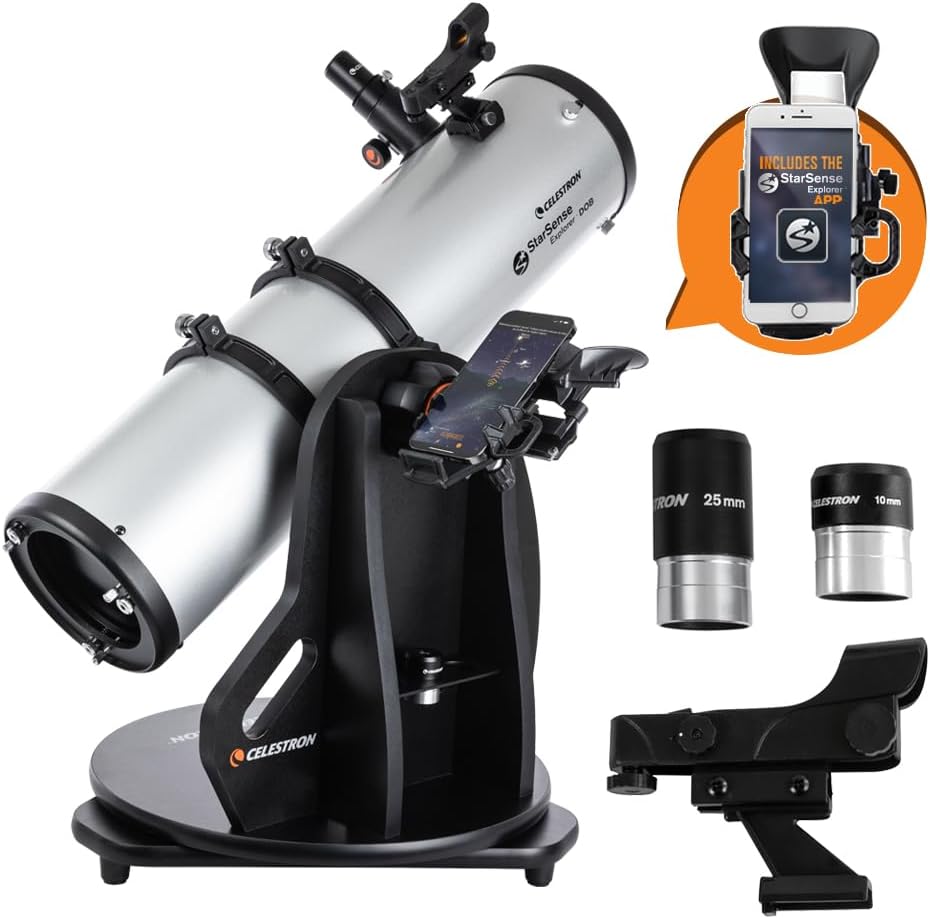
The StarSense Explorer uses a unique app-based system to locate objects without traditional alignment procedures. It has a strong rating for its innovative approach to amateur astronomy navigation.
We may earn a commission when you buy through this link, at no additional cost to you.
It features a 150mm aperture which provides bright views of deep-sky objects. The tabletop Dobsonian base is simple to set up and easy to move to different viewing locations.
The system relies on your smartphone which requires a compatible device and battery. It does not track objects automatically so you must manually adjust the scope to keep targets in view.
This telescope is great for users who want a large aperture without complex setup. It is ideal for casual observation where ease of use is more important than automated tracking capabilities.
The app recognizes the sky and guides you to targets with on-screen arrows.
The large mirror collects significant light for clear views of faint objects.
We may earn a commission when you buy through this link, at no additional cost to you.
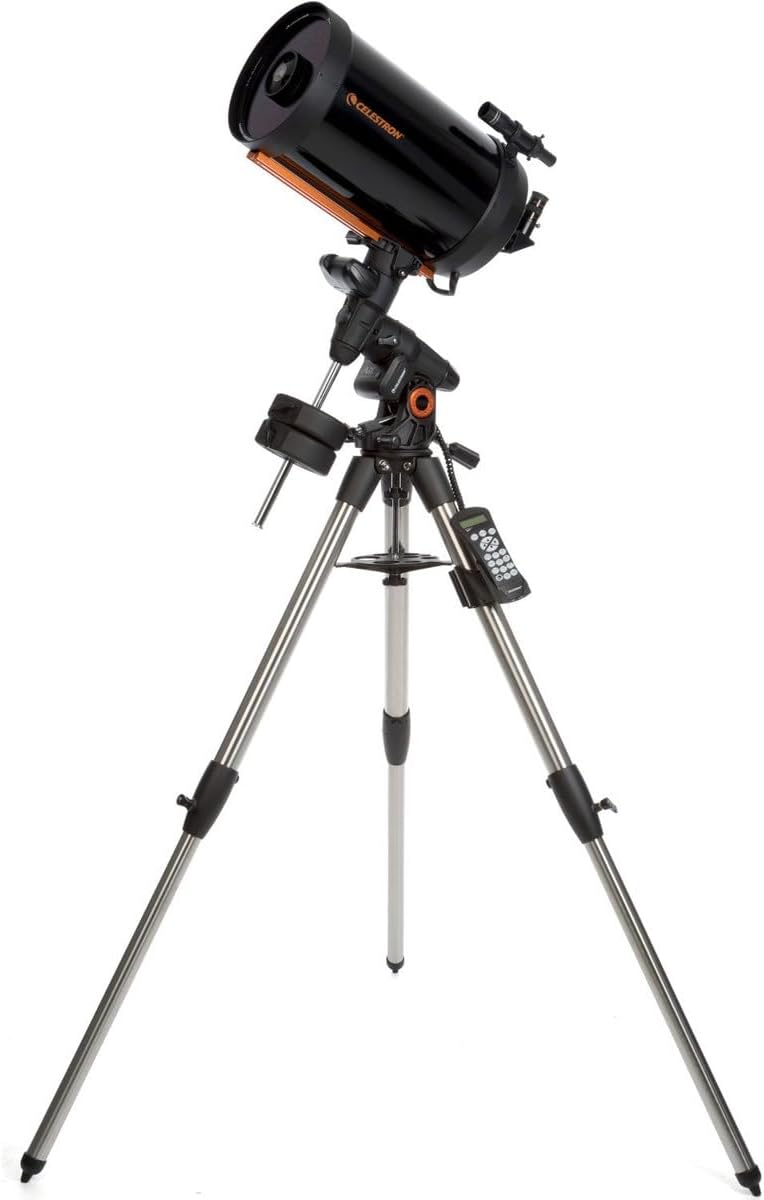
The Advanced VX 8 combines a large aperture with a robust German Equatorial mount designed for stability and imaging. It is rated well for its solid build and optical quality.
We may earn a commission when you buy through this link, at no additional cost to you.
With an 8-inch Schmidt-Cassegrain tube this system offers exceptional light gathering and resolution. The tripod provides a stable platform that minimizes vibrations for clear steady views.
Setting up the mount requires polar alignment which is more complex than alt-azimuth systems. The weight of the setup means it is less portable than smaller table top models.
This is an excellent choice for serious amateur astronomers interested in long exposure imaging. It provides the precision needed for tracking objects accurately during extended photography sessions.
The heavy-duty mount ensures steady images even with heavy equipment attached.
The mount is capable of supporting cameras for serious astrophotography projects.
We may earn a commission when you buy through this link, at no additional cost to you.
The 9.25-inch version offers immense light grasping power for the most demanding observers. It has a high rating for its ability to reveal incredible detail in both planetary and deep-sky targets.
We may earn a commission when you buy through this link, at no additional cost to you.
The large aperture allows for high magnification views that remain sharp and bright. The Advanced VX mount ensures smooth tracking which is vital for holding steady images of faint objects.
Its physical size and weight make it a permanent or semi-permanent setup option. You will need a strong vehicle and significant effort to move this system to new locations.
This is a top choice for dedicated hobbyists who prioritize optical performance above all. It provides the brightness and clarity needed to see faint galaxies and nebulae with stunning detail.
The 9.25-inch aperture captures enough light to see the faintest galaxies.
Magnification can be pushed high while maintaining image clarity and brightness.
We may earn a commission when you buy through this link, at no additional cost to you.
The Advanced VX 6 is a smaller version of the equatorial setup providing stability in a more manageable size. It is highly rated for its optical coatings and precise tracking capabilities.
We may earn a commission when you buy through this link, at no additional cost to you.
Its 6-inch aperture is well suited for planetary and lunar viewing. The long focal length provides high resolution images which are enhanced by the StarBright XLT coatings.
While smaller than the larger VX models it still requires polar alignment to work correctly. It offers a good balance of performance and portability for those interested in the EQ format.
This scope is suitable for intermediate users ready to learn equatorial mount operations. It delivers clear bright views and serves as a solid stepping stone into more advanced imaging techniques.
The coatings enhance brightness and contrast for clearer views of objects.
The tripod and mount combination provides a stable platform for observation.
We may earn a commission when you buy through this link, at no additional cost to you.
Selecting the right computerized telescope involves considering several technical factors to ensure you get a system that matches your goals. This section breaks down the key elements to help you make an informed decision.
Aperture determines how much light the telescope collects which directly impacts how faint objects you can see. Larger apertures are better for deep-sky viewing while smaller ones are lighter and more portable.
Choose the largest aperture your budget and transport options allow for the best viewing experience.
There are two main mount types: Alt-Azimuth and Equatorial. Alt-Azimuth scopes move up and down and left to right which is easier for visual observing. Equatorial mounts track objects along the Earths axis which is better for long-exposure imaging.
Pick Alt-Azimuth for ease of use or Equatorial if you plan to do serious photography.
A GoTo system automates the process of finding celestial objects using a database of stars and planets. Look for a system with an intuitive hand control or app interface that simplifies alignment.
Ensure the mount supports automatic tracking so objects stay in view while you observe.
Consider where you will use the telescope. If you plan to travel to dark sites a lighter scope or tabletop model is advantageous. If it stays in your backyard weight is less of a concern.
Prioritize a design that fits in your vehicle if you plan to move it regularly.
The quality of the lenses or mirrors affects the sharpness and contrast of the image. High-quality coatings reduce glare and improve transmission of light for clearer views.
Look for reputable brands that guarantee optical quality and offer good warranty support.
Computerized telescopes require power to run the motors and electronics. Some use AC adapters which limit you to backyard use while others use rechargeable batteries for flexibility.
Check the power requirements to ensure you can use the scope in your preferred location.
Modern scopes often come with planning software or apps to help you organize viewing sessions. These tools can simulate the sky and provide information about what you are observing.
Choose a model that includes helpful digital tools to enhance your learning experience.
Prices vary widely from affordable entry models to professional-grade systems. Determine your spending limit before shopping to avoid overspending on features you might not need.
Set a realistic budget that allows for necessary accessories like sturdy tripods and eyepieces.
Start by setting up your telescope on a stable surface in an area with minimal light pollution. Ensure the mount is level and the tripod legs are securely tightened to prevent wobbling during use.
Turn on the power and follow the alignment instructions on the hand control or app. This usually involves pointing the telescope at a few bright stars so the system can calibrate its position.
Clean the optics only when necessary using a soft brush or air blower to remove dust. Store the scope in a dry place with lens caps on to protect the mirrors from humidity and damage.
Yes computerized telescopes are excellent for beginners because they automate the complex task of finding objects in the sky. This allows new users to focus on observing rather than learning star charts manually.
Yes many models can be used in light polluted areas especially for viewing the Moon and planets. However for deep-sky objects you may need to visit darker locations to get the best views.
Setup times vary but most modern computerized scopes can be ready in under 15 minutes. Simple alignment procedures like SkyAlign make this process very fast even for first-time users.
Yes many models support astrophotography either directly or with adapters. Advanced users may need specific mounts and tracking features to capture long-exposure images effectively.
Routine maintenance involves keeping the optics clean and checking the motor gears for dust. Store the telescope indoors when not in use to protect it from moisture and extreme temperatures.
Most computerized telescopes use a hand controller or smartphone app and do not need a PC. However some advanced models allow you to connect to a computer for additional control and features.
The models reviewed offer a range of options from portable beginner scopes to high-performance imaging systems. Each has been selected for its reliability and ability to provide clear views of the night sky.
Consider your primary goals whether they are casual viewing or serious imaging when choosing a model. The right telescope should inspire you to explore the universe regularly.
Prices and availability are subject to change so check the latest details before purchasing. Investing in a quality system will reward you with countless hours of stargazing enjoyment.