As an Amazon Associate we earn from qualifying purchases. We may earn a commission when you buy through links on this page, at no additional cost to you. Read our affiliate disclosure.As an Amazon Associate we earn from qualifying purchases.Purchases through our links may earn us a commission, at no extra cost to you. Read our affiliate disclosure.
Finding the right voltage regulator ensures your microcontrollers and sensors receive clean stable power. A good regulator minimizes heat and noise while adapting input levels safely.
We compared ten top rated modules based on efficiency, size, current capacity, and customer feedback. Each option offers unique benefits for hobbyists and professionals alike.
Each pick highlights key specs and real world use cases to help you decide quickly. Note that prices and availability change frequently so check links for current deals.
Top 3 Picks for Best 5V to 3V Voltage Regulator
Best Budget
Dorhea 7 Pack 3.3V DC-DC Buck Converter 3 Pins AMS1117-3.3V DC 4.75V-12V to 3.3V Voltage Regulator Step Down Power Supply 800mA Buck Module
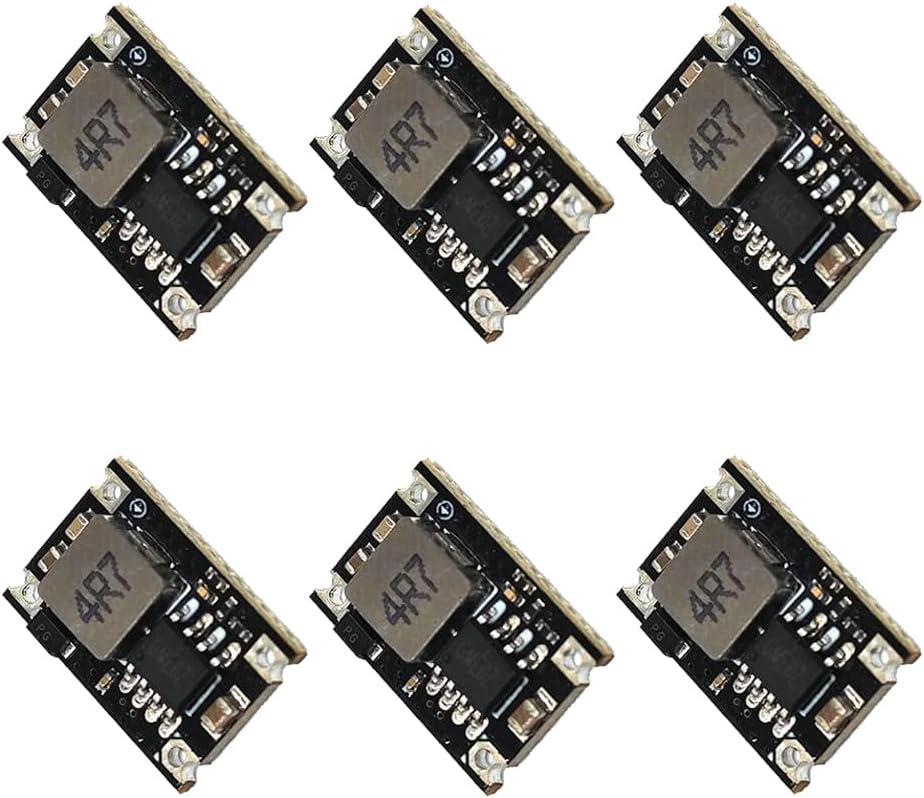
3.3V Regulator 6pcs Mini Reducer DC 4.75-23V 5V 12V Buck to 3.3V Buck Converter Board 1.8A Output Mini360 Small Size Aircraft Model MP1584EN Power Module(3.3 Volts)
5pcs 3.3V Buck Converter Module DC 4.5-24V to 3.3V Voltage Regulator
Input 4.5V to 24V
Output 3.3V fixed
Current up to 1.8A
Size 17.5x12x4.5mm
This module stands out as a top choice for converting higher voltages to a stable 3.3V rail. It supports inputs from 4.5V to 24V making it versatile for many power sources.
Pros
Wide input voltage range
High current capacity
Low ripple output
Small compact size
Value five pack deal
Cons
Requires diode for motors
Soldering skills needed
We may earn a commission when you buy through this link, at no additional cost to you.
The switching design ensures high efficiency and low heat even under load. Its compact size fits easily into tight PCB layouts while delivering up to 1.8A consistently.
Keep in mind that inductive loads like motors need external protection. Adding a diode and capacitor prevents voltage spikes from damaging sensitive components downstream.
Buy this if you need reliable power for microcontrollers or sensors across a wide voltage range. It balances performance and value better than most competitors.
Wide Input Range Flexibility
Accepts battery packs or wall adapters directly without extra pre regulation.
Compact Footprint Design
Measures only 17.5x12x4.5mm saving valuable board space.
10 Pack 3 Pins AMS1117-3.3 DC 4.75V-12V to 3.3V Voltage Regulator
Input 4.75V to 12V
Output 3.3V fixed
Current up to 0.8A
Simple 3 pin design
This pack offers ten individual AMS1117 linear regulators perfect for projects needing clean power without switching noise. Each unit converts 4.75V to 12V input to 3.3V output.
Pros
Ten piece bulk pack
Low noise linear design
Overheat protection built in
Easy pinout connection
Affordable price point
Cons
Lower current than switching
More heat at high load
We may earn a commission when you buy through this link, at no additional cost to you.
Linear regulators are simpler than switching ones and produce less electromagnetic interference. They are ideal for audio circuits or sensitive analog sensors that demand low noise.
However they dissipate more heat as input output gaps widen. Ensure proper airflow or heat sinking if running near the 0.8A limit continuously.
Choose this for small scale builds or prototyping where noise matters more than efficiency. The ten pack ensures you have spares for future iterations.
Low Noise Output
Linear topology avoids high frequency switching noise entirely.
Overheat Protection
Built-in thermal shutdown prevents chip damage under heavy load.
5PCS DC-DC Step Down/Step Up Converter 1.8V-5V to 3.3V, 100mA Max Current
Input 1.8V to 5V
Output 3.3V fixed
Current up to 100mA
Step up or down
This converter handles both step up and step down making it unique for battery powered apps where voltage may fall below target. It maintains a steady 3.3V from 1.8V to 5V.
Pros
Handles input below output
Perfect for single cells
Small footprint board
Efficient conversion design
Five unit package
Cons
Low current capacity
Not for heavy loads
We may earn a commission when you buy through this link, at no additional cost to you.
Such bidirectional conversion extends battery life by utilizing energy even when cells drop near 1.8V. This is critical for portable wearables or remote sensors running on small coin cells.
The 100mA limit restricts use to low power tasks only. High drain devices like WiFi modules or motors will exceed this capacity causing brownouts.
Select this for battery constrained IoT devices needing stable voltage across discharge curves. Its efficiency and flexibility outweigh the current limits for small projects.
Bidirectional Conversion
Boosts low inputs and bucks high inputs to stable 3.3V.
Battery Optimization
Extracts usable energy from batteries nearing depletion.
3.3V Regulator 5pcs Mini Reducer DC 5-30V 5V 12V 24V Buck to 3.3V Buck Converter Board 1.8A Output Mini360 Small Size Power Module (3.3, Volts)
Input 4.5V to 24V
Output 3.3V fixed
Current up to 1.8A
Switching frequency 1.5MHz
This mini converter uses the Mini360 chip known for excellent efficiency and small size. It accepts 4.5V to 24V input and delivers stable 3.3V at up to 1.8A.
Pros
Mini360 high efficiency chip
Wide input tolerance
Low ripple clean power
Robust current delivery
Small form factor
Cons
Premium price per unit
Requires careful wiring
We may earn a commission when you buy through this link, at no additional cost to you.
Premium builds benefit from its low ripple and stable voltage under dynamic loads. It is engineered for reliability in demanding applications like industrial or robotics controls.
Users must follow protection guidelines for motors or inductive loads to avoid noise issues. Proper grounding and capacitors ensure optimal performance and longevity.
Invest in this for high performance projects requiring minimal power loss and space. The five pack ensures spares for critical installations needing backup power.
Mini360 Efficiency
Delivers high power in a tiny footprint with minimal heat.
We may earn a commission when you buy through this link, at no additional cost to you.
5. Dorhea 7 Pack 3.3V DC-DC Buck Converter 3 Pins AMS1117-3.3V DC 4.75V-12V to 3.3V Voltage Regulator Step Down Power Supply 800mA Buck Module – Best Budget Option
Dorhea 7 Pack 3.3V DC-DC Buck Converter 3 Pins AMS1117-3.3V DC 4.75V-12V to 3.3V Voltage Regulator Step Down Power Supply 800mA Buck Module
Input 4.75V to 12V
Output 3.3V fixed
Current up to 0.8A
Overheat shutdown protection
This pack offers excellent value with seven ready to use regulator modules. Each unit supports inputs from 4.75V to 12V and provides 3.3V at up to 0.8A.
Pros
Extremely low price
Seven units per pack
Reliable AMS1117 chip
Simple 3 pin layout
Overheat protection
Cons
Linear heat dissipation
Limited to 0.8A
We may earn a commission when you buy through this link, at no additional cost to you.
The AMS1117 chip is a proven workhorse used widely in DIY electronics. It simplifies design with minimal external components and reliable thermal protection.
Budget builders appreciate the cost effectiveness but should plan for heat management at high loads. Adding small heatsinks improves reliability during long operation.
Ideal for student projects or prototyping where cost is a priority. You get enough units to test multiple boards without breaking your budget.
Cost Effective Bulk
Seven modules for less than typical single unit prices.
Trusted Chipset
AMS1117 ensures consistent performance across units.
AMS1117-3.3 DC 4.75V-12V to DC 3.3V Voltage Regulator 15pcs
Input 4.75V to 12V
Output 3.3V fixed
Current up to 0.8A
15 piece bulk pack
With fifteen units this pack delivers the highest volume among linear options. Each module stabilizes 4.75V to 12V input to 3.3V output at 0.8A.
Pros
Fifteen unit bulk count
Consistent output voltage
Overheat protection included
Plug and play pins
Excellent price per piece
Cons
Linear heat at high load
Input range limited to 12V
We may earn a commission when you buy through this link, at no additional cost to you.
Buyers get a reliable source for classroom labs or large production runs needing many regulators. The consistent output accuracy helps simplify design constraints.
Remember that linear devices waste heat at higher input voltages. For efficiency or larger gaps consider switching regulators instead of these.
Great for projects needing multiple small regulators without bulk costs. The overheat protection adds peace of mind during experimentation.
5PCS 3.3V Mini Buck Converter Board Regulator – 5-30V to 3.3V, 1.8A Output, Small PCB Board Power Buck Module, Black
Input 5V to 30V
Output 3.3V fixed
Current up to 1.8A
Reverse polarity protection
This buck converter supports inputs from 5V to 30V and outputs 3.3V at 1.8A. Its small size makes it suitable for tight embedded applications.
Pros
High input range support
Compact PCB size
Good current capacity
Low ripple output
Reverse polarity mark
Cons
Lower user ratings
Inconsistent quality control
We may earn a commission when you buy through this link, at no additional cost to you.
Users report stable power with low ripple which protects sensitive chips well. The board includes reverse polarity markings to prevent wiring mistakes.
Reviews indicate some units vary in performance. Quality may not match top tier switches so test before deploying in critical systems.
Choose this when space and input range matter more than premium quality. The price reflects the trade off between cost and reliability.
10PCS 5V to 3.3V DC-DC Step Down Power Supply Buck Module AMS1117 800MA Automatic Adjustable Boost Board Start Limit Voltage
Input 4.5V to 7V
Output 3.3V fixed
Current up to 0.8A
Low drop out design
This pack targets low voltage scenarios with inputs from 4.5V to 7V and outputs 3.3V. The AMS1117 provides stable 0.8A current without complex switching.
Pros
Low drop out range
Ten piece count
Simple connection
Stable output voltage
Good price
Cons
Narrow input range
Linear heat loss
We may earn a commission when you buy through this link, at no additional cost to you.
Its low drop out feature helps when supply is close to output level reducing wasted voltage. Ten units provide ample coverage for batch builds.
Efficiency suffers compared to switching due to linear losses but simplicity wins for short runs. Heat should be managed during continuous operation.
Select this for low voltage microcontroller projects requiring minimal drop and reliable power. The ten pack ensures enough spares for production needs.
Low Dropout Feature
Operates efficiently when input approaches output voltage.
We may earn a commission when you buy through this link, at no additional cost to you.
10. 3.3V Regulator 6pcs Mini Reducer DC 4.75-23V 5V 12V Buck to 3.3V Buck Converter Board 1.8A Output Mini360 Small Size Aircraft Model MP1584EN Power Module(3.3 Volts) – Model Power
3.3V Regulator 6pcs Mini Reducer DC 4.75-23V 5V 12V Buck to 3.3V Buck Converter Board 1.8A Output Mini360 Small Size Aircraft Model MP1584EN Power Module(3.3 Volts)
Input 4.5V to 24V
Output 3.3V fixed
Current up to 1.8A
MP1584EN chip used
This regulator uses the MP1584EN chip known for efficiency and reliability. It accepts 4.5V to 24V input and outputs 3.3V at 1.8A consistently.
Pros
MP1584EN reliable chip
Six unit pack size
High current rating
Low ripple output
Small board footprint
Cons
Protection needed for motors
Higher price per unit
We may earn a commission when you buy through this link, at no additional cost to you.
Aircraft and robot hobbyists appreciate its ability to run off varied power sources while protecting sensitive logic boards. Its small size fits tight frames.
Inductive loads like servos still need external diodes or capacitors to prevent noise. Proper wiring ensures stable voltage and prevents brownouts.
Purchase this for hobby projects needing robust power conversion in small packages. The six pack supports multi unit setups like sensor arrays.
We may earn a commission when you buy through this link, at no additional cost to you.
Buying Guide – How to Choose the Best 5V to 3V Voltage Regulator
Selecting the right regulator depends on input range output needs and noise sensitivity. Review these factors to find the best fit.
Input Voltage Range
Check your power source voltage against the module input limits. Buck regulators need input higher than output while linear ones need a margin.
Choose wide ranges for battery or vehicle apps to avoid extra conversion.
Output Current Capacity
Sum the current draw of all connected devices. Regulators should handle peak load plus twenty percent headroom for safety.
Ensure the module matches your max current to avoid overheating.
Linear vs Switching Design
Linear regulators produce low noise but waste heat. Switching types are efficient but may introduce interference.
Use linear for audio and switching for motors.
Thermal Protection
Look for overheat or overcurrent protection features. These prevent damage during overload or short circuits.
Prioritize modules with thermal shutdown for reliability.
Physical Size
Measure your PCB or enclosure space before ordering. Compact modules save room but may lack heatsinking.
Balance size with thermal needs for stable performance.
Noise and Ripple
Sensitive electronics require low ripple output. Check specs for ripple values under load.
Select lower ripple modules for precision sensors or radios.
Protection for Inductive Loads
Motors and servos create back EMF that can damage regulators. Add diodes and capacitors near inductive loads.
Always verify protection requirements before wiring motors.
Package Quantity
Buying multi packs reduces cost and ensures spares. Single units work for small trials.
Choose packs for projects requiring multiple regulators.
How to Use and Care for Your 5V to 3V Voltage Regulator
Connect input power to VIN and ground to GND then attach output to load. Follow polarity markings on the module to avoid reverse wiring.
Add capacitors on input and output sides to smooth ripple and stabilize voltage. Use at least 10uF per side as a general rule.
Monitor temperature during first use. If the module gets hot reduce load or add airflow to prevent damage over time.
Frequently Asked Questions
What is the difference between a buck converter and a linear regulator?
A buck converter steps down voltage efficiently using switching which produces less heat. A linear regulator reduces voltage by dissipating excess energy as heat.
Can I use these regulators with battery packs?
Yes especially buck types that accept wide input voltages. Ensure the battery voltage exceeds 3.3V enough to maintain regulation.
How much current can these regulators supply?
Most models deliver 0.8A to 1.8A. Check the datasheet or product specs for exact limits before attaching high load devices.
Do I need to solder wires or use connectors?
Most modules require soldering wires to pads or pins. Connectors can be added for easier removal but increase size slightly.
How do I prevent overheating?
Reduce load current ensure airflow or add a small heatsink. Thermal protection helps but cooling prevents performance drops.
Is output voltage adjustable?
Most listed units have fixed 3.3V output. Adjustable modules exist but are not included in this comparison.
Final Thoughts on Choosing the Best 5V to 3V Voltage Regulator
This guide reviewed ten top rated modules covering linear and switching options for diverse project needs.
Prioritize input range and current capacity to ensure stable power for your microcontrollers and sensors.
Always verify current pricing and availability since deals change often.