
AGFRC 20A BLHeli_S DSHOT600 ESC
4.3Editor score
BLHeli_S firmware support
Damped light enabled feature
Compact lightweight design
Discover the top Escs for Racing Quadcopter in this expert guide comparing performance, features, and reliability to help you choose the right speed controller.
Choosing the right electronic speed controller is crucial for any racing quadcopter build. These components dictate motor responsiveness and efficiency, directly impacting your flight experience and performance on the track.
We evaluated ten leading ESC options based on firmware support, current handling, and build quality. This list covers a range of budgets and configurations to suit various racing and freestyle drone requirements effectively.
Each pick highlights key strengths and trade-offs for informed decisions. Note that prices and availability change frequently, so verify current listings before purchasing to ensure you get the best deal available today.
4.3Editor score

5.0Editor score

4.0Editor score
This side-by-side comparison highlights the specifications and capabilities of each top-rated ESC to help you identify the best fit for your specific racing quadcopter build.




This ESC stands out with a perfect rating and robust features designed for serious racers. Its new core software delivers improved throttle response that enhances flight precision.
We may earn a commission when you buy through this link, at no additional cost to you.
The adaptive default settings automatically adjust timing to suit almost all applications. This reduces configuration time and ensures optimal performance right out of the box.
One trade-off is the size which may not fit the smallest frames. However the signal quality improvements justify the extra space for most racing builds.
Highly recommended for pilots seeking top-tier performance and reliability. This model offers an excellent balance of power and control for competitive racing.
The new core software simplifies setup by auto-adjusting timing for different motor configurations.
Reduced crosstalk ensures clean throttle signals even in noisy electrical environments.
We may earn a commission when you buy through this link, at no additional cost to you.
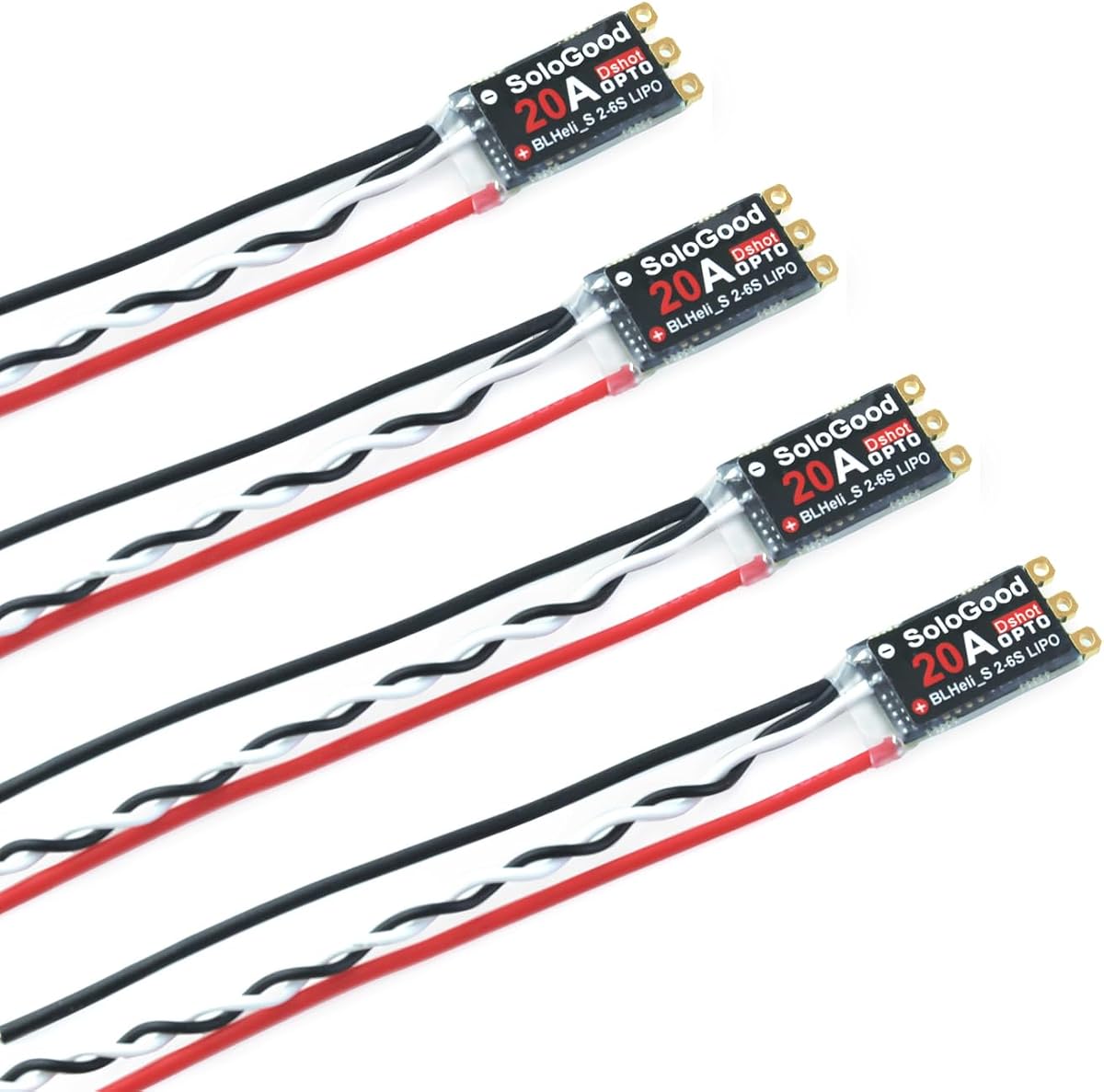
This 4-pack offers excellent value for building multiple drones or replacements. The BLHeli_S firmware makes upgrades straightforward via the signal cable.
We may earn a commission when you buy through this link, at no additional cost to you.
Twisted pair throttle cables reduce crosstalk significantly. This ensures stable performance even with multiple ESCs packed closely together in a frame.
The main limitation is compatibility with only 2-4S batteries. Pilots needing 6S power will need to look elsewhere for higher voltage support.
Ideal for budget-conscious builders seeking reliable performance. These ESCs deliver smooth control for standard FPV racing and freestyle applications.
Upgrading firmware is simple with the included signal cable connection method.
Twisted wires minimize interference for cleaner throttle communication.
We may earn a commission when you buy through this link, at no additional cost to you.
The LittleBee ESC is designed for tight racing builds where weight matters. Its compact footprint integrates seamlessly into minimal frame designs.
We may earn a commission when you buy through this link, at no additional cost to you.
Muted mode operation reduces noise while maintaining efficiency. This is a nice touch for pilots who value a quieter flying experience.
The lack of verified user ratings makes confidence slightly harder. However the brand reputation suggests reliable performance for standard use cases.
Recommended for weight-sensitive racing builds needing 2-4S power. Its small size and DShot support make it a solid choice for competitive flyers.
The small 23x12x4mm footprint allows for more compact frame layouts.
Muted mode lowers acoustic signature without sacrificing motor performance.
We may earn a commission when you buy through this link, at no additional cost to you.
This 60A ESC provides ample power for high-voltage 6S setups. The immersion gold design resists heat and current stress effectively.
We may earn a commission when you buy through this link, at no additional cost to you.
Direct plug-in pads eliminate soldering hassles for the flight controller. This simplifies assembly and reduces risk of damage during installation.
The trade-off is limited cable flexibility due to fixed pads. Users should plan wiring carefully to avoid strain on connections.
Perfect for racers wanting reliable 6S performance without complex soldering. Its robust build supports stable output for powerful flight configurations.
Immersion gold plating protects against heat and corrosion during high current use.
Direct plug-in connectors speed up the build process significantly.
We may earn a commission when you buy through this link, at no additional cost to you.
An affordable ESC option that does not compromise on essential features. It comes with BLHeli_S firmware for easy upgrades and adjustments.
We may earn a commission when you buy through this link, at no additional cost to you.
Hardware PWM drive ensures smooth throttle response with low noise. Damped light makes the ESC more sensitive for better control precision.
While limited to 20A it fits many standard racing quads well. The wide protocol support ensures compatibility with most modern flight controllers.
Best for budget builds needing reliable performance. This ESC offers great value with high-quality components for competitive flying.
Supports DShot600, PWM, Oneshot and Multishot for wide compatibility.
Damped light mode enhances sensitivity for detailed throttle management.
We may earn a commission when you buy through this link, at no additional cost to you.
This powerhouse ESC delivers 160A continuous current for demanding high-power setups. The large metal heat sink maintains stable performance under stress.
We may earn a commission when you buy through this link, at no additional cost to you.
Telemetry via the built-in ammeter provides real-time data on motor speed and temperature. Dual-pad power design makes welding easier and increases capacity.
The main trade-off is the premium price compared to standard ESCs. However the telemetry and power handling justify the investment for serious pilots.
Best for heavy load racing and high-voltage builds. This ESC ensures optimal power delivery and monitoring for advanced flight operations.
Real-time updates on current and temperature help prevent motor failures.
Dual-pad configuration increases current carrying capacity significantly.
We may earn a commission when you buy through this link, at no additional cost to you.
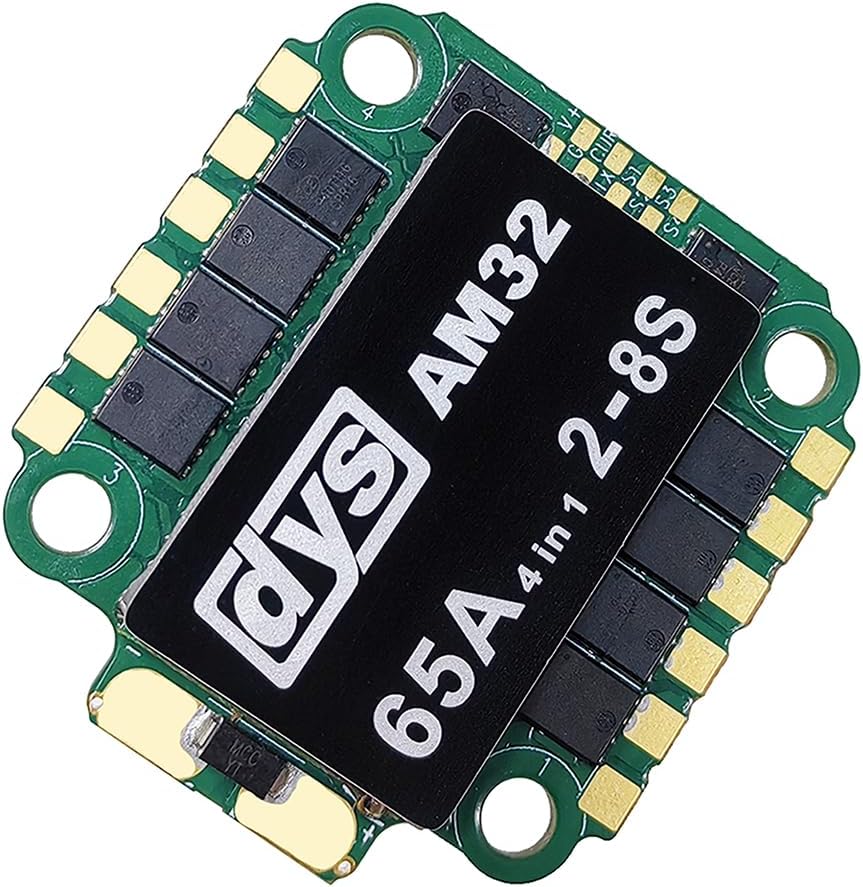
A 32-bit ESC featuring AM32 firmware for precise control and modern features. It supports 2-8S LiPo input giving great flexibility in battery choice.
We may earn a commission when you buy through this link, at no additional cost to you.
High-performance premium MOS components were upgraded for better efficiency. The standard 30x30mm mounting fits various frames easily.
User ratings are lower which raises questions about quality control. Pros should be aware of potential reliability variations compared to top brands.
Suitable for pilots wanting AM32 features on a budget. This ESC offers good power handling but verify quality before heavy use.
32-bit architecture enables advanced firmware features and better control.
30x30mm pattern ensures compatibility with most racing frames.
We may earn a commission when you buy through this link, at no additional cost to you.
This all-in-one stack integrates a flight controller with ESC to save weight. It features dual BEC output for powering DJI and analog systems.
We may earn a commission when you buy through this link, at no additional cost to you.
Black box flight data recording helps analyze performance. Angled solder pads reduce welding difficulty for cleaner builds.
Integration can complicate troubleshooting if issues arise. Users should test components individually if problems occur.
Ideal for builders wanting a compact stack solution. This unit offers comprehensive features for racing and freestyle quad setups.
Dual 5V/10V outputs support both digital and analog video systems.
Black box logging captures flight data for performance analysis.
We may earn a commission when you buy through this link, at no additional cost to you.
A solid mid-range ESC delivering 55A continuous power reliably. The Bluejay firmware supports various modes to suit different flying styles.
We may earn a commission when you buy through this link, at no additional cost to you.
Hardware-generated PWM improves throttle response and reduces noise. A dedicated 3-in-1 driver IC ensures smooth motor starts.
Firmware version variations might require checking compatibility before install. Users should verify the exact firmware included with purchase.
Good for pilots needing reliable power without high costs. This ESC offers great balance of features for most racing applications.
Supports DShot, Oneshot, and Multishot modes for flexibility.
Hardware PWM design reduces audible motor noise during flight.
We may earn a commission when you buy through this link, at no additional cost to you.
This ESC targets larger load-type aircraft with 65A power. It adopts an AT32F421 processor for precise PWM control up to 96 KHz.
We may earn a commission when you buy through this link, at no additional cost to you.
Multi-layer PCB design increases current capability and heat dissipation. Angled pads make soldering easier and safer for complex builds.
Battery support tops out at 6S which limits high-voltage options. Pilots needing 8S should consider other models.
Best for standard racing frames needing robust power. This ESC offers efficient performance and modern firmware features.
Ultra-high efficiency MOSFETs reduce energy loss and heat.
Angled pads simplify assembly for complex wiring setups.
We may earn a commission when you buy through this link, at no additional cost to you.
Selecting the right ESC involves balancing current capacity, firmware, and build quality. Understanding key factors ensures optimal performance and longevity for your racing quadcopter.
Current capacity determines how much power the ESC can handle continuously. For racing quads, choose an ESC rated higher than your motor's max draw to prevent overheating and failure during aggressive flights.
Always select an ESC with at least 20% higher continuous current than your motor's peak draw.
Firmware influences throttle response and feature sets. BLHeli_S offers broad compatibility while AM32 provides advanced customization. Ensure your flight controller supports the firmware you plan to use.
Match firmware choice to your controller capabilities and desired customization level.
ESCs must support your LiPo battery configuration. 2-4S units work for smaller builds but 6S options offer more power. Check input range carefully to avoid damage.
Verify ESC voltage rating matches your intended battery cell count exactly.
Modern ESCs use digital protocols like DShot for cleaner communication. DShot600 is standard for racing ensuring minimal latency. Compatibility with your receiver is key.
Prioritize ESCs supporting DShot600 or higher for responsive control.
Physical dimensions affect build fit. 30x30mm and 20x20mm patterns are common. Measure your frame mounts to avoid installation issues.
Confirm mounting hole spacing matches your frame design before purchase.
Advanced ESCs offer telemetry data like current and temperature. This helps monitor health during flight. Useful for preventing unexpected crashes.
Look for built-in telemetry if real-time monitoring is a priority.
Components like MOSFETs and PCB layers impact durability. Multi-layer boards dissipate heat better. Quality materials ensure longevity under stress.
Opt for ESCs with multi-layer PCBs and premium components for reliability.
Prices vary widely based on features. Budget ESCs work well for casual use while premium ones suit competition. Balance cost against required specs.
Determine how much you need before spending to find value.
Before first use, calibrate throttle range with your flight controller. Connect battery and follow manual steps to ensure proper signal recognition.
During flight monitor ESC temperature using telemetry if available. High heat indicates overload. Reduce throttle to let components cool down.
After flights inspect solder joints and wires for damage. Clean dust and debris from heat sinks to maintain efficient cooling.
A minimum of 20A is typical for small racing quads. For larger or high-power builds, 30A to 60A ensures adequate headroom. Always check motor specs before selection.
No they are different firmware types requiring specific ESCs. Some ESCs support switching but you must verify compatibility with your controller and motor setup.
Overheating often results from excessive current draw or poor ventilation. Ensure your ESC rating exceeds motor needs and check airflow through your frame.
Yes most ESCs support a voltage range. If rated for 2-6S it will work on 2S. Always confirm minimum input voltage in the specifications.
With proper care they can last many flights. Replace if you notice throttle irregularities or physical damage like burnt pads or melted wires.
DShot is a digital signal protocol reducing latency and noise. It allows telemetry and smoother motor control compared to older PWM signals.
The MAD AMPX 40A Pro and AGFRC 20A lead our list for performance and value respectively. These options cover most racing needs with reliable control.
Prioritize current capacity and firmware support when shopping. Matching these specs to your motor and frame prevents issues during flight.
Always verify current prices before buying. Market changes frequently so checking latest listings ensures you secure the best deal available.