
NIIMBOT M2 Label Maker
4.4Editor score
300 DPI thermal transfer
Bluetooth connectivity
Multi-material support
This expert guide compares the top 10 label printers for laboratory use, evaluating durability, connectivity, print quality, and specialty features for precise
Selecting the right label printer for laboratory environments requires balancing precision, durability, and connectivity. Labs demand labels that withstand chemicals, extreme temperatures, and frequent handling while remaining legible over time.
Our comparison evaluates ten top-rated models based on real-world performance data, user feedback, and technical specifications. We focus on features critical to scientific workflows like chemical resistance and barcode support.
Each pick highlights specific strengths for different lab needs from sample tracking to equipment tagging. Prices fluctuate frequently so verify current costs before purchasing to ensure you get the best value for your budget.
4.4Editor score

4.4Editor score

4.3Editor score
This side-by-side comparison outlines the core specifications and capabilities of each selected model to help you quickly identify the best fit for your specific laboratory labeling requirements.



The Brady M210-LAB is a specialized handheld printer designed specifically for lab environments. It carries a solid 4.4 rating reflecting its reliability for tasks like labeling slides and tubes. This model excels in accuracy and ease of use for routine lab work.
We may earn a commission when you buy through this link, at no additional cost to you.
It features built-in label templates containing mathematical symbols which are essential for scientific contexts. The backlit LCD ensures labels are easy to read in dimly lit storage areas. Users can select from 6 text sizes to ensure readability on small containers.
While it lacks Bluetooth connectivity the simplicity of keypad entry reduces errors in high-pressure situations. Cartridges are easy to load but can add up in cost over time. For labs prioritizing durability over wireless features this is a strong choice.
Recommend this printer for lab managers needing a rugged device for equipment tracking and sample labeling. Its precision and reliability make it a top pick for consistent performance in demanding environments.
Built-in templates with scientific symbols streamline the labeling process for researchers who frequently tag chemical compounds or biological samples.
Reinforced construction ensures the printer withstands accidental drops and rough handling common in busy laboratory settings.
We may earn a commission when you buy through this link, at no additional cost to you.
This Brady M210 Kit is rated 4.7 stars indicating exceptional user satisfaction with its performance. It is designed for multi-line labels which helps in identifying complex equipment or wiring in labs. The impact bumpers add a layer of protection against accidental drops.
We may earn a commission when you buy through this link, at no additional cost to you.
It supports 12 different material types allowing you to choose labels that resist chemicals or moisture. The keypad includes letters numbers and a backlit LCD for clear visibility. This makes it versatile for both industrial and lab applications.
The kit approach means you get everything needed to start labeling immediately. However it lacks advanced connectivity features like Bluetooth. For teams needing robust physical labeling tools this kit offers great value and dependability.
Opt for this printer if you need a versatile device for wiring panels and lab equipment alike. Its durability and material variety make it a reliable workhorse for identification tasks.
Rubber impact bumpers and drop-tested design ensure the printer survives the rigors of active lab floors and storage areas.
Support for 12 material types allows users to select tapes that withstand specific chemical or environmental hazards.
We may earn a commission when you buy through this link, at no additional cost to you.
The Brother PT-E510 holds a 4.5 rating and is built for industrial projects within a lab context. It features USB-C for fast design and printing via P-touch Editor software. The dual cutter makes peel-and-apply labels simple and efficient for high-volume tasks.
We may earn a commission when you buy through this link, at no additional cost to you.
It supports heat shrink tubes and laminated labels which are essential for wire and cable management. Quick application keys speed up the creation of common label types like patch panels. You can also store databases to print existing work quickly.
The printer includes an ambidextrous hand strap for added convenience and protection. While it requires a computer for design the connectivity is modern and reliable. This makes it a great choice for tech-heavy labs managing complex infrastructure.
Choose this printer if you need robust cable management and network labeling capabilities. Its connectivity and cutting features provide a streamlined workflow for technical labeling projects.
USB-C connectivity allows for fast design transfers and charging from modern PCs and laptops.
The dual auto-cutter creates half-cut labels that are easy to peel and apply without scissors.
We may earn a commission when you buy through this link, at no additional cost to you.
The Brother PT-D610BT is rated 4.5 stars for its seamless Bluetooth connectivity. It allows multiple users to design labels from computers or mobile devices. This is perfect for dynamic lab environments where different researchers need quick access to labeling tools.
We may earn a commission when you buy through this link, at no additional cost to you.
It features a QWERTY keyboard for fast text entry and 175 business-specific templates. The large color LCD preview ensures labels are correct before printing reducing waste. With 900 symbols it supports complex technical text well.
Storable memory saves up to 90 frequently used labels for quick reprinting. This efficiency helps in high-volume inventory tracking. While designed for business the features translate well to asset management in labs.
This model is ideal for labs that need flexible multi-user access to labeling. The connectivity and template options make it a versatile tool for organizing lab assets and inventory.
Bluetooth connectivity enables multiple team members to design and print labels from their own devices easily.
The large full color display lets you see exactly how the label will look before you print it.
We may earn a commission when you buy through this link, at no additional cost to you.
Rated 4.3 the QL-820NWB stands out with lightning-fast speed of up to 110 labels per minute. It features network connectivity options including Ethernet and WiFi alongside Bluetooth. This flexibility allows it to be accessed from various devices across the lab network easily.
We may earn a commission when you buy through this link, at no additional cost to you.
It prints black and red labels using specific DK tapes allowing for color-coded warnings or instructions. The 300 DPI resolution ensures crisp barcodes and text for asset tracking. You can even use it standalone with its easy-to-read LCD.
This printer is built for high-volume needs like shipping or large inventory batches. The maximum label length of 3 feet accommodates long labels for equipment. Its versatility in connectivity makes it a strong asset for complex lab setups.
Select this if you need a fast networked printer for high-volume tasks. Its speed and flexibility make it a top choice for busy lab supply chains and storage areas.
Ethernet WiFi and Bluetooth interfaces ensure the printer integrates smoothly into your lab IT infrastructure.
With 110 labels per minute this printer reduces wait times for bulk labeling tasks significantly.
We may earn a commission when you buy through this link, at no additional cost to you.
The Makeid D50 is rated 4.2 and functions as a capable desktop label printer. It features a 2-inch print head and an automatic cutter for bulk work. You can control it via a mobile app or PC software depending on your preference.
We may earn a commission when you buy through this link, at no additional cost to you.
Print quality is maintained at 300 DPI ensuring labels remain clear for up to 10 years. The 2600mAh battery offers up to 90 days of standby time for long periods of use. Auto-template matching simplifies setup with different consumables.
This printer is great for cable labeling and asset tracking tasks. The auto-cutter saves time on large batches of labels. While desktop based its portability allows for use in different areas of the lab.
This is a good fit for teams needing a dedicated desktop unit. The battery life and print quality make it a reliable workhorse for general identification tasks.
The printer automatically identifies label sizes and matches templates reducing setup time for different jobs.
A 2600mAh battery allows up to 90 days of standby time ensuring power when needed.
We may earn a commission when you buy through this link, at no additional cost to you.
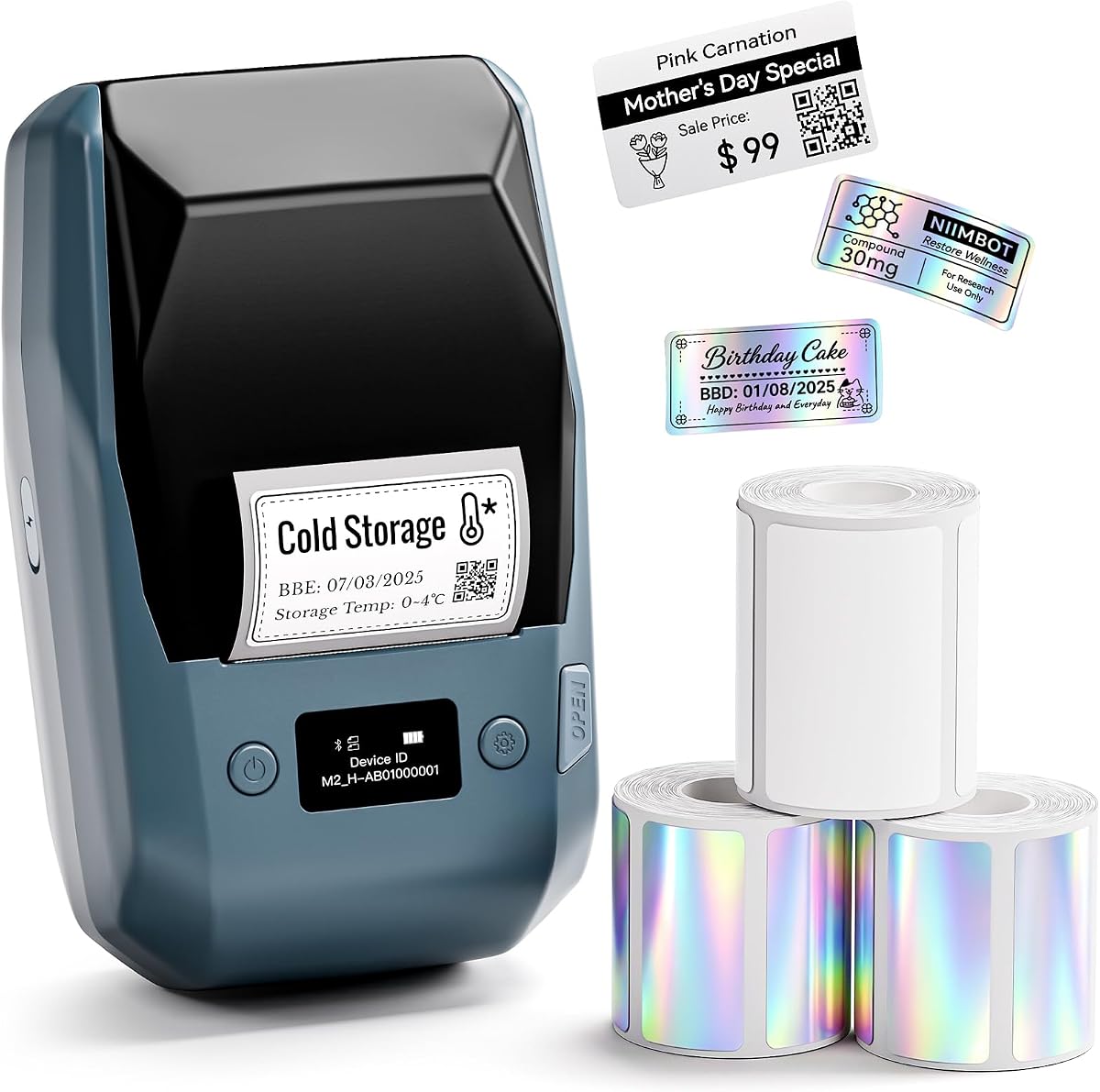
The NIIMBOT M2 carries a 4.4 rating and uses 300 DPI thermal transfer printing. This creates labels that are waterproof oil-resistant and scratch-resistant for extreme environments. It connects via Bluetooth to iOS and Android devices and via USB for PC users.
We may earn a commission when you buy through this link, at no additional cost to you.
It supports label widths from 1 to 2 inches perfect for vials and storage containers. Labels stay readable for 8 to 10 years ensuring long-term archival needs. You can choose from various ribbon colors like black red and blue for color-coding.
The rechargeable 2000mAh battery allows printing up to 15 rolls on one charge. It handles sample labeling and asset tracking effectively. While compact its print quality rivals larger machines for small lab projects.
Choose this for small lab projects needing durable waterproof labels. Its connectivity and print quality make it an efficient tool for sample and asset management.
Labels remain readable and intact even in temperatures ranging from -4°F to 248°F making them ideal for cryogenic storage.
Up to 10 devices can connect simultaneously allowing teams to print labels from different mobile devices easily.
We may earn a commission when you buy through this link, at no additional cost to you.
This Brady M210 Handheld is rated 4.6 stars for its simplicity and durability. It is a compact device designed for tagging items directly where they sit. While basic it offers the reliability associated with the Brady brand.
We may earn a commission when you buy through this link, at no additional cost to you.
The design focuses on ease of use without complex menus. This makes it accessible for staff who need quick labeling solutions. It is ideal for simple ID tags on containers or shelves.
It works best for manual labeling tasks without PC dependency. Its portable nature allows for quick trips around the lab to tag new items efficiently.
Use this handheld for quick manual labeling tasks. It is a reliable backup device for essential tagging needs.
A straightforward interface means you can label items quickly without needing to navigate complex menus.
We may earn a commission when you buy through this link, at no additional cost to you.
The NIIMBOT M2 Bundle is rated 4.6 stars and comes ready to use with 3 rolls of tape. It uses thermal transfer technology for resistance to water oil and chemicals. This makes it perfect for peptide sample tubes and reagent vials in labs.
We may earn a commission when you buy through this link, at no additional cost to you.
It supports simultaneous pairing with up to 10 mobile devices for efficient team workflow. You can import data from Excel to generate barcodes automatically. The included 6-month VIP membership unlocks advanced custom labeling functions.
This bundle saves time by providing necessary consumables upfront. The resistance to chemicals ensures labels survive harsh lab environments. It is ideal for small labs starting their labeling systems.
Select this bundle for teams needing a comprehensive start to labeling. The included supplies and connectivity make it a convenient choice for lab organization.
Labels resist chemicals and oil ensuring sample data remains visible even after exposure to harsh reagents.
Excel import and custom templates allow for automated batch labeling which saves significant time on inventory management.
We may earn a commission when you buy through this link, at no additional cost to you.
The Brother QL-800 is rated 4.3 and delivers 93 labels per minute at 300 dpi. It features dual color printing for black and red labels which command attention. The Plug & Label technology works with Word and Excel without extra software.
We may earn a commission when you buy through this link, at no additional cost to you.
It uses DK pre-sized labels which simplify the process for standard tags. You can also use continuous tapes up to 3 feet for custom signage. This printer is well-suited for high-volume shipping and business needs.
The auto-cutter ensures precise finishing every time. While it focuses on standard labels the speed makes it valuable for bulk tasks in labs. It works seamlessly with both Windows and Mac systems.
Choose this for high-volume labeling of files or inventory. Its speed and simplicity make it a practical solution for rapid labeling requirements.
Compatible with Microsoft Word and Excel so you can print labels directly from your existing documents without extra tools.
We may earn a commission when you buy through this link, at no additional cost to you.
Choosing the right label printer for a lab involves evaluating material durability, connectivity, and print speed to meet scientific and organizational needs.
Thermal transfer printers are preferred for labs because they produce labels that resist water, chemicals, and abrasion. Direct thermal printers fade over time which is not ideal for long-term sample storage.
Choose thermal transfer if you need labels to remain readable for years without exposure to harsh environments.
Lab labels must withstand extreme cold, heat, and chemical spills. Look for printers compatible with synthetic tapes like polyester or vinyl that are rated for industrial use.
Verify material compatibility ensures your labels do not degrade on cold storage or chemical storage containers.
Consider how you will send labels to the printer. Bluetooth allows mobile printing while USB or Ethernet connects to central computers for batch processing.
Network connectivity is essential for large labs where multiple users need to access a single labeling device.
Different containers require different label sizes. Ensure the printer supports the width needed for your smallest vials and largest equipment tags.
Check the minimum and maximum tape width to confirm it fits your specific lab containers.
The ability to integrate with lab management systems or spreadsheets is crucial for efficiency. Look for printers that support importing data to create batch labels.
Software that supports QR codes and barcodes is vital for accurate tracking and inventory management.
Lab equipment often faces rough handling. Ruggedized printers with rubber bumpers are safer for active environments. Portable models allow you to label items right where they sit.
Prioritize drop-tested designs if the device will be moved frequently or used on busy lab benches.
Calculate the ongoing cost of tapes and ribbons. Some brands use proprietary cartridges that can be expensive, while others use standard tapes.
Ensure the printer uses consumables that fit your budget for ongoing operations.
High-volume labs need fast printers to avoid bottlenecks. Look for models that can print at least 60 labels per minute for efficiency.
Speed matters when labeling batches of samples or organizing large inventory shelves quickly.
Install the correct tape or ribbon cartridge according to the manufacturer's guide. Ensure the labels are loaded smoothly without wrinkles to avoid print errors.
Connect the printer to your computer or mobile device and install any required drivers or software. Test a single label before starting a large batch to check alignment.
Clean the print head regularly using a soft cloth and rubbing alcohol to maintain clarity. Store the printer in a dry place to protect it from moisture and dust.
Thermal transfer printers are the best choice for lab samples because they produce labels that are waterproof and chemical resistant. They ensure your data remains readable for years.
No standard office tape will degrade quickly in lab conditions. You must use synthetic lab labels that are specifically designed to resist chemicals and extreme temperatures.
Most lab printers connect via USB, Bluetooth, or Ethernet. Check the model specifications to see which connection types it supports for your specific setup.
Yes thermal labels are more durable and do not require ink. They are less likely to smudge and provide better resistance to environmental hazards in labs.
You should clean the print head every time you change a ribbon or tape roll. Regular cleaning prevents dust buildup that can cause blurry prints.
Most modern lab printers support barcode and QR code printing. Ensure your software supports these formats for accurate tracking and inventory management.
Our top picks include the Brady M210-LAB for precision, the NIIMBOT M2 for versatility, and the Brother QL-820NWB for speed. Each model brings unique strengths to the lab environment.
When selecting a device prioritize material durability and connectivity. Your labels must survive harsh conditions while remaining accessible for your team's workflow.
Prices for these models fluctuate frequently so verify current costs before purchasing. Ensure you check the latest offers to get the best value for your laboratory.