
LONELY BINARY Logic Analyzer Kit
4.2Editor score
24MHz sampling rate
8 channel digital input
Comprehensive accessory kit included
This guide compares the best logic analyzer for electronics projects helping you choose the right tool for debugging digital signals in your next build.
Choosing the right logic analyzer for electronics projects can transform how you debug digital signals and validate circuit behavior. Whether you are a student, hobbyist, or professional engineer, having precise insight into protocol communication ensures your embedded systems run reliably without costly iterations.
We evaluated ten top models based on channel count, sampling rates, software compatibility, and ease of use. Each product was assessed for its ability to handle common protocols like I2C and SPI while maintaining stable connections and offering clear waveform visualization across different operating systems.
Every pick below highlights unique strengths from affordable entry-level kits to high-end professional tools. You will find detailed breakdowns of features, pros, cons, and practical use cases to guide your decision. Please note that availability and pricing may change over time so check current listings before purchasing.
4.2Editor score

4.5Editor score
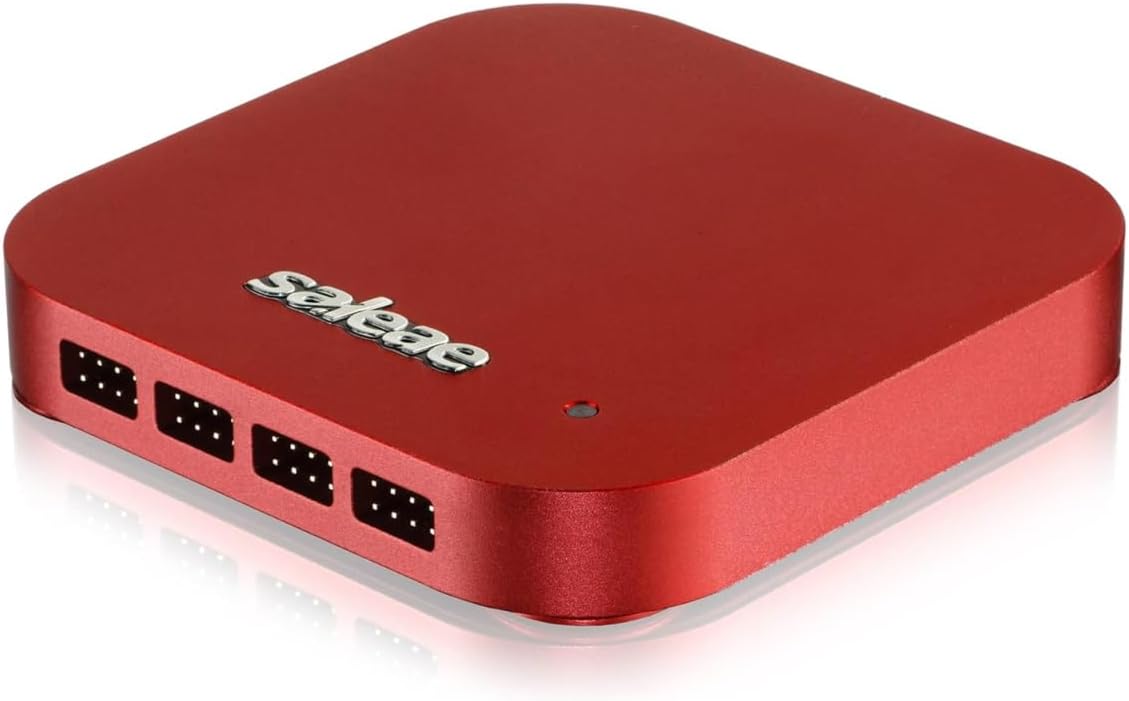
4.8Editor score
This side-by-side comparison highlights the key specifications and capabilities of each model to help you quickly identify which tool aligns with your project requirements and technical needs.


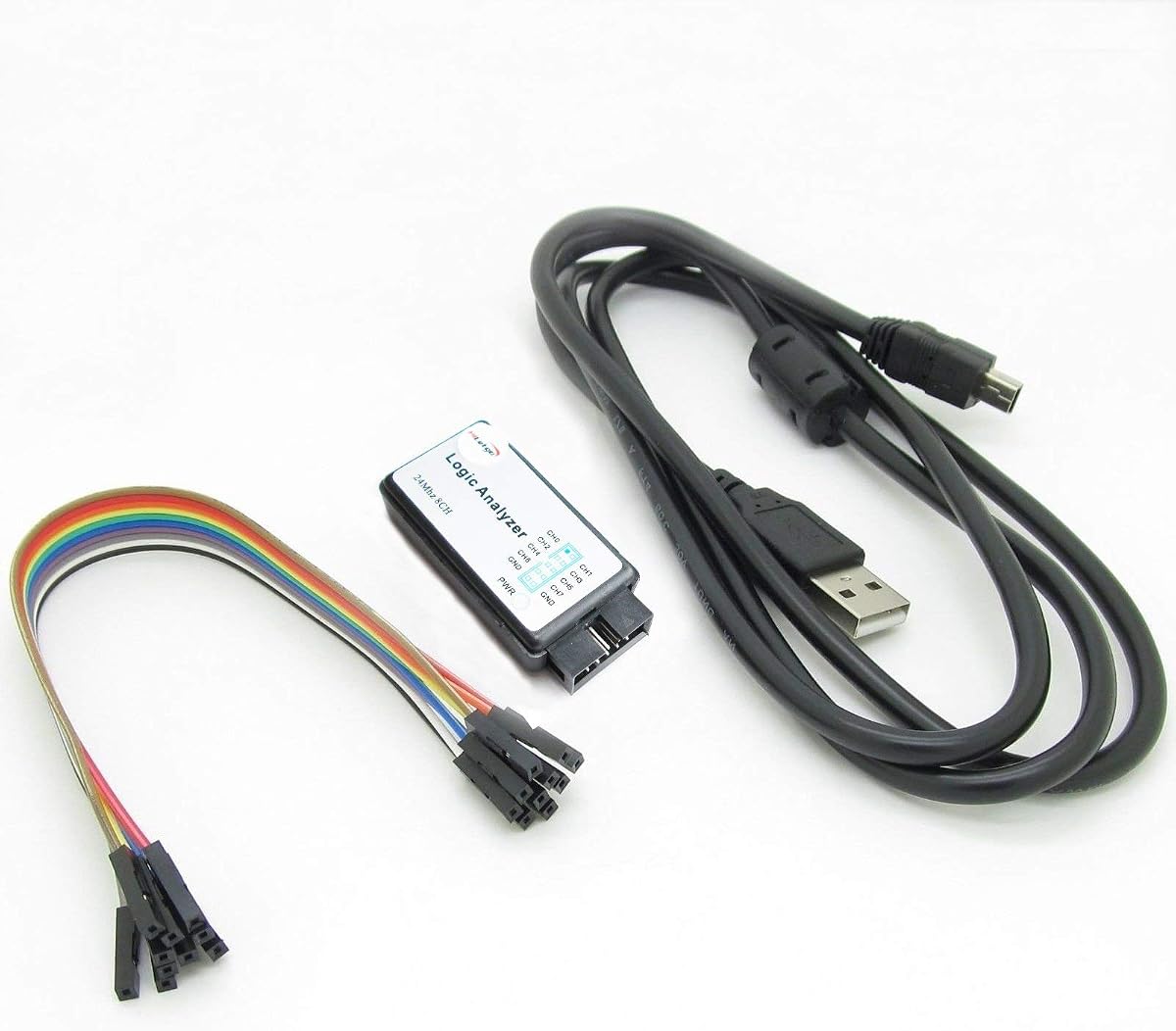


The LONELY BINARY Logic Analyzer Kit stands out as an accessible entry point for hobbyists needing reliable digital signal inspection. With a solid 4.2 rating, it delivers precise debugging for common protocols like I2C and SPI without requiring advanced technical knowledge.
We may earn a commission when you buy through this link, at no additional cost to you.
Its design prioritizes user friendliness through a base module and breakout board that simplify connections to microcontrollers. The included accessory kit provides test clips, jumper wires, and a storage case ensuring you have everything needed for immediate out-of-the-box use.
While it lacks the channel count of higher end models the 8-channel layout covers most basic to intermediate projects effectively. The 24MHz sampling rate is sufficient for many embedded systems though it may not capture extremely high-speed signals with granular detail.
This analyzer is ideal for students and DIY enthusiasts working on IoT or embedded systems who value convenience and cost. Its portable organization and dual USB compatibility make it a practical choice for on-the-go prototyping sessions.
Breakout boards and breadboard adapters reduce connection complexity allowing faster transitions from design to testing phases.
Support for both USB-A and Type-C ensures compatibility across older PCs and modern laptops without extra adapters.
We may earn a commission when you buy through this link, at no additional cost to you.
The LA1010 USB Logic Analyzer offers a robust balance of performance and versatility for serious developers. Its 4.5 rating reflects strong user satisfaction with its ability to capture 16 digital signals simultaneously at a 100MHz sampling rate per channel.
We may earn a commission when you buy through this link, at no additional cost to you.
Real-time signal visualization paired with protocol decoding for over 30 standards accelerates debugging significantly. You can extract human-readable communication data from I2C SPI UART and CAN instantly reducing time spent interpreting raw waveforms manually.
The device supports Windows Mac and Linux with auto-installing drivers which simplifies integration into diverse workflows. Its low power consumption makes it suitable for long-term signal monitoring tasks without demanding excessive system resources.
Ideal for embedded system developers this analyzer handles MCU ARM and FPGA testing effectively. While it lacks analog inputs its digital focus and high channel count make it a standout tool for complex protocol analysis and circuit validation.
Decode 30+ standards to extract human-readable data instantly speeding up debugging for complex communication systems.
Auto-install drivers on Windows Mac and Linux ensure seamless integration without manual configuration overhead.
We may earn a commission when you buy through this link, at no additional cost to you.
The Saleae Logic Pro 16 represents the pinnacle of professional logic analysis with exceptional speed and flexibility. Rated 4.8 by users it delivers digital sample rates up to 500 MS/s and analog rates up to 50 MS/s capturing intricate signal behaviors effortlessly.
We may earn a commission when you buy through this link, at no additional cost to you.
Its ability to handle 16 digital and analog inputs simultaneously provides deep insight into mixed signal environments. The software decodes SPI I2C and over 23 more protocols ensuring comprehensive visibility into communication layers without manual interpretation.
Users benefit from over 10 billion digital samples stored using PC memory via USB 3.0 enabling long capture durations. Cross platform support across Mac Windows and Linux ensures it fits seamlessly into any professional development ecosystem.
This analyzer is built for engineers requiring precision and reliability for complex FPGA or embedded projects. Its ultra-portable form factor saves time and frustration making it a top investment for high-stakes debugging and validation tasks.
Support both digital and analog inputs simultaneously for comprehensive analysis of complex mixed signal circuits.
Capture digital signals up to 500 MS/s ensuring precise timing analysis for high-speed protocols.
We may earn a commission when you buy through this link, at no additional cost to you.
The Logic Pro 8 Black offers Saleae's renowned speed in a more compact 8-channel configuration. It retains the 4.8 rating by delivering digital sample rates up to 500 MS/s and analog rates up to 50 MS/s ideal for precise timing analysis.
We may earn a commission when you buy through this link, at no additional cost to you.
Its multi-use inputs allow simultaneous digital and analog capture which is critical for mixed-signal debugging. Protocol decoding for SPI I2C and over 23 other formats ensures you can quickly visualize communication data without manual setup.
Over 10 billion digital samples are stored using PC memory via USB 3.0 allowing extended capture windows. The software works across Mac Windows and Linux providing flexibility for teams with diverse operating system preferences.
This tool suits engineers needing high performance without requiring 16 channels. Its ultra-portable design and intuitive software save time and frustration making it a reliable choice for advanced prototyping and debugging tasks.
Achieve 500 MS/s digital sampling in a smaller footprint for portable high-performance analysis.
Capture digital and analog signals on the same channels to simplify mixed-signal circuit testing.
We may earn a commission when you buy through this link, at no additional cost to you.
This USB Logic Analyzer provides a cost-effective solution for Arduino ARM and FPGA debugging. With a 4.5 rating it offers up to 24MHz sampling rate across 8 channels which suffices for most common communication protocols like UART and SPI.
We may earn a commission when you buy through this link, at no additional cost to you.
Its compatibility with Saleae Logic Analyzer software and PulseView ensures you can leverage established tools without reinventing workflows. The adjustable voltage threshold lets you fine-tune signal detection between low and high states accurately.
Users can choose from multiple sampling rates including 16MHz 12MHz and lower options to balance speed and memory usage. This flexibility makes it adaptable for various project scales from simple microcontroller tests to more involved system checks.
Ideal for hobbyists and students this tool delivers twice the result with half the effort when paired with auto-analysis features. It avoids unnecessary costs while providing essential functionality for protocol debugging and signal verification tasks.
Seamlessly work with Saleae Logic software and PulseView to leverage familiar interfaces and features.
Select from multiple sampling rates to optimize performance based on your specific signal speed requirements.
We may earn a commission when you buy through this link, at no additional cost to you.
The DSLogic Plus stands out with its 400MHz sampling rate in buffer mode and 256Mbits of on-board SDRAM memory. This combination allows capturing high-speed signals without relying solely on PC memory which enhances stability during long captures.
We may earn a commission when you buy through this link, at no additional cost to you.
It supports both stream and buffer modes giving users flexibility for long sample durations or high sample rates as needed. The adjustable threshold feature ensures precise signal detection while shielded fly wires reduce noise for cleaner waveform display.
DSView software is open-source and compatible with Windows macOS and Linux supporting nearly a hundred protocol decoders. This transparency allows advanced users to customize decoders or contribute to the software ecosystem directly.
Best for professionals needing high-speed capture and customization this analyzer offers a robust hardware-software ecosystem. Its aluminum case and USB 2.0 Type-C interface ensure durability and modern connectivity for demanding debugging scenarios.
Switch between stream for long durations and buffer for high sample rates to match specific capture needs.
Access DSView source code on Github to customize decoders or enhance features as per project needs.
We may earn a commission when you buy through this link, at no additional cost to you.
The HiLetgo USB Logic Analyzer offers reliable performance for UART IIC and SPI debugging with its 24MHz sampling rate. Its 4.5 rating reflects consistent functionality in capturing digital signals across 8 channels for embedded system validation.
We may earn a commission when you buy through this link, at no additional cost to you.
An included EMI ferrite ring on the USB cable reduces noise interference ensuring cleaner data transfers during testing. Input impedance of 1Mohm and adjustable sampling rates provide flexibility for various signal conditions and protocol speeds.
General applications around 10MHz suffice for most common tasks while higher rates up to 24MHz handle faster transitions. The input voltage range supports typical 3.3V and 5V logic levels without requiring additional level shifters for most projects.
Ideal for hobbyists needing a straightforward tool this analyzer combines practical design with essential features. Its compact form and cable noise protection make it a practical choice for routine prototyping and quick diagnostic checks.
EMI ferrite ring minimizes interference for more stable signal capture and reliable waveform display.
Adjust sampling rates from 25KHz to 24MHz to match the speed of your target protocol effectively.
We may earn a commission when you buy through this link, at no additional cost to you.
The Logic 8 Black provides Saleae's user-friendly interface in an affordable 8-channel package. With a 4.5 rating it supports digital sample rates up to 100 MS/s and analog up to 10 MS/s which meets most embedded development needs.
We may earn a commission when you buy through this link, at no additional cost to you.
Its eight multi-use inputs enable both digital and analog signal capture for mixed-signal debugging. The software decodes SPI I2C and over 23 other protocols ensuring comprehensive visibility into communication layers without manual interpretation.
Users benefit from over 10 billion digital samples stored using PC memory via USB 2.0 allowing long capture durations. Cross platform support across Mac Windows and Linux ensures it fits seamlessly into any development ecosystem.
This tool suits engineers needing high performance without requiring the Pro model's full speed. Its ultra-portable design and intuitive software save time and frustration making it a reliable choice for advanced prototyping and debugging tasks.
Utilize eight channels for both digital and analog signals to simplify mixed-signal testing workflows.
Decode SPI I2C and over 23 protocols automatically to visualize data without manual decoding.
We may earn a commission when you buy through this link, at no additional cost to you.
This DSLogic Plus variant delivers exceptional performance with 400MHz sampling and 16G sampling depth in stream mode. A 4.7 rating highlights its ability to capture high-speed signals while maintaining extensive memory for long-duration monitoring tasks.
We may earn a commission when you buy through this link, at no additional cost to you.
It supports 16 channels with dual-mode functionality enabling real-time capture or high-speed buffering as needed. The shielded wires and adjustable threshold ensure cleaner waveforms and precise signal detection across diverse voltage environments.
Compatible with WinXP through Win10 macOS and Linux the software supports nearly 100 protocol decoders. Being open-source on Github it allows advanced users to extend functionality and tailor decoders to specific project requirements.
Ideal for engineers requiring deep capture and high speed this analyzer offers robust hardware and flexible software. Its Type-C interface and extensive memory make it a powerful tool for demanding protocol analysis and system validation.
Capture up to 16G samples in stream mode for long-duration protocol analysis without losing data.
Leverage nearly 100 protocol decoders to quickly interpret complex communication patterns in your circuits.
We may earn a commission when you buy through this link, at no additional cost to you.
The Analog Discovery 3 combines an oscilloscope waveform generator logic analyzer and power supply into one compact unit. Rated 4.5 it offers 16 digital I/O channels at up to 125 MS/s per channel for comprehensive embedded system testing.
We may earn a commission when you buy through this link, at no additional cost to you.
Its dual-channel oscilloscope provides 14-bit resolution at 125 MS/s with a 30MHz bandwidth ideal for signal integrity checks. The arbitrary waveform generator and programmable power supplies allow creating custom inputs and powering circuits directly from the device.
Virtual instruments like spectrum analyzers and protocol decoders expand its functionality beyond basic measurements. SDK support for C++ Python and LabVIEW enables automation and custom control scripts for advanced users.
Best for versatile workstations this tool eliminates the need for multiple bench instruments. While it has a lower sample rate than dedicated analyzers its multi-functionality makes it indispensable for complex development and educational environments.
Replace multiple bench instruments with one device combining scope generator logic and power supply functions.
Use SDK scripts to automate measurements and integrate with LabVIEW or MATLAB for advanced analysis.
We may earn a commission when you buy through this link, at no additional cost to you.
Selecting the right logic analyzer depends on understanding your specific project needs and technical requirements.
Channel count determines how many signals you can monitor simultaneously. For simple microcontroller debugging eight channels often suffice but complex systems like FPGA or multi-protocol networks may require sixteen or more to avoid swapping probes during testing.
Choose a channel count that matches your maximum simultaneous signal requirements to ensure smooth debugging workflow.
Sampling rate defines how quickly the device captures signal transitions. Faster rates like 500 MS/s are essential for high-speed protocols but 24MHz to 100MHz works well for most standard I2C UART and SPI applications found in hobbyist projects.
Ensure the sampling rate exceeds your highest signal frequency by a comfortable margin to capture edge transitions accurately.
Built-in protocol decoders translate raw binary waveforms into human-readable data. Look for support for the specific protocols you use such as I2C SPI UART CAN or JTAG to reduce manual interpretation time.
Prioritize analyzers that support your target protocols automatically to accelerate debugging and reduce manual analysis effort.
Software drives the usability of any logic analyzer. Ensure the provided software runs on your operating system and offers intuitive waveform visualization and easy navigation. Cross-platform support is valuable for mixed environments.
Verify software compatibility with your OS and assess its user interface for efficiency and ease of use.
Memory depth determines how many samples you can store before needing to transfer data. Larger memory allows capturing longer signals without gaps which is vital for intermittent errors or slow protocols that require extended observation windows.
Opt for sufficient memory depth to capture entire signal sequences without interruption or loss of critical data.
USB connectivity impacts data transfer speed and port availability. USB 3.0 offers faster throughput than USB 2.0 but Type-C is increasingly common for modern laptops. Compatibility with your computer's ports prevents additional adapter needs.
Match the interface type with your computer's available ports and bandwidth needs for efficient data transfer.
Adjustable voltage thresholds allow tuning the analyzer for different logic levels like 1.8V 3.3V or 5V. Fixed thresholds can miss signals on mixed-voltage boards so flexible settings ensure accurate high-low detection.
Select a device with adjustable thresholds to ensure accurate signal detection across various logic voltage levels.
A portable analyzer is crucial for field work or lab mobility. Look for compact designs with sturdy casing and included cases to protect components during transport. Robust build quality ensures reliability during frequent use.
Choose a portable and durable design to support frequent transport and protection of components in different environments.
Begin by connecting the logic analyzer to your computer via USB and launching the software application. Ensure drivers are installed and the device is recognized before attaching probes to your circuit.
Attach probe clips to the relevant signal pins on your circuit ensuring proper grounding to avoid noise interference. Configure the software to match your logic voltage levels and adjust sampling rates based on your protocol speed.
Capture signals by triggering on specific events or patterns to isolate relevant data segments. After analysis save your waveform data and compare it against expected values to validate your design functionality effectively.
A logic analyzer captures and displays digital signals to help you understand communication between components. It is essential for debugging protocols like I2C and SPI that multimeters cannot decode efficiently.
Most hobby projects work well with eight channels which cover microcontroller and peripheral connections. Complex systems like FPGA may require sixteen channels to monitor multiple buses simultaneously.
Yes logic analyzers are widely compatible with Arduino projects for debugging serial communication. They help identify timing issues and data errors that standard serial monitors might miss.
Higher sampling rates capture faster signals accurately but require more memory. For most standard protocols like I2C lower rates are sufficient and more efficient for storage.
Software quality significantly impacts usability so choose one that supports your OS and offers intuitive controls. Poor software can hinder analysis even if the hardware performs well.
Most analyzers accept up to 5V but check specifications to confirm voltage tolerance. Using voltage dividers can protect inputs when working with higher voltage signals safely.
We reviewed ten outstanding models offering a range of capabilities from budget-friendly kits to professional tools. Each pick balances speed channel count and software support to help you find the right fit.
Prioritize features like protocol decoding and sampling rate that match your specific project needs. Avoid overpaying for specs you won't use but ensure quality remains consistent for reliability.
Check current pricing and availability before purchasing since models may vary by region. Select the analyzer that empowers your creativity and simplifies your debugging process effectively.