
WOOKLEA End Fed Half Wave Antenna
4.8Editor score
1-30MHz wide coverage
Compact portable design
Standard interface connectivity
This guide compares the top End Fed Half Wave Antenna models for ham radio operators seeking reliable multiband performance without tuners in field or base
End fed half wave antennas offer ham radio enthusiasts a simple yet powerful solution for multiband communication. These antennas resonate on multiple HF bands without requiring a tuner, making them ideal for portable and permanent setups alike.
We evaluated ten leading models based on construction quality, impedance matching efficiency, power handling, and ease of installation. Our analysis focuses on real-world performance metrics and user feedback to highlight the most reliable options available today.
Each pick details specific strengths, trade-offs, and ideal use cases to help you match the right antenna to your operating style. Note that availability and shipping terms vary by region and retailer at the time of purchase.
4.8Editor score

4.7Editor score
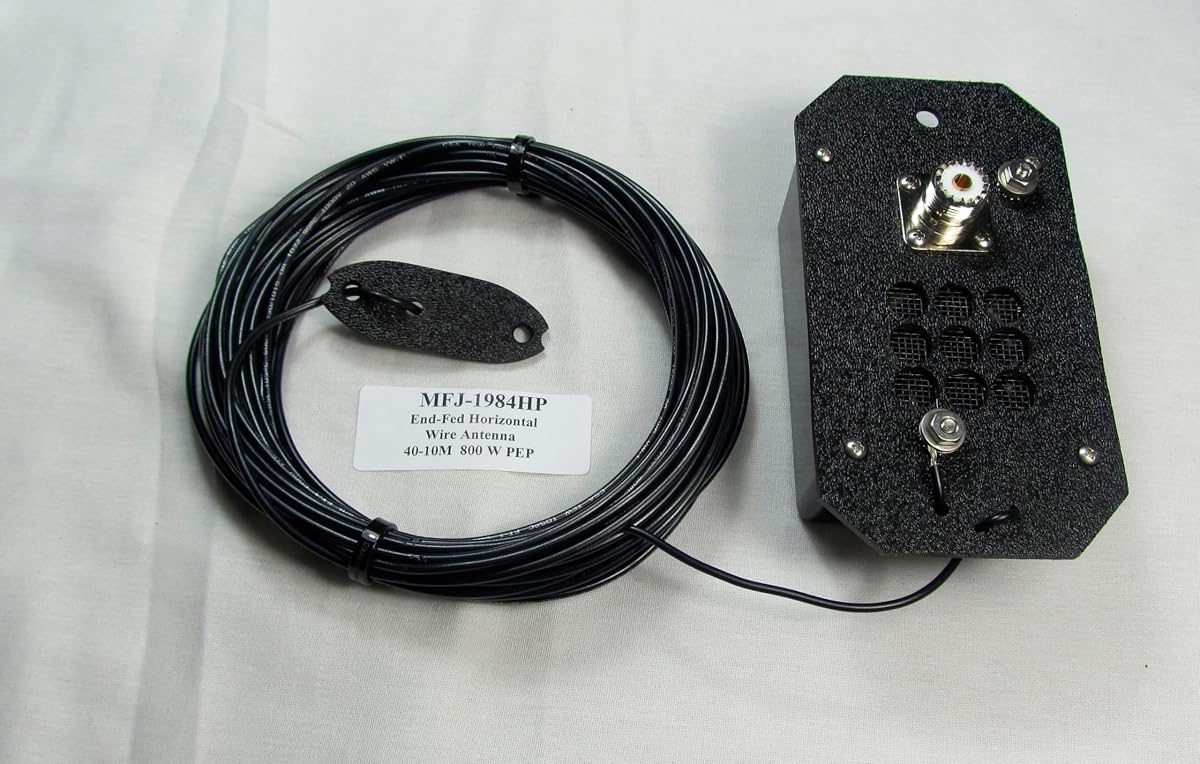
The following table provides a side-by-side overview of key specifications and features across all ten models to help you quickly identify the best fit for your radio station needs.
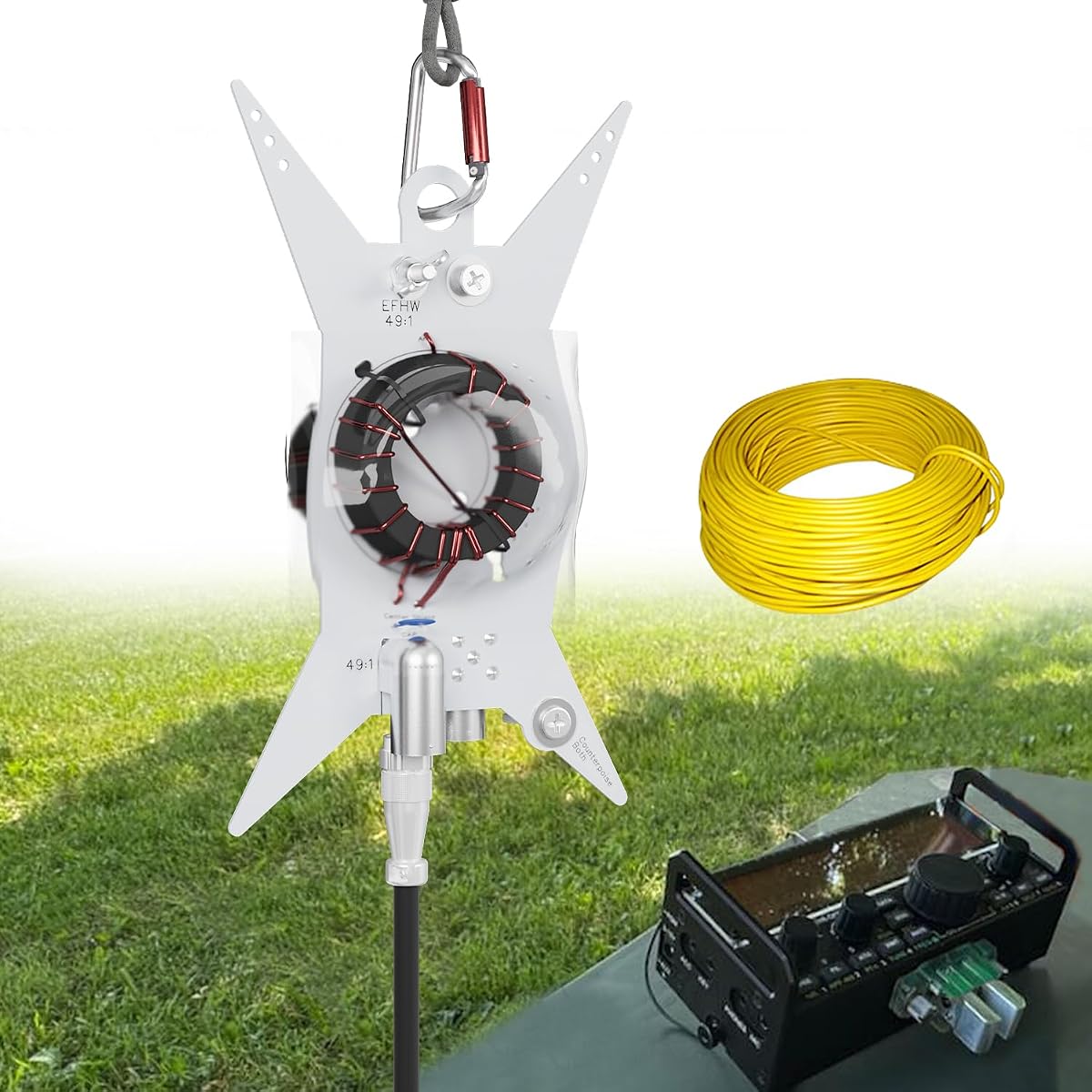

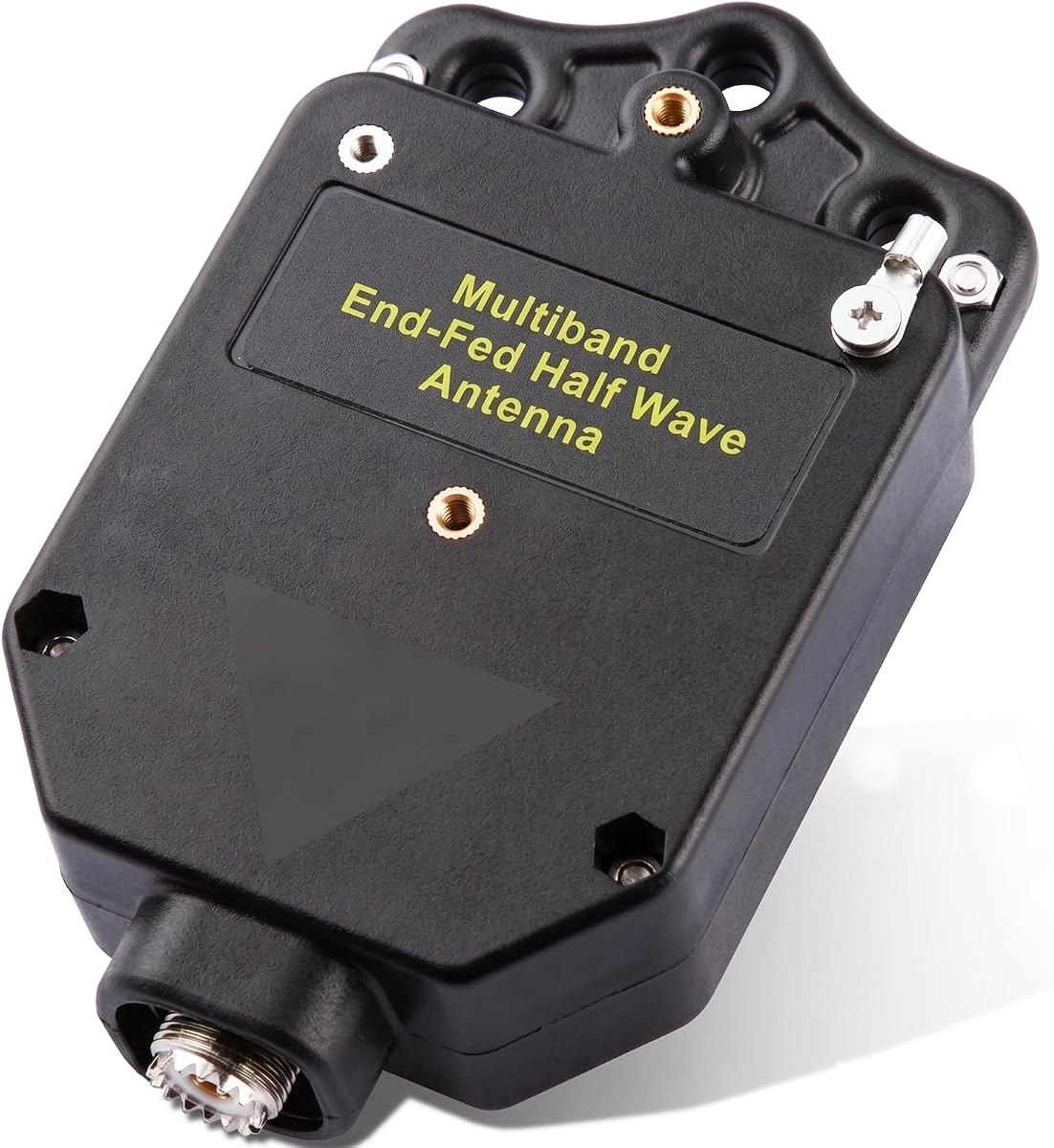


This antenna delivers reliable multiband operation across 40m, 20m, 15m, and 10m without requiring a tuner. Its 4.7 rating reflects strong performance in portable and permanent applications alike.
We may earn a commission when you buy through this link, at no additional cost to you.
The integrated 1:64 balun enables efficient impedance transformation while the ABS shell protects internal components from moisture and UV exposure. This design ensures stable performance during extended outdoor transmissions.
Though the unit is robust, proper clearance from metal surfaces and obstacles remains necessary for optimal signal quality. Grounding the balun helps mitigate static buildup and protects connected equipment.
Ideal for POTA activists and home station operators seeking a balance of durability and ease of use. This model stands out as a dependable choice for consistent HF communication.
The 1:64 ratio supports multiband resonance with minimal SWR across all supported bands for clean signal transmission.
Sealed housing and reinforced insulators ensure long-term reliability in diverse weather conditions without frequent maintenance.
We may earn a commission when you buy through this link, at no additional cost to you.
This model offers exceptional value with broad 1-30MHz coverage and compatibility across multiple HF bands. Its 4.8 rating highlights user satisfaction with performance relative to cost.
We may earn a commission when you buy through this link, at no additional cost to you.
The 1:64 matching ratio reduces signal loss while the compact size simplifies transport for field deployments. Setup is straightforward for temporary and emergency communication needs.
Users should prepare appropriate wire lengths for their desired band configuration to ensure resonance. The housing is durable but may not withstand extreme conditions as well as premium models.
A top choice for beginners or budget-conscious operators needing a versatile antenna for casual or emergency use. It delivers solid results without compromising on essential features.
Supports eight bands including 80m to 6m for flexible operating across multiple amateur radio segments.
Compact enclosure enables quick packing and transport for SOTA climbs or temporary field stations.
We may earn a commission when you buy through this link, at no additional cost to you.
This kit provides two impedance ratios in one unit enabling use with resonant half-wave or random wire antennas. Its 4.6 rating indicates reliable performance across varied configurations.
We may earn a commission when you buy through this link, at no additional cost to you.
The 49:1 side works well for end fed resonant setups while the 9:1 supports random wire with a tuner. Mounting options include horizontal vertical or diagonal placements for terrain flexibility.
Though durable and weather-resistant, the enclosure lacks the premium shielding found in higher-end models. Performance depends on proper wire selection and installation height for best SWR.
Best for operators needing versatility without purchasing multiple units. It balances cost and functionality for field ops or backyard stations.
Offers two transformer paths to support both resonant antennas and random wire configurations with a tuner.
Horizontal or vertical deployment allows users to adapt to tree lines or mast structures easily.
We may earn a commission when you buy through this link, at no additional cost to you.
This antenna covers 80m through 10m with natural resonance and SWR under two across all bands. Its 4.6 rating reflects consistent performance and robust materials.
We may earn a commission when you buy through this link, at no additional cost to you.
The cold drawn multi-strand copper wire ensures efficient transmission while the 64:1 balun simplifies matching. Installation includes rope for quick mounting between supports.
The 130 foot wire length requires ample space for deployment and clearance from buildings or ground. Users should plan placement carefully to maintain signal integrity.
Ideal for home stations or field sites with room for longer wire runs. It delivers broad coverage without needing an external tuner for most modes.
Eight natural resonant bands allow operation across HF spectrum without manual adjustment or traps.
Multi-strand copper construction reduces resistance and improves signal strength over distance.
We may earn a commission when you buy through this link, at no additional cost to you.
This balun supports omnidirectional HF coverage with a compact enclosure for discreet placement. Its 4.6 rating underscores reliability for both portable and base operations.
We may earn a commission when you buy through this link, at no additional cost to you.
A dedicated ground terminal helps suppress EMI during digital modes without requiring earth burial. Wire length can be trimmed to optimize resonance for 4 or 8 band setups.
Performance depends on maintaining separation from obstacles and metallic objects. Users must prepare wire and optionally use an analyzer for fine-tuning.
Great for HOA-compliant setups or field use requiring quick stealth deployment. It balances performance with flexibility for diverse environments.
Radiates in all directions enabling contacts regardless of antenna orientation relative to target.
Provides easy connection for grounding to reduce interference and protect equipment during transmissions.
We may earn a commission when you buy through this link, at no additional cost to you.
This unit combines broadband HF coverage with a waterproof ABS housing for stable outdoor use. Its 4.6 rating reflects confidence in durability and signal consistency.
We may earn a commission when you buy through this link, at no additional cost to you.
The 1:64 ratio minimizes path loss while the compact design suits emergency or temporary setups. Installation is straightforward for users with basic antenna knowledge.
Operators must prepare and trim wire to match frequency points for best performance. The housing resists weather but lacks heavy-duty reinforcements.
Well suited for responders or hobbyists needing a dependable antenna for varied environments. It offers reliable operation without complex setup.
Sealed ABS enclosure maintains function in rain or humidity without degradation over time.
One to thirty megahertz operation covers multiple amateur bands for flexible communication needs.
We may earn a commission when you buy through this link, at no additional cost to you.
This model focuses exclusively on the 40 meter band with a 200 watt power rating. Its 3.4 rating suggests performance depends on careful tuning and installation.
We may earn a commission when you buy through this link, at no additional cost to you.
The copper clad steel poly coated radiator ensures durability and consistent resonance. Best tuning uses an antenna analyzer attached to the far end for accuracy.
Outside the 40m band operation requires a tuner which limits versatility compared to multiband models. Installation can be horizontal vertical or sloped depending on terrain.
Best for operators dedicated to 40m communication or those needing a simple fixed band antenna. It delivers robust performance when tuned properly.
Designed for resonant operation on 40m enabling efficient transmission with minimal SWR on that band.
Requires analyzer adjustment at the far end to optimize resonance and minimize reflected power.
We may earn a commission when you buy through this link, at no additional cost to you.
This antenna targets the 20 meter band specifically using a half-wave end fed design. It offers simple setup for operators focused on this popular frequency range.
We may earn a commission when you buy through this link, at no additional cost to you.
As a single band solution it minimizes SWR on 20m without requiring a tuner. The model remains compact and portable for field operations or permanent mounts.
Operators seeking broader HF coverage should consider multiband models instead. Installation is straightforward using standard wire suspension methods.
Ideal for 20m enthusiasts needing a reliable resonant antenna. It provides focused performance without multiband complexity.
Tuned for optimal resonance on 20m delivering efficient transmission and reception on that band.
Lightweight and compact design makes it easy to deploy during portable operations.
We may earn a commission when you buy through this link, at no additional cost to you.
This antenna covers 40m through 10m with a shorter wire length ideal for tighter spaces. Its design emphasizes simplicity and portability without requiring a tuner.
We may earn a commission when you buy through this link, at no additional cost to you.
The 19.8 meter wire connects to a sturdy 64:1 balun with SO-239 interface. A storage bag and rope are included for convenient transport and setup.
Clearance from buildings and ground is essential for best SWR. Users may need slight adjustments based on local environment.
Best for operators with limited installation space needing four-band operation. It provides reliable multiband capability with minimal setup.
Shorter wire reduces space requirements while maintaining resonance across four HF bands.
Storage bag and rope simplify transport and installation for field use.
We may earn a commission when you buy through this link, at no additional cost to you.
This premium model supports 40m through 10m with high power capability and a weather-resistant matching network. It delivers reliable coverage without requiring a counterpoise or tuner.
We may earn a commission when you buy through this link, at no additional cost to you.
The broadband transformer enables efficient operation across HF bands with low SWR. Stainless hardware and UV-resistant materials ensure longevity in outdoor environments.
Setup requires only one support point and is ideal for fast deployment. Higher cost reflects premium construction and power handling.
Best for serious operators needing robust performance and durability for base or field stations. It combines convenience with high-end features.
800W PEP allows high power digital and voice modes without overheating the matching network.
UV-resistant and stainless components protect against corrosion and sun exposure over time.
We may earn a commission when you buy through this link, at no additional cost to you.
Selecting the right end fed half wave antenna depends on your operating style installation constraints and desired frequency coverage.
Determine whether you need single band or multiband operation. Multiband models resonate on four to eight bands without tuning while single band units offer optimized performance on one frequency.
Choose multiband for flexibility across HF segments and single band for focused operations on a specific band.
Check the SSB and CW power limits to match your transceiver output. Models range from 100 watts to over 800 watts peak envelope power for robust transmission.
Ensure the antenna can safely handle your highest operating power to prevent damage and maintain signal integrity.
Look for 1:49 or 1:64 baluns to transform the high end fed impedance to 50 ohms. A quality transformer minimizes SWR and loss across supported bands.
Prefer models with sealed and durable balun housings to protect internal windings from moisture and heat.
Antenna wire length dictates resonant frequency so verify the included wire meets your band needs. Copper or copper-clad steel ensures low resistance and good conductivity.
Measure available space for deployment and prepare appropriate wire lengths for optimal performance on desired bands.
Outdoor antennas require UV-resistant and waterproof housings to withstand rain wind and sunlight. Sealed connectors protect against corrosion over time.
Select models with weather-rated materials to maintain consistent performance in varied conditions without frequent replacement.
Consider height clearance from ground and obstacles for best radiation patterns. Horizontal vertical or diagonal mounts suit different environments and support structures.
Plan for non-metallic ropes and adequate separation from buildings or metal objects to avoid detuning.
Many baluns include a grounding terminal to suppress interference and protect equipment from static buildup. Proper grounding improves signal clarity and safety.
Attach a short ground wire to the balun if available to reduce RF noise and equipment risk.
For POTA or SOTA use choose lightweight compact models with included storage bags and ropes. Easy packing and quick setup enable field flexibility.
Prioritize small enclosures and low-weight wire to simplify transport and deployment during activations.
Begin by planning your installation height and clearance from metal objects to avoid detuning and signal loss. Secure the balun to a stable support such as a tree or mast using non-metallic rope.
Connect the antenna wire securely to the balun terminal and trim to length for desired resonance. Use an analyzer if possible to verify SWR before operating your transceiver.
Inspect the antenna and connections every six months for wear corrosion or loose joints. Replace damaged wire or housing promptly to maintain reliable performance.
Most modern end fed half wave antennas include an internal impedance transformer that eliminates the need for a tuner on resonant bands. Some random wire options may require a tuner for broader frequency coverage.
Maintain at least three meters of clearance from buildings and five meters from metal objects to optimize radiation patterns. Proper spacing prevents detuning and improves signal quality.
Yes vertical horizontal or diagonal mounting is supported depending on available space and terrain. Vertical mounts offer low angle radiation ideal for DX communications.
Use the included copper or multi-strand wire specified for your model. If custom wire is needed select insulated stranded wire sized to match the resonant length for desired bands.
Grounding the balun or coax shield helps reduce static buildup and EMI especially during digital modes. Many baluns include a terminal for convenient grounding without burying earth rods.
Trim the wire length incrementally while measuring SWR with an analyzer. Small adjustments around the target frequency optimize resonance and minimize reflected power.
Yes their portable design and quick setup make them ideal for emergency communications. Compact models allow rapid deployment with minimal equipment in field conditions.
The top picks offer a balance of performance durability and ease of use across portable and base station applications. Select a model that matches your frequency needs and installation constraints for reliable operation.
Prioritize impedance matching power handling and weatherproofing when comparing options. These factors determine long-term reliability and signal quality under varied conditions.
Always verify current availability and specifications before purchase as product offerings may change. Check retailer details and warranty terms to ensure a satisfying antenna experience.